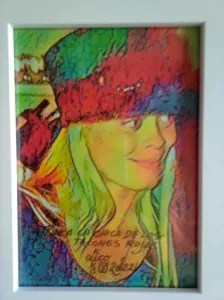
He was raised to be a ritual tool in the Apuseni mountains. He fell in love with the woman his clan kidnapped for a sex ritual, and chose to spend the rest of his exsistence guarding her from the shadows.
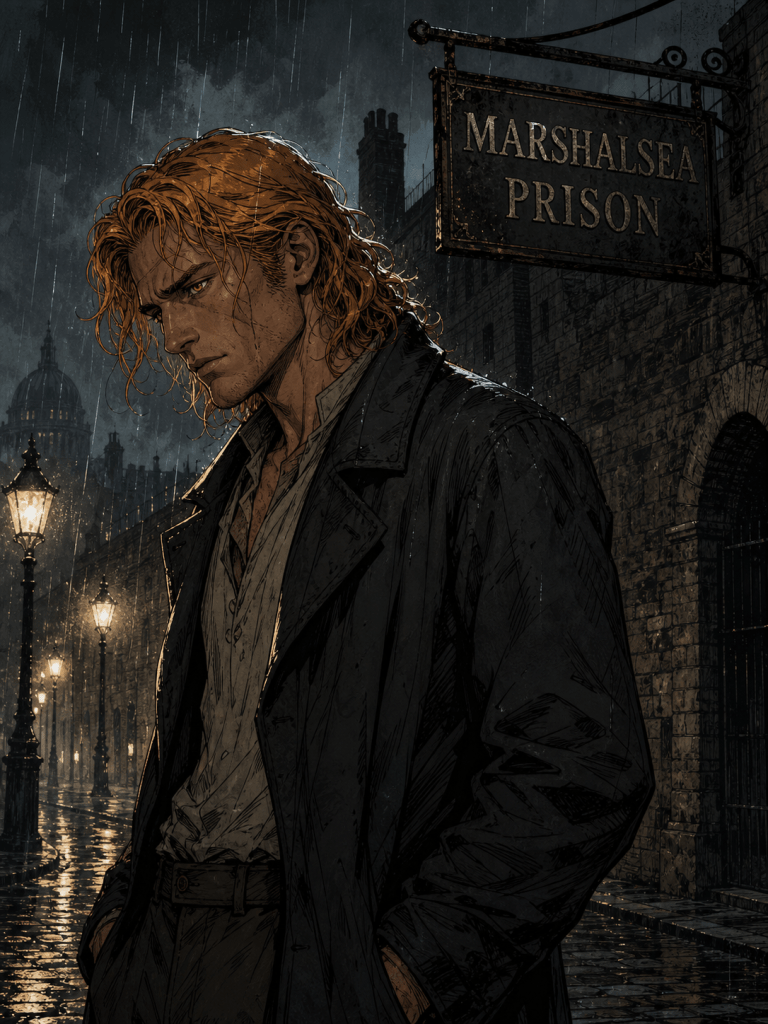
Who Is Asdar?
Asdar is a Dacian priest from Romania’s Apuseni mountains, born into a life already decided for him. His clan raised him to perform old rites, guard dangerous crossings, and carry a lineage of obligations older than many state. For years, he was treated more as an instrument than as a person: the one who knew the words, the one who preserved pathways, the one who did what was required.
That changes the day they kidnap Elena.
She is brought in as part of a ritual, a human component in an old ceremony he’s been trained to execute without blinking. Instead, she breaks the pattern. During the ritual, she sees him—not “the priest,” not “the clan’s tool,” but the young man inside the role. For the first time, someone looks past the duty and recognises the person. That moment is the quiet catastrophe of his life: he falls in love with the woman his own people have taken.
Sentinel in the Wings
From then on, Asdar refuses to be his clan’s weapon against her. Instead, he becomes her shadow-sentinel.
He doesn’t claim her. He doesn’t demand centre stage. He learns the art of loving from the sidelines: always close enough to intervene, never close enough to smother. He follows her through cities and borders, stepping in only when necessary and stepping back as soon as she’s safe. His rule is simple: never repeat his clan’s violation of her agency.
When Mikhail later flies Elena out of danger and she vanishes into thin air after giving birth to their twins, that rule comes back to haunt him. Asdar is left with a newborn son in the world, a missing lover he can’t trace, and the question of whether his choice to stay in the wings cost him the chance to save her.
Father at a Distance
Asdar is the father of Elena’s twin boy, but not the one cradling him every day.
The baby travels under the care of Karim—a horse shapeshifter with whom Asdar shares a deep, coded bond—and the aunt of Roger Boswell, Elena’s oldest Romani friend. Asdar trusts them with his child in a way he doesn’t even fully trust himself. His life is made of enemies, doors between worlds, and obligations that bring danger in their wake; he knows that sometimes protecting someone means not standing next to them.
So he operates as a guardian at a distance: erasing threats, dismantling predators, walking the darker, meanwhile searching the planes.
Between Clans, Courts, and Creatures
Asdar’s web of loyalties is messy and rich:
- His Dacian clan shaped him, misused him, and delivered Elena into his life through violence.
- Elena transformed him from an obedient instrument into someone who wants more than the role he was given.
- Karim, the horse shifter, carries Asdar’s son and shares the shapeshifter’s understanding of what it means to live between bodies.
- Roger Boswell and his Romani kin tie Asdar into another cultural orbit entirely, one where justice and protection are negotiated within the community as much as through state law.
When Asdar later walks London’s October streets and tracks a man to a cell in Marshalsea Prison, he isn’t acting as a rogue vigilante in a vacuum. He’s bringing his mountain priesthood, his clan’s rituals, Elena’s influence, and his obligations to Karim and Roger into the heart of a modern carceral space.
The man behind that door abused a child and drew seven years for it — a sentence Roger Boswell, in his own careful way, asked Asdar to make insufficient. Asdar doesn’t kill him. He leaves him breathing, still serving his time, still inside the system that will now misfile what happened to him as an accident — and never again able to walk toward a child, or anywhere else, unassisted. Not dead. Worse, in exactly the shape Roger meant.
He pays for it the way he pays for everything: in his own body, on his knees on a cold floor afterward, hollowed out for a week. He was raised to be the one who preserves and does what’s required without blinking. What costs him now isn’t the doing. It’s that he still feels it every time.
Why He Matters
Asdar sits at the crossroads of:
- ancient Dacian priesthood and contemporary London,
- love born out of a ritual turned wrong,
- fatherhood at a distance,
- and justice that doesn’t end at the prison gate.
He is the man in the shadows who was finally seen, and who now has to decide how far he’s willing to go to protect the people who gave him a self beyond his role.
Excerpt Chapter
Roger has his evidence. I have his next errand.
Third floor, second cell from the end. The scent leads there and stops, and I stop with it — asleep on his back, mouth open, no fear in the air to mask what’s underneath. Just the thing itself, comfortable in its own skin.
I don’t need a wall for this, or a lock. I find the place behind my own ribs where the sideways direction lives — the one I’ve walked from a London bedroom before now, the one no English word quite reaches — and I lean into it instead. No stone between us. No door that needs opening the ordinary way. Just the wolf, and then the wolf somewhere else, standing over a mattress that was empty of me a breath ago.
He wakes to weight on the mattress and gold eyes level with his throat.
He doesn’t scream yet. Men like him do the arithmetic first — bargain, threat, escape, in that order, always in that order — and I watch him reach for all three and find nothing in the room that answers.
Somewhere the nonce can’t come back from.
I don’t say it to him. Wolves don’t say things. I say it to myself, once, low in the chest, the way you check a knot before you trust your weight to it. I don’t say Roger’s name. I don’t say the child’s name — I don’t know it, never asked, some knowledge is a weight you don’t carry to do the job right.
Not dead. Roger was clear on that, in the way he was clear about everything he couldn’t say straight out. Worse. A cage with no visits from anyone who’d still want to visit him. Legs that will still count off his sentence but never carry him toward a child again, not down a street, not up a stair, not anywhere.
It doesn’t take long. It’s not meant to.
He’s still screaming when I’m done, which is the point — the scream is for the report he’ll give, the one nobody will believe, the impossible animal in a locked cell on the third floor. Let them not believe him. Let them find him exactly as broken as he says and write it up as some accident, some fall, something a man his age simply did to himself in his sleep.
I leave him breathing. That was the whole of the instruction.
The toll lands on me all at once, the way it always does after — legs going loose under me, my own weight suddenly a debt. I stand over the warm dent in the mattress a moment longer than I need to, getting my footing back, while behind me a man starts shouting for a guard who won’t reach him in time to see anything but the aftermath.
I let myself out the way I let myself in — sideways, the direction still open behind my ribs, one more lean and the cell is somewhere I used to be. By the time the corridor lights come up, there’s nothing in that room that shouldn’t be there, and nothing of me left to find.
London hasn’t moved in the hour I’ve been gone. The gas lamps don’t even flicker.
The shift back to a man happens somewhere in a side street off the river, quiet, unglamorous, my jacket — someone else’s jacket — waiting for me exactly where I dropped it, because some things you plan for even mid-hunt.
Roger will know before I tell him. Romani kings always know.
I just have to survive the telling.
“620k people have seen these faces. Almost none of them know the story yet. These spotlights are me closing that gap, one character at a time.” Irena Phaedra.
© 2026 I.Ph. de Lange. All rights reserved. Published by CYcrds OÜ.

