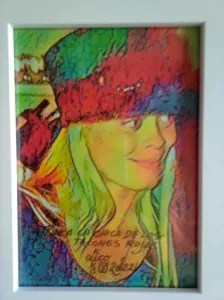
The pure heart shall sing when dying.
Field notes have been hugging the spotlight lately while I’ve been editing – so here’s an excerpt from today’s chapter instead. Promise I won’t go all anthropologist on you.
This one’s Asdar. London. A red Volvo with a cracked headlight, a lockup in Walthamstow, cash counted without looking up. And a tattoo parlour in Hackney, where a man named Dex asks the wrong question at the wrong moment.
A boot hit the mattress. Asdar opened his eyes to red hair and a smirk.
“Up, wolfboy. Da’s got work.”
Bartley stepped back as Asdar stood. “Christ. What do they feed you?”
Downstairs, Harry—the oldest—had keys already in hand. “You drive?”
Asdar said nothing.
“Right then.”
The Range Rover outside—he’d seen it before, parked near Elena’s flat, back when he was watching her. They drove to the station without speaking.
At the platform, Bartley shoved a burner phone and a fold of notes into his palm. “Past Watford, you’re not in England anymore.”
They were gone before Asdar checked the ticket.
West Calder. One way.
He pocketed both. Six hours north to see what Celts looked like now.
The phone buzzed somewhere past Carlisle:
2020 Volvo XC40 (5000) needs brought back. DO NOT take white Audi A3 2018 (11500). Red Volvo only. Haggle.
An auction, then. He knew Volvo. Knew Audi. Knew neither was worth what they were paying.
West Calder station: two platforms, stone walls still dark from rain that had stopped an hour ago. A footbridge. Ramps. The kind of upgrades that once signaled EU money. The air tasted of turned earth and diesel.
Twenty minutes downhill, past stone cottages with shale dust baked into the mortar.
Livingstone Street: salvage yards, stacked cars, the slow leak of engines into gravel.
Northern Salvage Auctions occupied a lot that had once been something else—the broken concrete still ghosted paint lines from a different purpose.
Asdar tried the accent. “Guid mornin’—”
“English is fine, son.” The man behind the counter didn’t look up from his clipboard. “What’re ye after?”
“A Volvo. Red, if possible.”
“Might have one.” The man glanced up now. “Ye’re no fae here.”
“No. Roger Boswell sent me.”
The man’s hand stilled. He leaned in, voice dropping. “Dinnae say that name.” A beat. “Wouldnae ye prefer the white Audi?”
“No.”
The phone rang. The man answered, listened, then: “Aye, sir.” His face tightened. “Forfaur’s sake.”
Asdar’s phone buzzed: Get your skates on.
So—he was being watched.
He pressed again for the red Volvo, though he still didn’t know how he’d pay for it. Shouldn’t he be in the auction hall, bidding? The whole thing felt staged. Or decided already.
The man muttered—Asdar caught bletherin pikies—then jerked his head toward the lot. “Come on, then.”
They walked past rows of salvage, some stripped to frames. The man handed him a key fob for a red XC40—cracked headlight, primer smeared across the passenger door.
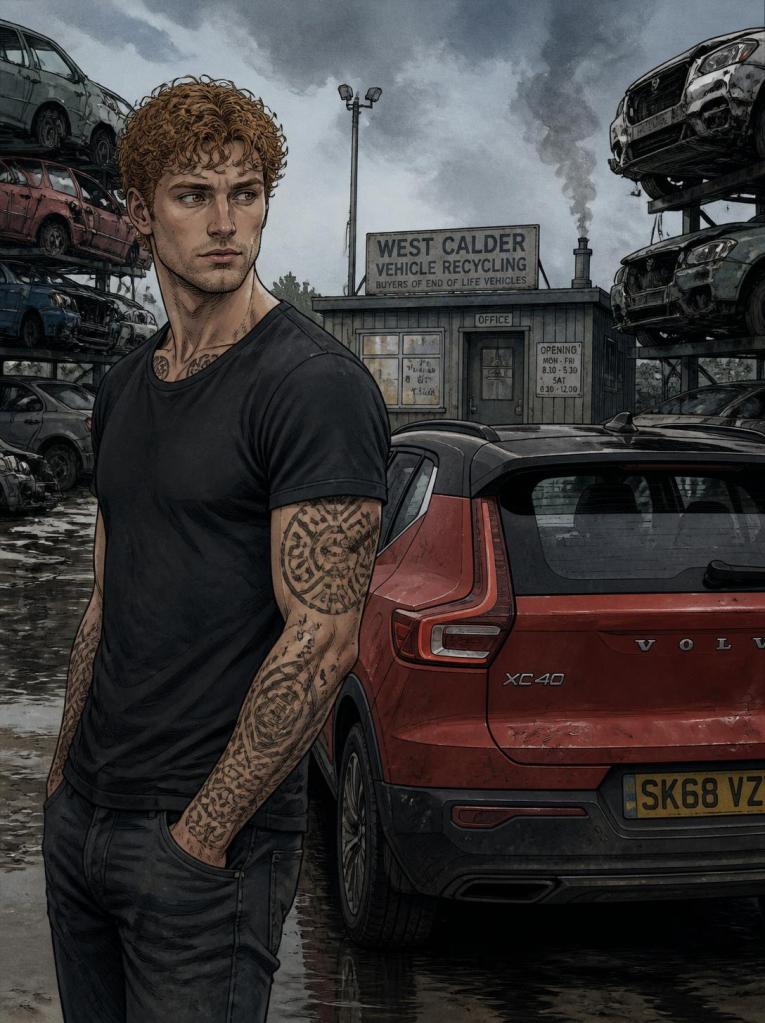
Asdar reached for the handle.
The man caught his arm.
Looked at him properly, for the first time.
“Ye seem a good lad.” His voice had changed—older, almost formal. “Candidus cantabit moriens.”
He held the gaze, as if waiting.
Then, quieter: “Be mindful.”
He let go and walked back toward the office without turning.
The XC40 pulled left. Asdar corrected.
Ten minutes later, it pulled again—harder this time, as if the frame remembered the impact.
He drove south with the window cracked. Cold air, sheep shit, diesel from lorries he couldn’t pass on the narrow roads. The phone sat silent on the passenger seat.
Past the border—no signs, just the land flattening—the roads widened.
He stopped once for petrol and coffee that tasted like the cup it came in. The attendant didn’t look at him.
Somewhere in the Midlands, the phone rang.
“Yeah?”
“How’s she running?” Harry.
“Pulls left.”
“Course she does. You’ll be back by midnight.”
“Where am I taking it?”
The line went dead.
The roads multiplied as he neared London—motorways splitting, rejoining, looping back on themselves. He followed the sat-nav until the streets narrowed again into something familiar: the kind of place where no one asked questions about a red Volvo with mismatched paint.
The phone buzzed. An address in Walthamstow.
Candidus cantabit moriens. The pure heart shall sing when dying.
Asdar turned off the motorway and wondered what the man had seen in his face that made him think a warning would matter.
The lockup sat among identical lockups, roller doors tagged with fading graffiti. Roger stood outside smoking. Bartley beside him, counting something on his phone.
“Any trouble?” Roger didn’t look at him—only at the car.
“No.”
“Pop the boot.”
Asdar did.
Roger leaned in, shifted something—a blanket, maybe a tarp—then nodded to Bartley, who pulled out a brick of notes and counted without looking up.
“Five hundred. Plus what we gave you for the train.” Roger handed over the cash. “You did alright, wolfboy.”
Asdar pocketed it. “I need a tattoo parlour. Good one.”
Roger’s eyebrow lifted. “What kind of good?”
“The kind that can do Greek letters properly.”
A pause. Then Roger grinned. “Bartley. Take him to Dex.”
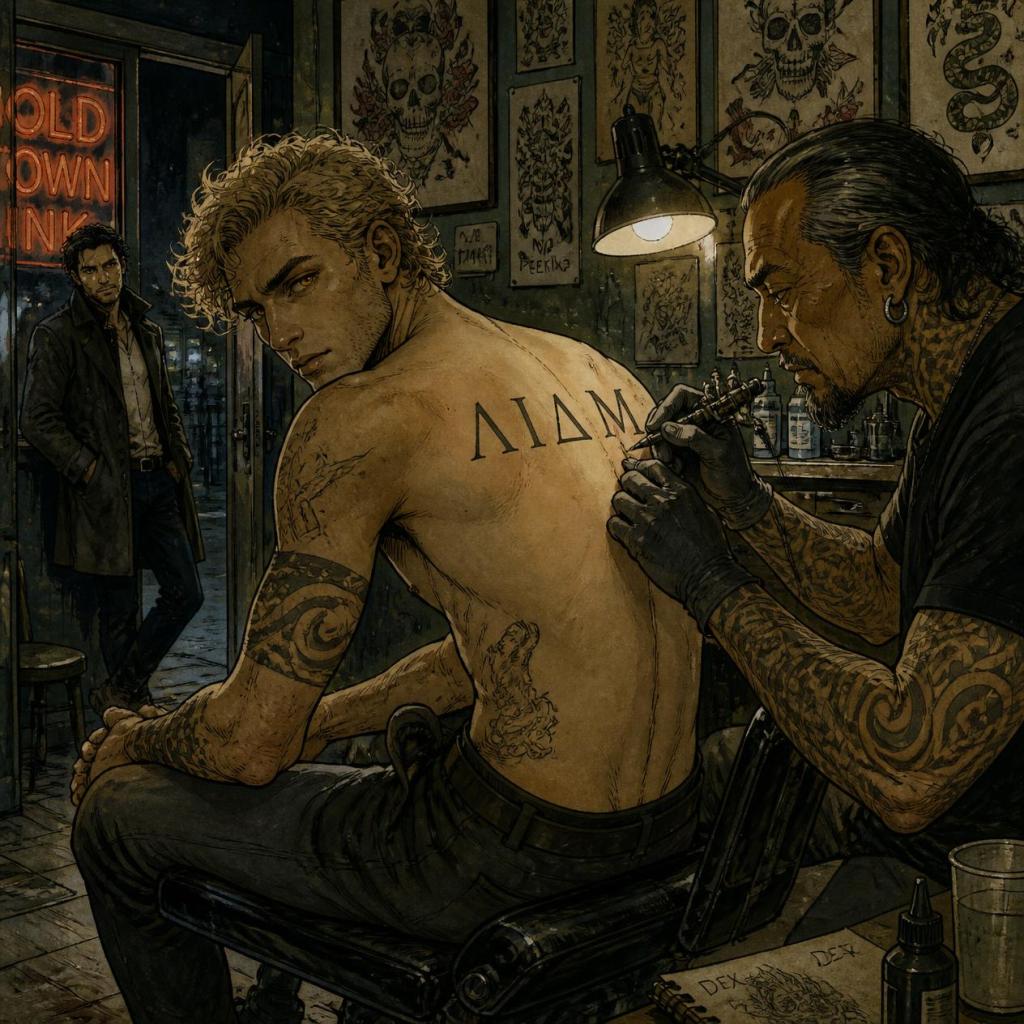
Dex’s shop was in Hackney, wedged between a Turkish barber and a betting shop. The walls were covered in flash-skulls, roses, tribal patterns that hadn’t been tribal in decades.
Dex himself was in his fifties, Māori ink running from wrists to neck.
“Roger’s boy says you want Greek.” He didn’t offer a hand. “Show me.”
Asdar handed over the back of his train ticket: ΛΙΔΜ.
Dex studied it. “Lambda, iota, delta, mu. That spell something?”
“Liam.”
“Unusual. Most just get the English.” He looked up. “Where?”
“Left to right shoulder blade.”
“Size?”
Asdar pulled off his shirt, turned, traced from one scapula to the other. “Here. Across.”
Dex took a moment, measuring the space with his eyes. “That’s a statement. You sure?”
“Yes.”
“Hundred fifty. Two hours, maybe more. You want it now?”
Bartley straightened from the doorframe.
Asdar said yes.
The needle hurt more than he expected—or maybe exactly as much as it should. He leaned forward, hands braced on his knees, while Dex worked.
The pain was clean. Deliberate.
Each letter carved rather than inked.
Bartley stopped looking at his phone after the first half hour.
“Who’s Liam?” Dex asked, about forty minutes in.
“My son.”
Bartley looked up.
The kid kept glancing at him after that. Then away.
“Where is he?” Dex asked.
“He’s gone.”
“Dead?”
“No.”
A pause. The needle buzzed on.
Dex didn’t ask again.
When he finished, he held up a mirror.
Four letters. Sharp. Austere. Like something cut into stone two thousand years ago.
“That’ll do,” Asdar said.
Outside, Bartley was quiet on the walk back.
Then: “Why Greek?”
“Because English isn’t mine to use and close to my language.”
Bartley considered that. “Da says you’re alright. Don’t make him regret it.”
“I won’t.”
But that wasn’t entirely up to him. Not anymore. Not with whatever had been in that boot. Not with whatever Roger needed it for. Not with whatever the man in the yard had seen coming.
Candidus cantabit moriens.
He touched the fresh ink beneath his shirt and wondered which heart that meant.
As so many scenes in the books, this one too is based on happenings in my life. The tattoo is real – the father of my son carries Liam across his back. Fiction gave me somewhere to put it. Irena Phaedra
Continue the journey — full chapters await on Kobo:
© 2026 I.Ph. de Lange
All rights reserved. Published by CYcrds OÜ.

