Previously: the writer has woken in Tangier from a scene she lived rather than dreamed. Two men have spent the night at her bedside: Wolfgang, who reads the world by scent, and Mikhail, who reads it by something older.

“Chaos magic,” I say, half-laugh, half-accusation. “Of course.”
Gold on her fingertips
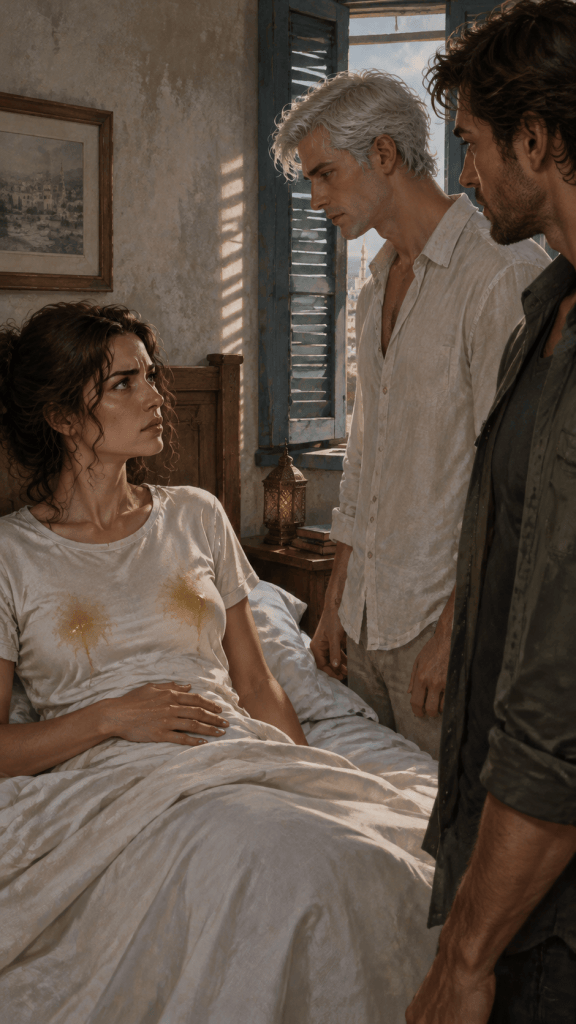
She wakes and the dream hasn’t let go. Ice is still under her fingernails, and the taste of aurora is still on her tongue. Then something warm traces down her ribs, and when she looks, her fingers come away gold: opalescent, impossible, smelling of no herb she knows.
Her body has started keeping the dream’s promises. That is what chaos magic means in this book. The cost of what she touched on the other side doesn’t stay on the other side.
“You knew.” “Да.”
话里有话
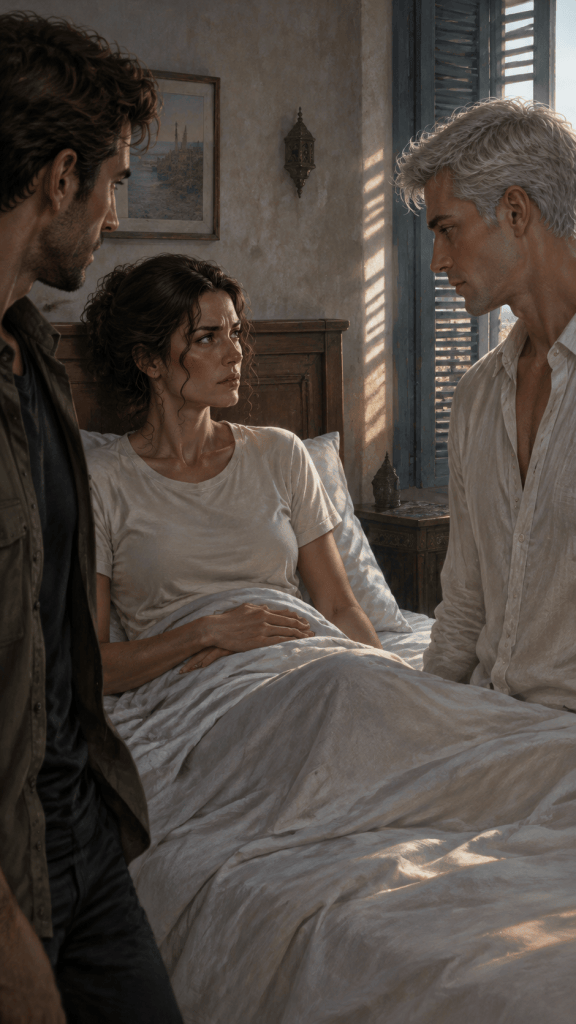
Chinese has an exact phrase for what happens next: 话里有话, words inside the words. Something was said to her days ago, in the middle of the medina, in a moment when nobody listens for meaning. She heard it as poetry.
It wasn’t. Saying a thing and telling someone are different acts, and the gap between them is where trust lives or dies. What has happened to her body is bigger than any man in the room. But one of them knew, and chose words she would hear as poetry. That much was his to decide, and she isn’t ready to let it go.
[Start the series here →]
© 2026 I.Ph. de Lange, published by CYcrds OÜ

