A house remembers every car that has ever come up its drive. This one was about to meet something it had never had to remember before.
The first car
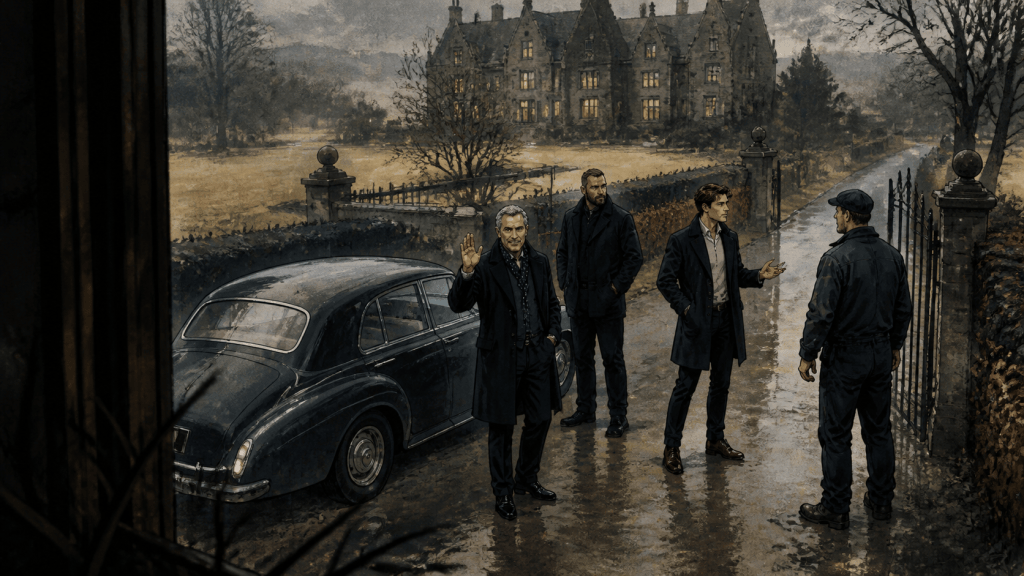
Roger arrives the way he arrives everywhere — hand up before the car’s fully stopped, coat already open to the rain like weather is something he’s decided not to take personally. His sons behind him, not matching him at all: one built like an old fight he never quite put down, the other loose and quick and already reading the gate for an angle. I wrote men like this once, a long time ago, and told myself I’d invented the type.
The second
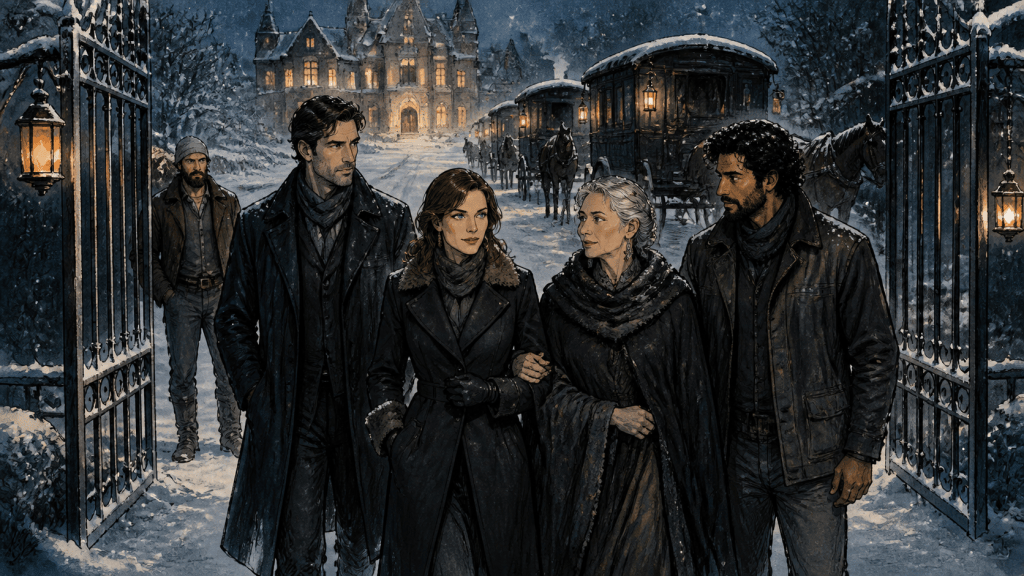
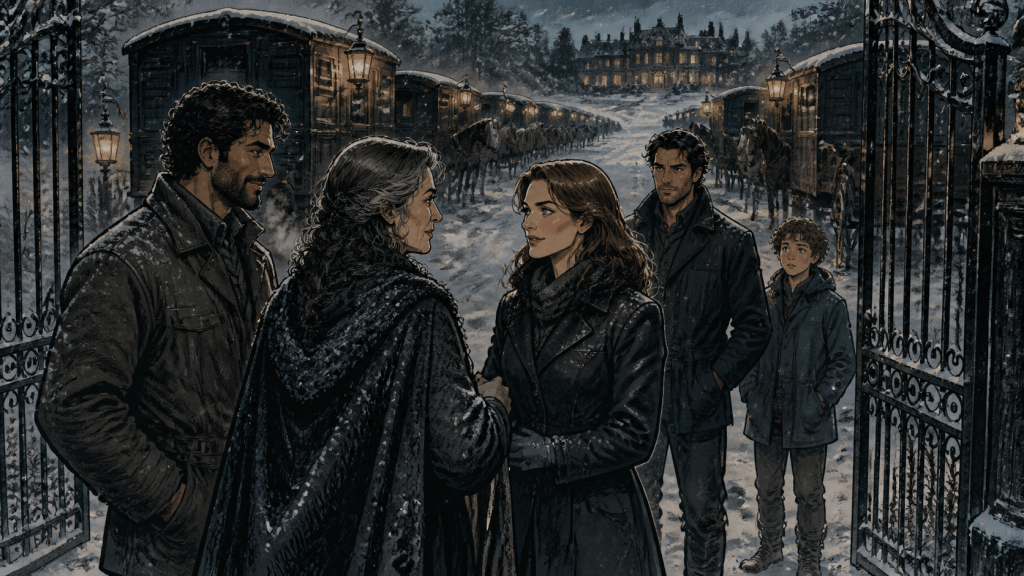
The caravans come after dark, lanterns before headlights, horses before engines. I watch them come through the gate the way you watch something arrive that the house itself doesn’t have a category for yet — old road, new snow, a woman at the front of it with hair gone the colour of the weather and a voice that stops conversations before it starts them.
Someone in that second arrival I have written before too. Not as a namesake. As the person.
The double duty of an iron gate
Nobody at either gate is questioned. That’s the thing about a house like this at Christmas — it opens for everyone who was invited, and some who weren’t, and doesn’t distinguish out loud between the two kinds of guest.
What I haven’t said yet: the iron itself doesn’t distinguish either. Roger is real. Eve is real. Lord Taren, Mitra — I didn’t invent a hair on them, I just left them where I found them and called it research. But the boy with the caravan and the songbook, I met him first and burdened him second, which is not the order any of this is supposed to go in. He’s walking through my gates tonight wearing the job I gave him. I don’t know which one of us is the copy. “Girl, that’s the job. Someone has to keep the ledger, even when it stops telling you which column you’re in.” I.Ph.
Find where this all began on Kobo. [Start the series here →]
© I.Ph. de Lange / CYcrds OÜ

