Vodun, Egun, and the words we don’t have for grief
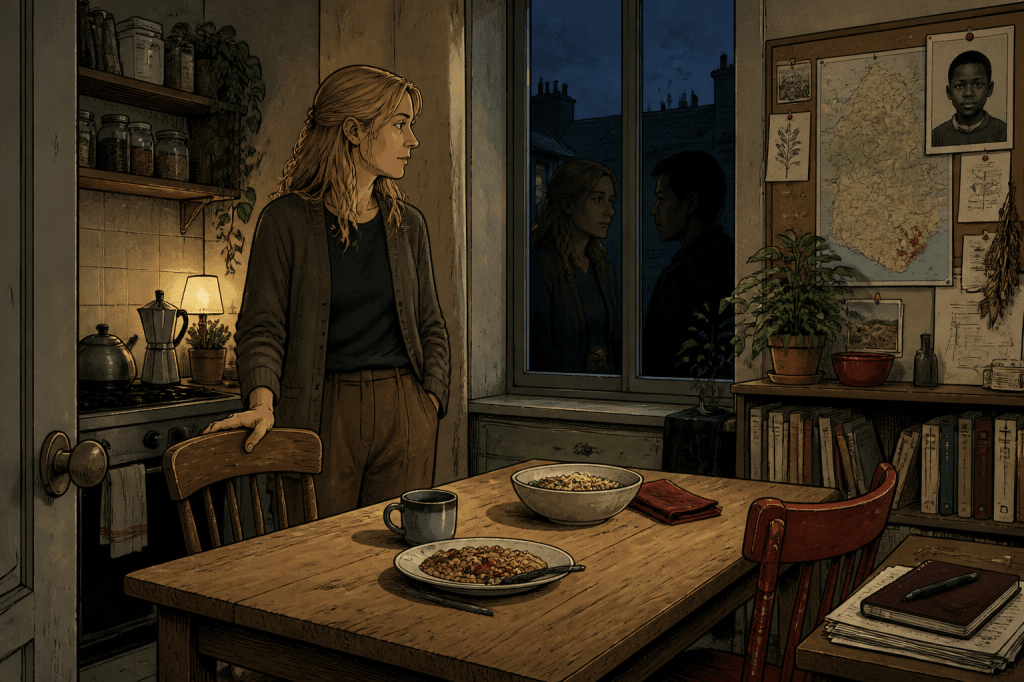
Elena has a problem with the word dead.
Not emotionally — professionally. As an anthropologist she’s spent twenty years watching language do its work on reality, carving the world into what exists and what doesn’t, what stays and what goes. Dood — in Dutch, death in English, in the tight cluster of Germanic words she thinks in — is a door that closes. Final. Categorical. The person was here; now they aren’t.
Except they are.
I am Elena, and I am not Elena
I know this because I am Elena, and I am also not Elena. She’s the character; I’m the one who made her out of fieldwork and grief and twenty years of sitting with people who refused to let their dead be only dead. The line between us has never been clean. It was never meant to be.
My son died. Friends. People whose names I carry the way you carry a stone in your pocket — not a burden exactly, just a weight you’ve stopped noticing until your hand finds it again. Dutch gives me dood. English gives me death. Neither of them holds what I actually know, which is that they’re gone and they aren’t, that the conversation didn’t stop, it just changed register.
What if dead is just elsewhere?
Vodun doesn’t have this problem.
In Benin, in the Vodun cosmology Elena walks into in Book V, the ancestors don’t vacate. They’re called back with a bowl of food and a name. The language doesn’t have a word that slams the door because the door was never part of the house. What you call dead, they treat as elsewhere — still present, still in conversation, still capable of showing up at the kitchen table if you set a place.
This is linguistic relativity in its most visceral form. Not Sapir and Whorf in a seminar room. Not a thought experiment about colour perception. The language you think in shapes what you’re allowed to know. If your only word for absence is dead — final, sealed, archived — then that’s what your grief becomes. An ending. A closed file.
The irony, if you go back far enough, is that even my word dood doesn’t start out as a door. It inherits from an older Germanic verb for a process — to die, to fade, to dwindle — and only later calcifies into a state: death as a finished fact, a noun you can file. We took a verb that described movement and turned it into a wall.
But if your language keeps the door ajar?
Egun: when the dead stay
Yoruba and related traditions have their own word for this refusal to let the dead be only dead. Egun — or Egún, Egungun, depending on spelling and context — names the dead who stay: ancestors as an active collective, people‑turned‑spirits who still watch, intervene, and get fed. It is not a poetic metaphor. It is a whole grammar of obligation and presence.
Where my Germanic words for “dead” behave like a period at the end of a sentence, Egun behaves more like a continuing subject: a “they” who still act, still claim, still answer when called. Change dead to Egun or to “elsewhere,” and you change what the dead are allowed to be. You change what your grief is allowed to do.
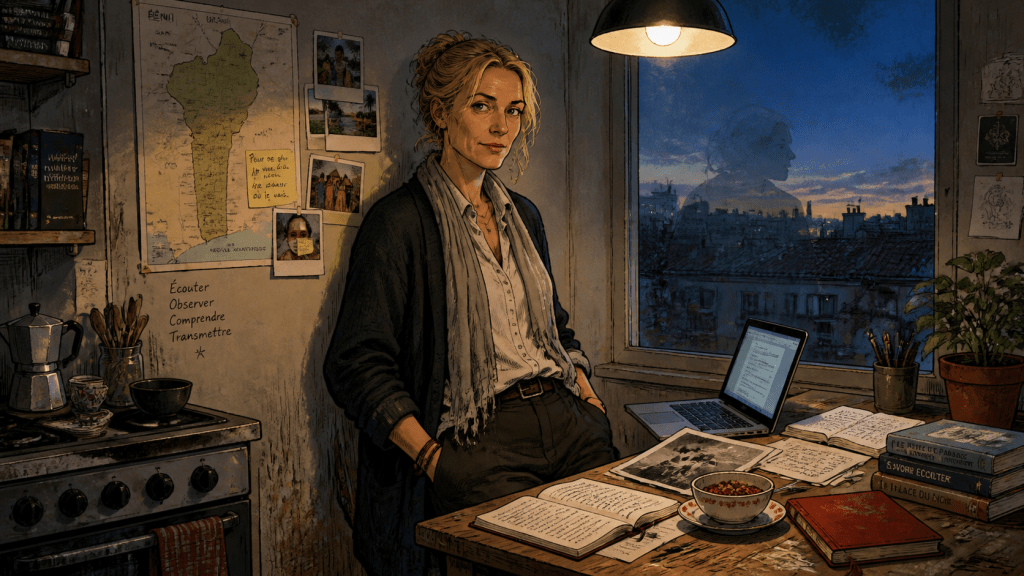
Elena walks into Abomey — into Vodun altars and ancestor plates, into words that never learned to slam the door. I walk in behind her with my Dutch and my English and my stone‑heavy pockets. She already suspects the answer. So do I. The real question is what happens to our grief if we stop letting our language call it finished.
I.Ph de Lange
© 2026 I.Ph. de Lange All rights reserved. Published by CYcrds OÜ.

