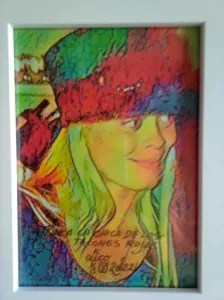
His name was Gwan, too young to be my uncle, too old to be my brother.
His father was a Chinese man who said little when needed to. He sat on his haunches on the kitchen chair and dipped his fingertips into the boiling rice while my grandmother looked away in something between disgust and the particular blindness of women who have made their choice.
At night, when I moved through the hallway crying softly with migraine, it was not my grandmother who came — she had inherited her mother’s coldness the way you inherit good bone structure, without effort. It was him. He pressed points along my back with the same fingers that had drummed the wooden board, and the pain moved, and then it left.
His son did not inherit this.
His father named him Gwan. In Chinese, it means the gate keeper— the one who decides what passes and what doesn’t. He lived up to it without ever explaining himself.
I was four, maybe five, the afternoon Gwan waved me over from the garage. He was there with friends, leaning against things the way boys do when they are performing being men. I had my doll carriage. He lifted the blanket and put metal things underneath, arranging them carefully, and then he smirked at me in a way that assumed I was already someone who could carry this.
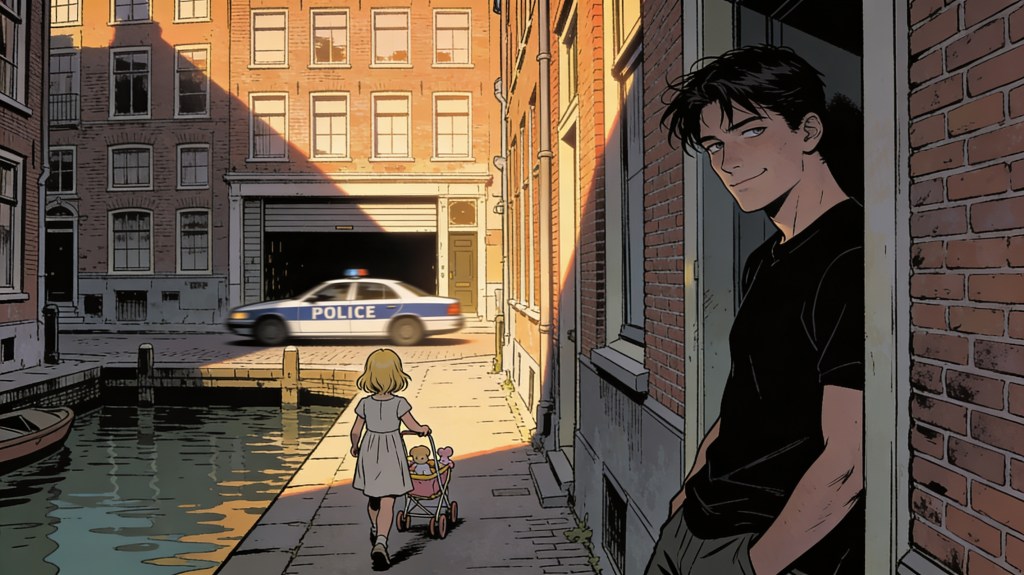
Go on, the smirk said. Be a good girl.
I walked on, pushing the carriage that was now heavy. A police car passed me on the street. I did not look at it. I was four, maybe five, and apparently already someone who did not look at police cars.
He wrote in my poezie album sometime after: Irena is een duivel en een heks. He drew two horns and a broom. I didn’t understand it then. I think he was simply recording what he saw.
I didn’t see him again until I was fifteen. By then, he had grown into the kind of man that casting directors in Hollywood have recently discovered — tall, half-blood, light skin, black sleek hair, eyes slightly slanted, a smirk that had calcified into permanent residence on his face. His father, the quiet Chinese man with the educated fingers, he had left behind somewhere in the architecture of his becoming. He spoke to Black people on the street the way certain Amsterdam men spoke to them then, with a contempt that had no logic to it, just inheritance he’d never examined. The women at de Wallen he treated with something close to courtesy. The heroin girls he did not.
The moral geography was precise. Completely wrong in several directions, but precise.
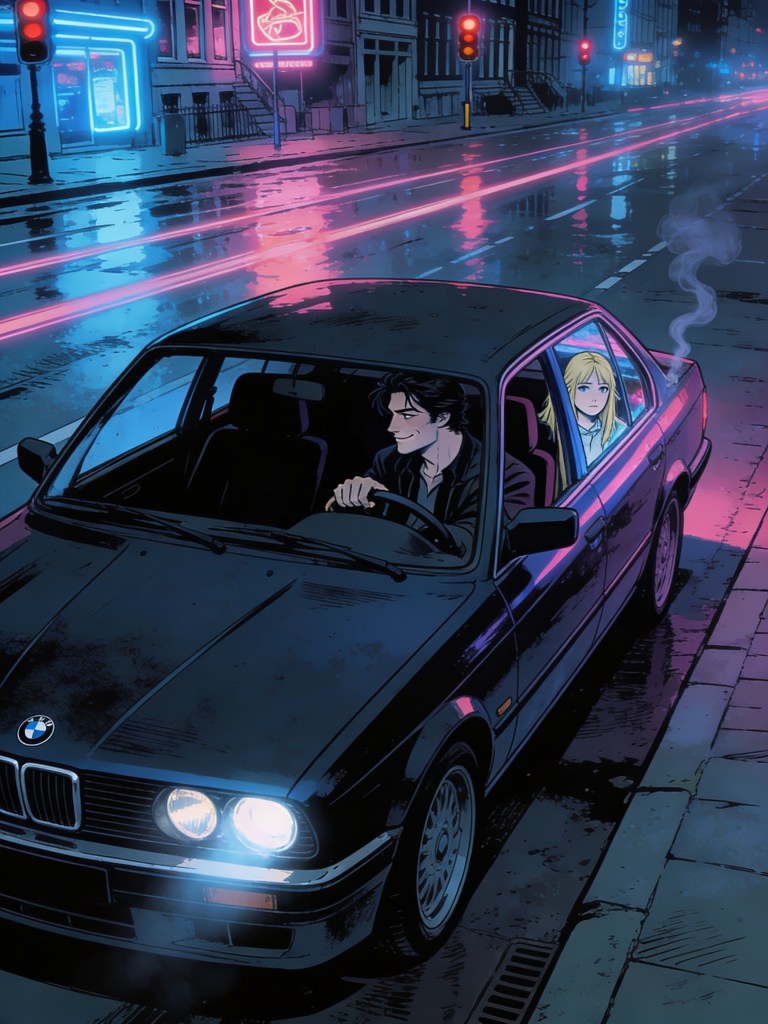
That first evening, he put me in the back seat of a BMW 5 or 7 series — I didn’t know enough yet to know which — with his Dutch girlfriend. His merry band of Dutch friends occupied the other cars. We drove through the city. We stopped, and he got out and received money. We stopped, and he got out and left bin bags. We ate kebabs and went to films and ate in restaurants, and somewhere in between the restaurants and the films, he turned around in the car when we pulled up somewhere and put one finger against his lips.
I said nothing. I had been trained for this since I was four.
When I asked too many times for sweets, he turned around and threw the bag and the candies into my face. Nobody in the car made a sound. I had already understood that love in that register comes with projectiles, and that the correct response to both the love and the projectiles was the same: receive it, say nothing, walk on.
He took care of three men.
The first I recognised driving a taxi. He had done something to me when I was six and my mother had responded by making me apologise to him. Gwan blew up his car.
The second was one of his own, a merry band member who had become obsessed with me and, in order to save his skin, had started collaborating with the police. Gwan blew up his car.
The third refused to leave me be and had put my kittens in the oven. For this one, Gwan came himself, quietly, and drove him to my house to collect his few belongings and escorted him out. No explosion. He had understood the scale exactly.
He never mentioned any of it. There was nothing to discuss. He had seen what I was since I was small enough to push a doll carriage, and he had decided, in whatever way he decided things, that this fell within his jurisdiction.
Then he vanished.
I reckon he met someone with a bigger smirk.
I.Ph.
© 2026 I.Ph. de Lange. All rights reserved. Published by CYcrds OÜ.
 The Memory Cartographer