Chemnitz, Germany: After the Bar
“That is exactly what frightens me,” I said, and was not sure until the doors closed whether I had spoken aloud.”
The Bar in Kaßberg
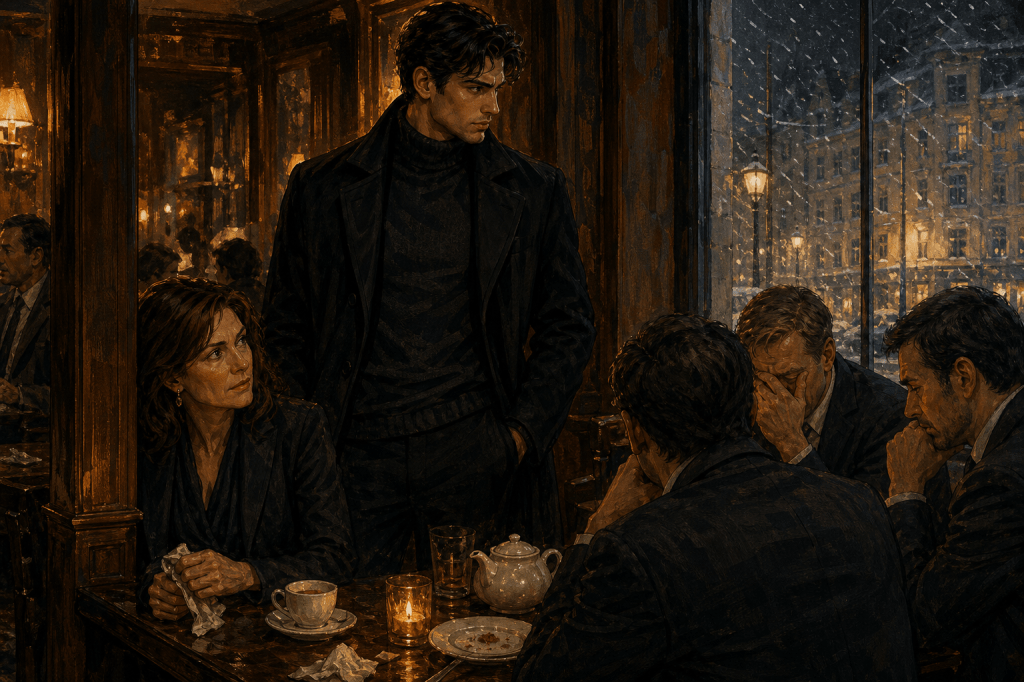
The hotel bar had tried for intimacy and overshot into gloom, which is exactly why I liked it. Low ceiling, dark wood, a brass rail dulled by too many hands. Someone had put candles on the tables, thinking it festive. Mostly they made small theatres of everyone’s faces.
I hadn’t gone there to be seen. A handful of men from the local circle had other ideas. The tone was familiar before the words were — amused, indulgent, already certain of its own conclusion. I’ve sat across from parliaments and border guards without flinching. A provincial bar in Saxony still managed to pin me to the wall.
What Wolfgang Said
He didn’t raise his voice. That was what made the table go quiet.
“You want to laugh at someone,” he added quietly, “laugh at me. I am the one who stepped out of his place. Not her.”
He wasn’t defending me. He was refusing, out loud, to let anyone else write the terms of what stood between us — including me.
Some Silences Filled Voids
We left in silence, breath going up in twin plumes. Chemnitz at night is a study in contrasts: lit windows in Art Nouveau façades, empty tram lines, the dark bulk of old factories repurposed into culture. The city has made a profession out of surviving its own redefinitions — which is, perhaps, why I like it here. It understands the work of becoming something else without pretending the old shape never existed.
In the lift, we stood too close, because there was no other way to stand. A shoulder brushing a sleeve shouldn’t feel like anything at all. Some nights, it does.
The Phone Call
On my floor, I managed a thank you. He told me it was only the truth. I didn’t say what I actually thought, which is that the truth is the most frightening thing anyone has told me in years.
Then the phone rang, the way phones only ring at that hour for one kind of reason, and whatever the evening was about to become got set down, unfinished, exactly where it stood.

Some chapters end mid-sentence. Not every silence gets its ending on the same night it’s earned.
Continue the journey. Start the series here → The European Records
© 2026 I.Ph. de Lange. All rights reserved. Published by CYcrds OÜ.
Author’s Note: Chemnitz
This scene is set in December 2025, while Chemnitz still held the title of European Capital of Culture — a year-long designation the city carried through 2025, handing it on to Trenčín (Slovakia) and Oulu (Finland) for 2026. The trip itself happened: a research visit undertaken as a favour for Mrs H, folded into the fiction the way most of the series’ Zavet and Azad geography is — real place, real itinerary, fictional weather laid over the top.
CYcrds itself is real. CYcrds OÜ is the publishing entity behind these books, registered in Estonia. What’s invented is the university — the fictional research centre inside the story that Elena is attached to, which borrows the name.
I.Ph.

