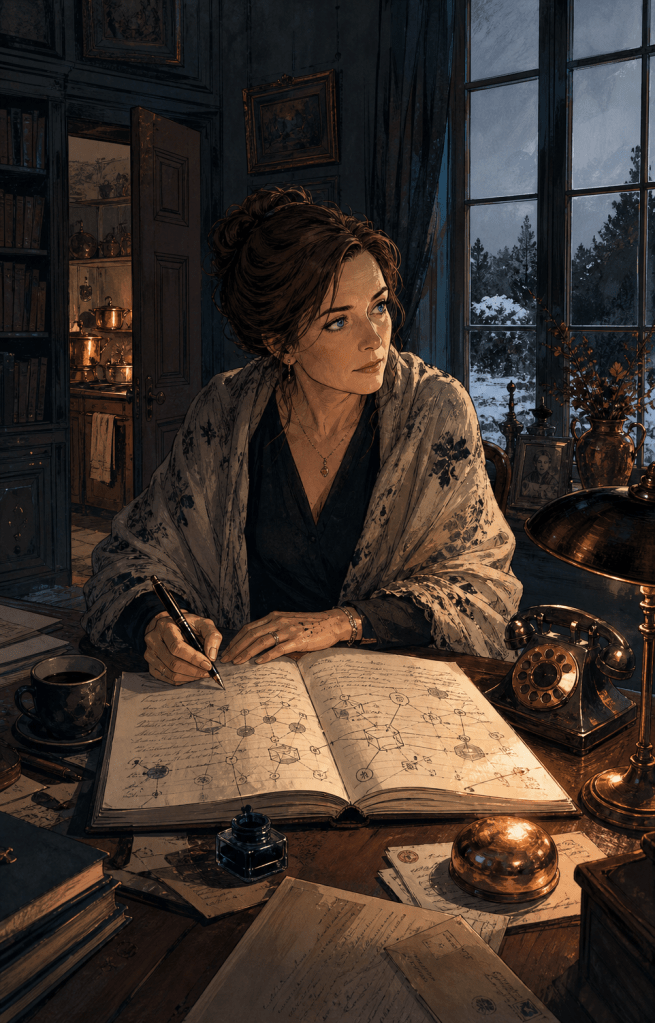
The Desk
Some nights, the house goes quiet enough to hear the pen. Ma’am works from an old machine—copper bell, rotary dial, a ledger that doesn’t care what year it thinks it is. She writes the way she pours: slowly, and only ever giving away exactly as much as she means to.
The Political Ritual
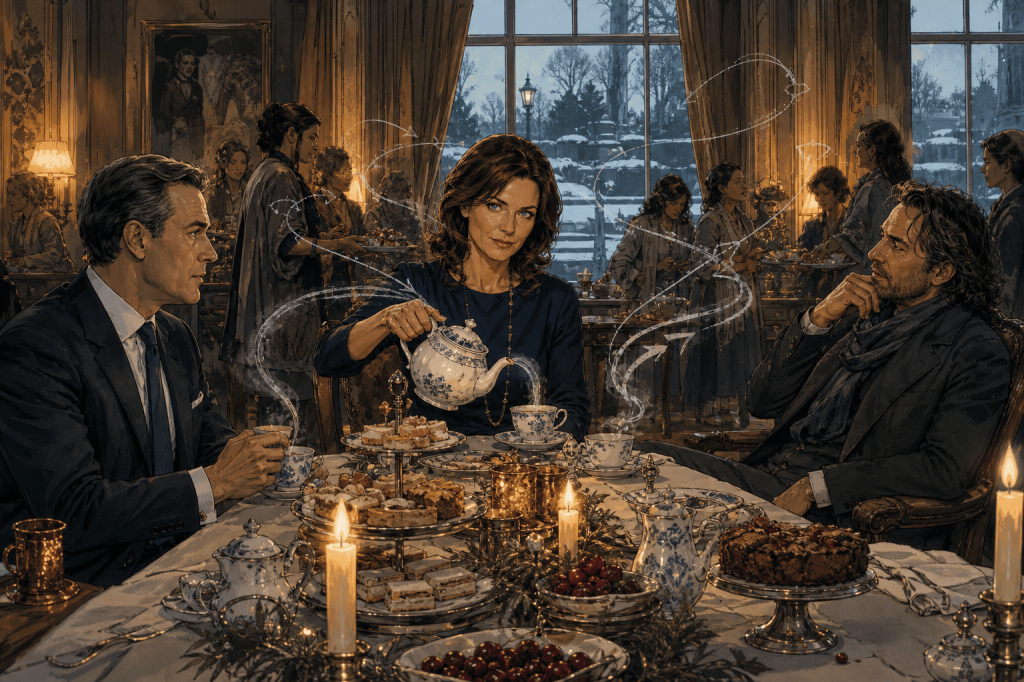
Christmas gave her an excuse to seat a politician and a film director across from each other for longer than either would have chosen alone. She let them talk. She refilled their cups. By the time the plates were cleared, she knew more about both men than either had said aloud—and neither had noticed the asking.
There is a particular kind of power that never has to raise its voice. It only has to keep the pot full.
Continue the journey. Start the series here → The European Records
© 2026 I.Ph. de Lange. All rights reserved. Published by CYcrds OÜ.
Author’s Note
At Overton, tea is never only tea.
It is the room prepared before anyone arrives. The guests seated where they can hear one another. The choice of cup, the timing of silence, the pause before a refill. It is hospitality, certainly—but also attention, negotiation, memory, and the quiet work of learning what people reveal when their hands are occupied.
In Chinese tea culture, cháyì (茶艺), often translated as “the art of tea,” speaks to tea as more than a beverage: its preparation, presentation, aesthetics, and shared social experience. Ma’am’s tea belongs to no single tradition. It is an Overton practice—part household ritual, part diplomacy, part fieldwork.
She does not use tea to make people speak.
She makes room for them to discover that they already have.
I.Ph.

