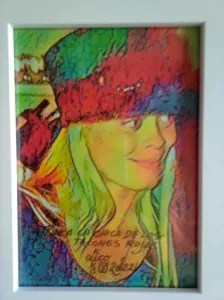
“The last arc ended in water, wings and hooves and two babies born at the edge of the world. This one opens on open grassland, smoke from dung fires, and the wary eyes of people who have no word for archangel but know a god-shaped thing when they see one. Elena and Mikhail arrive in the Bronze Age with nothing but bare skin and too many questions. The series moves on” –
I.Ph.de Lange.

Field Notes — Arc VI, Opening Edit
Elena surfaces inside Mikael’s wings, naked, leaking gold, on grass that isn’t African anymore. The settlement she walks into feels like a Bronze Age fragment: semi-subterranean huts, herds, subsistence, and a kind of communal sleeping that echoes places she has actually worked in — but stripped of anything that looks like comfort.
I wanted first contact to read like fieldwork under shock: the anthropologist’s body knows it’s out of time before her mind admits it. She is still cataloguing smells, textiles, sleeping arrangements, speech sounds, social cues — because that’s what she’s trained to do — while underneath, the realisation is forming that this isn’t “a remote village,” it’s another epoch. The people are reading her body as omen; she’s reading their camp as data, even as she’s bleeding and lactating gold. That double gaze is the core of the book.
Questions I write in my notebook:
— How do you take notes when you are the omen?
— What does consent or ethics mean when you’ve literally fallen into someone’s prehistory?
— How much of what we call “Yamnaya” is deduction from bones and genetics — and what would it do to you to live inside that inference?
I.Ph. de Lange
Companion note to Quantum Jump, a mythic, anthropological speculative sequence in the same universe as The Memory Cartographer
Start the series here →
I’ve woken up in enough strange places, to know what Elena is cataloguing when she lies down between those Bronze Age women.
The smell first. Always the smell. Then the breathing pattern of people who you don’t know but have decided they’re not a threat tonight. The particular weight of a stranger’s arm thrown across you in sleep, entirely unselfconscious. In the tropics it comes with humidity and insects and someone’s baby making small sounds in the dark. Here it’s bone-dry cold and fur and the grumble of someone’s stomach and nothing else.
I wrote that scene and then sat with it for a while.
Because the thing Elena is doing — cataloguing textiles and sleeping arrangements and speech sounds while her body is still in shock — that’s not fiction. That’s the fieldworker’s reflex, but overall a puerpera’s experience, a new mother still inside the shock of birth. You keep noting because noting is the one thing you can control when everything else has dissolved. I’ve done it. You do it until you can’t, and then you do it some more.
What I didn’t expect when I wrote it: the moment it tips. When she realises this isn’t a remote village she’s misread. It’s another epoch entirely. And the catalogue keeps going anyway, because what else is there.
I.Ph. de Lange
© 2026 I.Ph. de Lange — All rights reserved. Published by CYcrds OÜ.
 The Memory Cartographer