Jan ’98
The coast I knew turned green. The disco drum turned to doves.
I put my bikini in a drawer and borrowed a fur coat. I learned the village map like a religion.
My sunny frontline apartment became a big old house from before the war. Empty rooms make loud ghosts.
My daughter stopped speaking. One Dutch word would come out like a pebble. My son—why we left—couldn’t move. Days were cold and long; the village lay flat and low, right on the border where even the air feels like a question.
One afternoon I was loading groceries into the bike basket. The voice landed like a coin: “Nice hat on a nice head.”
I turned.
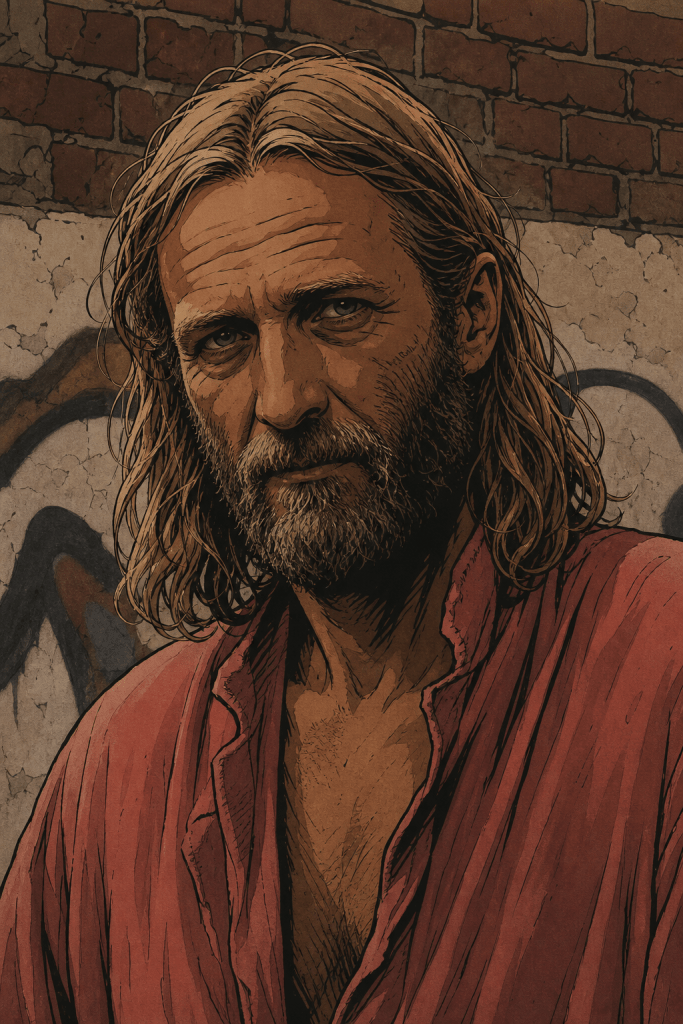
He was all wild blond hair and curls, denim that had bled into every colour, rainboots, a blond beard that made him look like someone’s fever dream of a sailor.
He introduced himself with a certainty that suggested he’d rehearsed nothing and still knew the lines. He told me he already knew I had arrived.
I didn’t know what to do with that. He slotted into his cobalt Renault 4; I pushed off on my granny bike. The village moved past in small grey frames.
That afternoon the front door bell rang—front door bells rarely do here; people come by the back.
I threaded the house, rooms like emptied pockets.
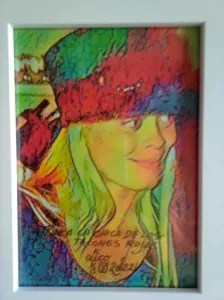
He stood on the stoop holding a large painting. No flourish. No apology.
“I had to put you on canvas,” he said.
The painting was me—true in ways I could not claim for myself. He left the canvas on the floor and walked out as if he’d merely returned a thing that didn’t belong to him.
And so Jan te Wierik arrived: sudden, a bruise of colour in a muted town, the man who announced himself with a painting left on my doorstep.
That was the beginning.
I.Ph.
 The Memory Cartographer