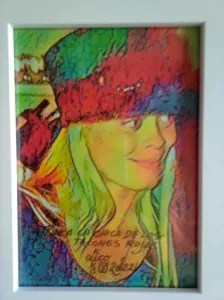
THE MEMORY CARTOGRAPHER — BOOK 0.1
My Law at Their Borders
Etymology, origins, and the before-files
I.Ph. de Lange
Before the memories, there is the woman who carries them.
Book 0.1 — My Law at Their Borders — is the foundation file for The Memory Cartographer series: three fragments from Elena’s life before the fieldwork began, the institutional dossier that watched her leave, and the etymology of every word that matters in Book I.
Read it first. The memories that follow will mean more.
A Note on This Book
Every chapter in The Memory Cartographer series carries a title in the language of where Elena stands at that moment — or in the tongue of whoever is moving through her. This is that book: the words themselves, where they come from, what they carry that translation destroys.
But before the roads, there is the woman who walks them.
Book 0.1 — My Law at Their Borders — is placed here first, not as prologue but as foundation. It is the before-file: three fragments from the life that preceded everything, rendered in Elena’s voice looking back, and in the institutional voice that watched her leave without understanding what it was watching.
Read it, and the roads that follow will mean more.
BOOK 0.1
MY LAW AT THEIR BORDERS
A Before File
Before File · 01 · The High Cage
People ask me how I became an anthropologist. I tell them fieldwork. I don’t tell them about the Herengracht.
The house had five floors and a gardener who reported directly to my mother. He managed the roses — five hundred varieties, she was precise about this — and he was not someone I was permitted to speak to beyond good morning. Neither were the women who cleaned, the driver who waited, or the family two doors down whose children played football in the street. The street itself was borderline. You could see it from the windows. That was considered sufficient.
What they were teaching me, I understand now, was the grammar of ownership. Not the crude kind — no one in that house would have used that word — but the refined sort, which is more durable. How space is organised to signal who belongs where. How posture encodes claim. How a certain quality of silence, maintained across a dinner table, communicates more precisely than any law that some people’s existence is background and others’ is subject.
I was a quick study. This is not a compliment.
On the wall of the first landing hung a portrait of my great-grandmother. Gravin Schaffner with her schnauzer, from the Alsace, severe in the manner of women who understood that severity was the only power available to them. Her daughter — my grandmother — looked at that portrait and apparently decided the whole arrangement was negotiable. She married twice, both times badly by the family’s measure, both times men who had no business being in that house. She was not discussed. The portrait stayed.
I used to stop on the landing and look at the countess and think: your daughter understood something you didn’t. Or perhaps she understood exactly what you did, and simply drew a different conclusion.
I was eight when I copied out the dictionary by hand. Not all of it — my mother was precise, not sadistic — but enough. Fifty pages, because I had arrived five minutes late to dinner. The lesson was meant to be about punctuality. What I learned instead was that punishment, in this world, could accidentally be a gift. I was made to reproduce the instrument of my own freedom.
I finished it in three days. I didn’t tell her it had been interesting. It wasn’t. But it gave me a lexicon that most people I’d later meet did not possess, and a settled contempt for the idea that obedience produces understanding. It produces volume. They are not the same.
Before File · 02 · The Vanishing Authority
She left on a Tuesday. I know this because I came back from school on a Wednesday and her wing was empty.
Not dramatically empty. Carefully empty. The furniture remained — it was part of the house, technically. The paintings were gone, the silver was gone, the Wedgwood service for twenty was gone. What remained was the impression of objects on surfaces. Rings on the sideboard where the candelabras had stood. Pale squares on the walls where the smaller portraits had hung. The large ones she’d left, including the countess, who continued to survey the first landing with her usual equanimity.
On the kitchen table: two spoons, two forks, two knives. A lawyer’s letter in an envelope addressed to my father. The legal minimum. She had, apparently, looked it up.
My father sold the house the following spring. Not in grief — he was not a man much given to grief — but because the scale of it had always been hers, and without her it was simply a problem of maintenance. He bought something smaller, in a village. Sensible. I understood his reasoning completely and found it, at seventeen, unbearable.
What I was mourning was not her. I had understood, in the kitchen, looking at two of each, that she had never been what I thought she was. What I mourned was Swiebertje, who went with the house. And the private forest in Brasschaat I had treated as my own territory since I could walk. And the idea — which I had carried without knowing I carried it — that the world I had been born into had permanence.
It didn’t. Property shuffles. Titles transfer. What you are told is yours turns out to be contingent on signatures, lawyers, the decision of someone else to leave on a Tuesday.
The question arrived fully formed, the way the important ones do: who owns what, and why? Who decided that a line on a document meant the earth beneath it belonged to a person rather than to itself?
I didn’t have an answer. I had, for the first time, the right question. In my experience, that’s worth considerably more.
Before File · 03 · First Treason
The plane to Benidorm cost less than the silver spoons she left behind. I know because I sold two of them to buy the ticket.
I carried one suitcase because anything more would have been a negotiation. I was eighteen. I had a secondary school certificate, four languages, a body trained by fifteen years of ballet and tennis and hockey, and an absolute clarity that I was not going to perform the life that had been constructed for me.
At the airport, my passport opened doors like a key. I stepped into the priority lane out of habit, even though every part of me wanted to stand with the families in the regular queue. Ownership has a stance; you can spot it in posture. I straightened mine anyway. I was raised fluent in hypocrisy.
The border guard barely glanced before stamping my exit. Behind me, a man with the wrong passport was sweating under lights, reduced to three questions about money, address, and purpose. I dropped my boarding card; when I bent to retrieve it, I let a folded note slide toward his shoe. A name, a number, a door off the map.
A small act of treason. The most honest thing I’d done in years.
Benidorm was not, as my great-aunt Didi, the baroness would have said, a serious destination. This was precisely why I chose it. I had spent eighteen years in serious destinations. I wanted somewhere the rules were openly provisional, where nobody expected refinement, where I could think.
I thought for three years. Then I enrolled in anthropology.
The rest is fieldwork.
COMC / FILE 07-Δ / CROSS-REFERENCE · RESTRICTED
Fragment recovered from the Amellal Trust Heritage archive. See Book II
SUBJECT: [REDACTED] Classification: Asset — Independent Moral Framework / High Adaptive Value Origin: Netherlands, documented aristocratic lineage Education: Elite institutions; competitive athletics; advanced humanities
Subject demonstrates consistent pattern of self-legislated conduct. Operates within institutional frameworks when convenient; exits them without apparent conflict when they cease to serve. No observable guilt response to either. This is not opportunism. It is a settled value system that predates and outranks the systems she moves through.
BEHAVIOURAL OBSERVATIONS:
Subject inherited significant material wealth and discarded it without hesitation when it ceased to align with her trajectory. This is not rebellion — rebellion still orients itself against the thing it rejects. Subject simply reassigned the hierarchy. Her own judgement sits above property, title, and inherited obligation. She is not anti-establishment. She is post-establishment, which is considerably more useful.
Interaction with institutional authority is fluent and untroubled. She passes through border controls, elite social structures, and bureaucratic frameworks without friction — not because she respects them but because she understands them completely. Comprehension without deference. This combination is rare.
PRELIMINARY ASSESSMENT:
Subject’s moral framework is internally consistent, cross-culturally portable, and resistant to coercion by conventional means — financial leverage, social pressure, and appeals to authority have no observable purchase. She cannot be bought or shamed into compliance. She can, however, be interested.
RISK / OPPORTUNITY:
Subject’s insight into elite structures combined with her rejection of their underlying logic makes her an unusual instrument. She will not follow orders. She will, under the right conditions, pursue objectives that align with her own values — and pursue them with the full fluency of someone raised inside the systems she has since left behind.
NOTE: File remains open. The above assessment was accurate at time of writing. What it failed to anticipate was the scale of her adaptability. Subsequent movements have required significant revision of our projections.
BOOK I
THE EUROPEAN CHRONICLES
What follows are the words that matter in Book I — some carried as titles, some surfacing in the text itself. Their roots, their weight, what the surface doesn’t show.
‘A Tesa | The Brim
In Naples, the wide-brimmed hat was never merely fashion. The tesa — the brim — served as a tool of discretion, a portable privacy in a city where everything happens in public and everyone watches. To pull your brim down was to signal: I am here but not available. A boundary worn on the head.
The pamela Elena wears to La Fontana delle Zizze that September evening is black on the outside, red on the inside. Nobody sees the red but her.
‘Sí ancora ‘na guaglia | You are still a girl
Guaglia — or guagliona in its fuller form — is Neapolitan dialect for girl, young woman. Not Italian. Neapolitan, which is its own language, not a dialect of convenience, carrying centuries of the street, the market, the kitchen, the bed.
Said in that particular moment, it is not a comment on age. It is the opposite — an undoing of it. A young man looking at a fifty-year-old woman and seeing not the years but the aliveness underneath them.
The red inside the black.
The White City
White City, in west London, takes its name from the gleaming plaster exhibition halls built for the Franco-British Exhibition of 1908 — a showcase of empire, progress, and civilised order. What the official histories omit is what stood there before: a stretch of open common where Romani Travellers camped, traded, and moved by their own calendars, answerable to no landlord and no borough council.
The exhibitions came and went. The BBC moved in. The common was paved and built over and forgotten, the way cities forget whatever stood before the version they prefer to remember.
The area is known today as Shepherd’s Bush. The name predates the exhibitions by centuries — its origins obscure, as the origins of working people’s places tend to be. The most persistent account has shepherds resting their flocks on the common en route to Smithfield Market, an ancient hawthorn bush pruned into a shelter against the weather. The drove road, the common, the bush. All of it gone now except the name.
Roger Boswell’s people were there before the white plaster. They remember the common. They remember what it was before someone decided it was available.
Šta je ne koliko sati | What Are A Few Hours
Serbs have a particular relationship with time. Not careless — unhurried. The country has survived empire after empire, occupation after occupation, and has learned that urgency is often someone else’s agenda. Šta je nekoliko sati — what are a few hours — is not an expression of indifference. It is a measure of proportion. Of knowing what actually matters against the long scale of things.
Elena arrives in Novi Sad running on London time. Novi Sad has other ideas.
Košulja i Mastilo | Shirt and Ink
What you see first. What you cannot unsee.
Otpor | Resistance
Otpor was the name of the student movement that brought down Slobodan Milošević in 2000. Founded by university students in Belgrade, it used non-violent civil disobedience, humour, and street theatre to mobilise a population exhausted by war and authoritarianism. The clenched fist became its symbol — printed on stickers, spray-painted on walls, worn on t-shirts across Serbia.
EXIT Festival grew from that same impulse — music and freedom as acts of defiance at the Petrovaradin Fortress.
The graffiti in the tunnels beneath the fortress is otpor too. So is building something that can’t be copy-pasted.
Uncle Vanya
Although not Serbian, Uncle Vanya has had a permanent place in the repertoire of the Serbian National Theatre in Novi Sad since the nineteenth century — part of the deep cultural current that runs between the Slavic worlds, where Chekhov’s particular understanding of longing, wasted years, and the quiet devastation of misplaced loyalty translates without friction.
Anton Chekhov’s 1897 play circles one question without ever answering it: what do you do when you realise the life you sacrificed everything for may not have been worth the sacrifice? Vanya has given his best years to supporting a man he now sees as mediocre. The work was real. The dedication was real. The betrayal — quiet, structural, nobody’s fault exactly — is also real.
In Novi Sad you can see Uncle Vanya in a theatre that has survived two world wars, NATO bombing, and the slow erosion of everything the city was before. Vanya is still there, sitting in his chair, asking his question.
What do you do when you realise the life you gave everything to may not have been worth the giving?
Chekhov doesn’t answer it. Neither does Elena. But she knows exactly how the play feels from the inside.
Snus
A smokeless tobacco product originating in Sweden, placed under the upper lip rather than chewed or smoked. Widespread across Scandinavia and quietly present in parts of Eastern Europe. Discreet, habitual, slightly antisocial at dinner tables.
Marko’s small secret. Solved eventually.
Benediction | noun | Latin: bene — well, good; dicere — to speak, to say
To speak well of someone. To bless them with words. To send them forth.
In Italian tradition, the kiss pressed to the forehead carries a different weight entirely — the bacio della morte, the kiss of death. Not violence but finality. The gesture that closes the account. Judas understood this. So, perhaps, did Marko.
The benediction and the death kiss are the same motion. One hand cupping the face. Lips to the forehead. Eyes that already know what the other person does not yet.
The blessed rarely understand, in the moment, that they have been released.
Speakeasy | noun | American English, circa 1880s | speak — to talk; easy — quietly, carefully
The instruction was practical: if you wanted illegal liquor, you spoke easy. Kept your voice down at the door. Didn’t announce yourself. The word itself was the survival manual.
During American Prohibition (1920–1933), an estimated 30,000 speakeasies operated in New York City alone — more than double the number of legal bars before the ban. They existed everywhere and nowhere simultaneously: behind laundries, below restaurants, inside respectable brownstones. You had to know someone who knew someone. The door that looked like a wall. The wall that was actually a door.
Some places refuse to be known. That is the point of them.
Tattoo | noun | Dutch: taptoe | tap — tavern tap, barrel; toe — shut, closed
A drum signal. Nothing more, initially.
In the seventeenth century, Dutch garrison towns ran on a simple nightly order: when the drumbeat sounded taptoe, the tavern keepers shut the taps. Soldiers heard it and knew — drinking was over, return to barracks, the night was closing. The British army adopted both the practice and the word, corrupting taptoe into tattoo, and turned it into the elaborate military ceremony of drums and pipes that still fills stadiums today.
Somewhere in the long history of sailors and soldiers, the word migrated from the drum signal to the ink. Men far from home, moving between ports and campaigns, marked their skin — dates, names, coordinates, symbols of what they wanted to carry and what they needed to remember. The body as the only reliable archive.
Marko’s tattoos were exactly this. Not decoration. A record. Elena’s eyes, rendered permanently between his left pectoral and shoulder — the taptoe sounded, the tap shut, but the ink remained.
The Dutch gave the world the word. Amsterdam’s daughter recognised it on a stranger’s skin in a London club, and didn’t yet know what it meant that he was already carrying her.
Labyrinth | noun | Greek: labyrinthos | origin disputed, possibly pre-Greek Minoan | labrys — double-headed axe
No one agrees on where the word comes from. This is appropriate.
The oldest theory connects it to labrys, the double-headed axe that appears everywhere in Minoan Crete — on frescoes, on palace walls, on the seal stones of a civilisation we still cannot fully read. The labyrinth, on this reading, was the house of the double axe. The palace at Knossos itself, with its hundreds of interconnected rooms, its staircases that lead sideways instead of up, its corridors that return you to where you started — this was the labyrinth. Not a puzzle built to contain a monster. A building so complex it became its own myth.
The Minotaur came later. Every labyrinth eventually gets a monster assigned to it — something to justify the walls, explain why you cannot leave, make the confusion feel intentional rather than architectural.
Witching Hour | noun | English, circa 1535 | wicce — Old English, female sorcerer; wicca — male sorcerer
Midnight. The hour when the membrane between the living and the dead grows thin enough to push through.
The Church was specific about this. The witching hour was not poetic — it was a designated threat window, the period between midnight and 3am when demonic activity peaked and Christ’s crucifixion at 3am cast its longest shadow backwards through the night. The Inquisition kept records. Confessions placed sabbaths and conjurings consistently in this narrow band of darkness. Whether this reflected genuine belief, the psychology of sleep deprivation and fear, or simply what happens when you ask people under torture to confirm your existing theology — the hour acquired its reputation regardless.
In practice, the witching hour is the moment a night changes register. Before it: sociable dark, music, the performance of being out. After it: something rawer, less governed, the crowd thinned to those with nowhere else to be or no reason to leave. The disc jockey at 54 Berwick Street understood this precisely — disco until midnight, then the gears shift, house and techno, sharper edges, a different kind of permission.
Elena crosses that threshold with Marko. What happens in the club bathroom happens in witching hour territory — after the rules have quietly changed, before the night has to account for itself.
The Church was right to be specific. Things that happen between midnight and 3am belong to a different jurisdiction.
Bravado | noun | Spanish/Italian: bravata | bravo — bold, fine, worthy of applause
A performance of courage. The operative word being performance.
Bravo began as genuine praise — the actor who earned it had done something worth seeing. Bravata was its shadow: the show of boldness without the substance, the swagger that fills the space where nerve should be.
Ross hesitates. Daryl’s hands twitch. Marko says four words softly and both men back away. No bravado. No performance required.
The ones who have it never need to show it.
Takotsubo | noun | Japanese: たこつぼ | tako — octopus; tsubo — pot, trap
A traditional Japanese fishing trap, narrow-necked and round-bellied, designed to lure octopus inside and hold them there.
In 1990, Japanese cardiologist Hikaru Sato noticed something in patients presenting with apparent heart attacks following acute emotional distress — grief, shock, sudden loss. The left ventricle, under the assault of stress hormones, had changed shape. Ballooned at the base, narrowed at the neck. On the scan it looked exactly like the trap.
The heart, it turns out, does not speak in metaphor. It speaks in geometry. Emotional devastation has a measurable shape, a clinical name, an entry in the medical literature. You can see it on a screen. You can watch it happen.
Most patients recover. The ventricle returns to its normal shape once the acute distress passes.
Mostly.
Author’s Note
I was born on the Herengracht, Amsterdam. I left at eighteen with one suitcase and two silver spoons.
What happened in between — the grammar of ownership, the portrait on the landing, the dictionary copied by hand as punishment — shaped every question I would spend the next thirty years asking in the field. Who owns what, and why. Whose memory gets preserved and whose gets paved over. What language carries that no translation survives.
This book is the foundation. The roads begin on the next page.
I.Ph. de Lange
Costa Blanca, 2026
© 2026 I.Ph. de Lange All rights reserved. Published by CYcrds OÜ

