
Istanbul: 72 hours ago
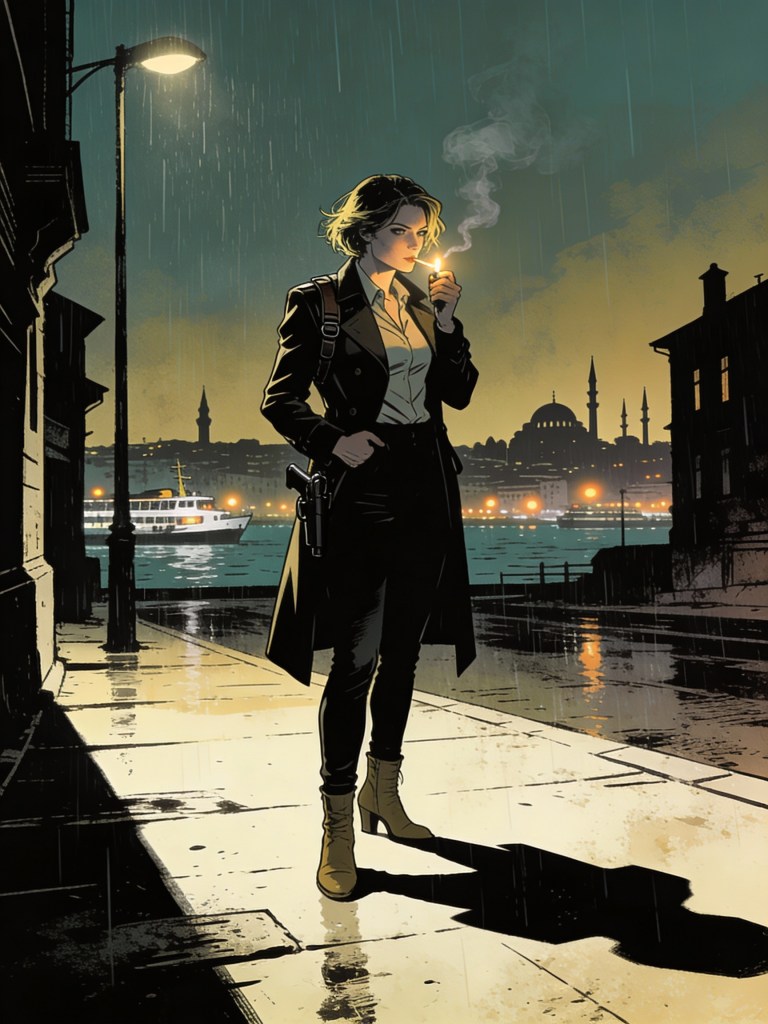
Sandi felt the pulse of Istanbul, its call to prayer echoing through the alleys as the city’s night took on a spectral glow.
She was ostensibly a buyer, working for Tarmo’s shipping interests, but below the surface: she was tracing Turkey’s quietly intensifying maneuvers in Africa, missions that stretched beyond logistics into the labyrinth of soft power and clandestine alliances. Erdogan’s Africa strategy: shadowed by rivalry with the Gülenist movement and the geopolitics of aid and education, had opened new but dangerous currents in the Ankara-Dar es Salaam corridor.
Bartek, her Polish lover, lingered at her side, his fingers brushing against hers as he tried, for a third time that week, to speak of marriage.
“After this, when you’re done with Tarmo, come to Warsaw. I want to show you the river in spring. Let’s build something new.”
But Sandi, haunted by dust-clouded rallies in Nairobi and whispered warnings from Turkish diplomats, kept herself distant, unable to promise anything except uncertainty.
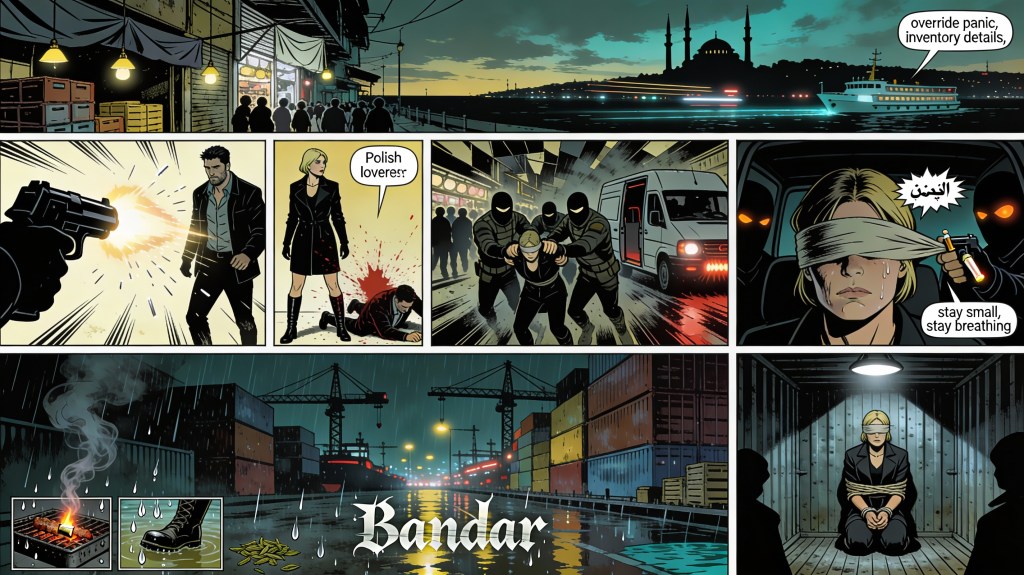
Their contact, a wiry fixer with a stubble-lined jaw, had arranged a twilight meet at an abandoned wholesale bazaar beside the Golden Horn. Sandi and Bartek waited in the flickering light. The fixers arrived, clutching envelopes marked in two languages. As Sandi reached for the documents, the world fractured: a gunman, face blurred by the streetlight, drew a pistol. The report was sharp, almost subdued: a single shot.
Bartek collapsed, blood saturating the stones, his last words for her choked out amid the echoing footsteps of retreat. Sandi tried to reach him, but hands closed on her shoulders—another group, masked, efficient. In seconds, she was spirited away, forced into a van as the bazaar’s shadows folded around her. She glimpsed Bartek’s body in the rear window as Istanbul reeled, the city’s silence now monstrous, her mission and the memory of his gentle proposal ripped to shreds.
She clawed for breath, half hoping Tarmo could orchestrate her escape—half cursing him for sending her into a net woven from politics, trade routes, and the bruised promise of Turkish-African partnership that turned out to be far darker than anyone at the shipping office had realized.
Blindfolded and sore from the interrogations, Sandi sits wedged between two silent men as the vehicle rumbles across Istanbul’s waking streets. The cloth over her eyes makes the sounds sharper: the throb of distant traffic, a mosque’s call blending with overlapping voices in Turkish and Persian, laughter from a radio, the drone of old engines. She feels each bump multiply her bruises. Sardined against the window, she notes the waiting, the corners, the metallic tang of sweat and cigarette smoke—traits of men who have done this before.
The van stops and starts again. She picks out the scratchy static of police radios, the click of guns checked and unholstered. Through vents comes the city’s night air, laced with the sharpness of petrol, faint overtones of grilling meat, cardamom, incense, and yesterday’s rain, mingling with the exhaust and spices unique to Istanbul’s arteries. Somewhere, someone mutters in an Azerbaijani accent, the word “Bandar” barely audible—an unwelcome hint about her next destination.
Her wrists burn against zipties. The rough hands that lift her into the hold of a new vehicle are impatient, unkind, the breath of her captors reeking of raki and stale bread. Someone eats near her—crumbs, maybe nutty simit from dockside vendors. Language shifts again; now Farsi swells in the enclosed space as the city’s urban hum gives way to the rattling microcosm of a shipping container.
Through it all, Sandi anchors herself with the mantras drilled into her by SUPO: stay alert, collect details, inventory senses over fears. Every sound, every smell, every inconsistency is a clue. “Override panic,” she repeats silently.
“Observe, endure, count heartbeats.”
The cold iron of intelligence training helps her lock away pain and keep her mind disciplined, cataloging everything for the moment she might turn it to survival. No fear—only information and the will to stay human, even as the city gives way to the darkness and she senses, by the smell of diesel and brackish water, that she’s being shipped out, destination Iran.
I.Ph.
 The C.O.M.C. Files