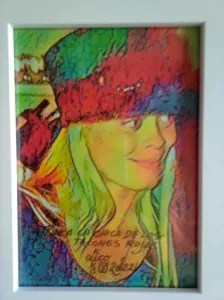
I found Ciro at dawn, sitting by the Fontana delle Zizze with his sketchbook, drawing the same Siren over and over as if trying to capture something that kept escaping.
“I’m sorry,” I said, settling beside him on the stone steps.
“For what? Being right?”
“For being cruel about it.”
He closed the sketchbook and looked at me with tired eyes. “You want to know the truth? The whole truth?”
“Yes.”
“I did notice you because you looked like someone with money and connections. Foreign woman, expensive camera, staying at a nice hotel—you were exactly the kind of person I thought could help me.”
The admission stung, even though I’d expected it.
“But,” he continued, “that stopped mattering after the first day. You could have been as poor as I am, and I still would have followed you around Naples like a lost dog, not for the stories themselves, but for the way you told them. The way you see this city, how you weave memory and myth, how you make even dead shoemakers and ancient sirens feel alive. You made me fall in love with Naples all over again…and with you.”
“Why?”
“Because when you spoke, I saw the city—and myself—through new eyes. You made me remember that history isn’t just something we inherit, it’s something we live. You made me want to be more than just someone surviving here. You made me want to understand, to belong, to become someone worthy of the stories you tell.”
I pulled out my chequebook—an old-fashioned thing that always amused younger people. “How much?”
“I told you, I don’t want your money.”
“And I told you, that’s not what I’m asking.” I wrote out a sum that would cover art school, proper supplies, and a small studio. “This isn’t payment for services rendered. It’s an investment in talent I believe in.”
Ciro stared at the check. “Why?”
“Because fifty years from now, when you’re famous and I’m dead, maybe someone will write about the summer an old English woman helped launch the career of Naples’ greatest artist.”
“I’m not that good.”
“You could be. With the right chances.”
He folded the check carefully and put it in his pocket. “This doesn’t make us even,” he said.
“No. It makes us honest.”
The Siren continued her eternal flow, water streaming from stone breasts into the basin below. According to legend, her beauty had saved Naples from the destruction of Vesuvius. I understood now why the myth persisted. Some stories are too necessary to die, even when everyone knows they’re not entirely true.
I thought back to the first day I saw him. He was with his friends—a big blond guy with blue eyes tried to get my number, pretending it was about a Spotify playlist. But Ciro didn’t say a word. He just watched me from across the Piazza, waiting. He didn’t flirt or make a move. He waited until I was alone, standing there silently, until I couldn’t ignore him anymore.
“Will you write about this?” Ciro asked. “About us?”
“Probably. But I’ll change the names, make it fiction. No one will believe it really happened anyway.”
“Why not?”
“Because real life is messier than people want their love stories to be. Real love is part transaction, part miracle, part delusion. People prefer their romance to be pure.”
Ciro laughed—the first genuine laugh I’d heard from him in days. “And you prefer yours complicated.”
“I prefer mine true.”
We sat in comfortable silence as Naples woke up around us—vendors setting up stalls, old women heading to early mass, the eternal dance of a city that had survived everything from Vesuvius to the Nazis to municipal corruption and somehow kept believing in miracles.
“In the Smorfia,” I said, “what number is loving someone you can’t keep?”
“Seventy-seven,” Ciro answered without hesitation. “The devils that tempt us.”
“And helping someone you care about succeed without you?”
He thought for a moment. “That’s not in the Smorfia. That’s something new.”
I didn’t know what to say. I’d sensed that about him, this fragile, fleeting thing inside him. He was so young, but there was something old in his eyes, as if he carried a lifetime of sadness and still somehow stayed pure.
“I remember that time you told me, you said
‘Love is touching souls.’
Surely you touched mine
’Cause part of you pours out of me
In these lines from time to time.”
Epilogue: The Lottery of Memory
“We are all just stories in the end.”
— Doctor Who (Steven Moffat)
Back in London, I turned my research into material for CYcrds™ and a lecture about Naples’ hidden treasures. But I never wrote about Ciro, never shared the most crucial story I’d discovered—until now, five years later, realising that the world needs romance and culture in equal measure, and that even at fifty, you can still surprise yourself.
Six months later, I received a package with an Italian postmark. Inside was a small canvas showing La Fontana delle Zizze exactly as it appeared on that first September evening, painted with the kind of skill that comes from seeing something truly. On the back, in handwriting I recognised:
“For the woman who taught me that the best stories are the ones we live ourselves. The Siren remembers. —C.”
In the Smorfia, I discovered that finding unexpected love at fifty is number 90—the fear and the ecstasy, the ending that becomes a beginning, the story that writes itself into memory and refuses to fade.
Naples had claimed another love story, adding it to the countless others that lived in every fountain’s splash, every ancient wall’s shadow, and every star that fell over the Bay like a blessing from Parthenope herself.
What we shared was never a mere interlude. It was real, shaped as much by circumstance as by desire. He needed a hand to rise in his art; I needed to remember I could still be moved. Our love was not less pure for being brief, nor less true for needing to end.
Some stories, I realised, are too beautiful to regret—even when they end exactly as they must.
I did not leave because love was lacking—what we had was real, sacred even—but because we both deserved to follow our own paths. He would find his way, and I would travel onwards, carrying the memory of that holy summer while answering what has called me since childhood: the thrill of discovery, the way meeting new cultures lifts the very fabric of life. I am an anthropologist at heart, not just in theory but in practice. Novi Sad waits, and with it, another chance to experience the world the way I always have.
“Where every ending is just another number drawn, and every love a chance worth taking“
May our soulmates find us,
Irena Phaedra
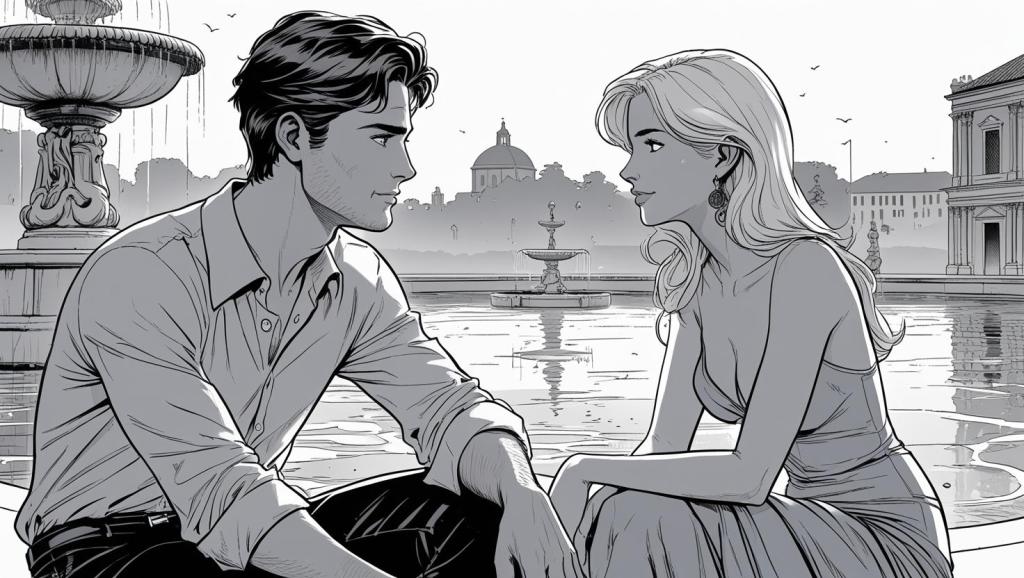
 The Memory Cartographer