
from one woman crossing borders to all of you
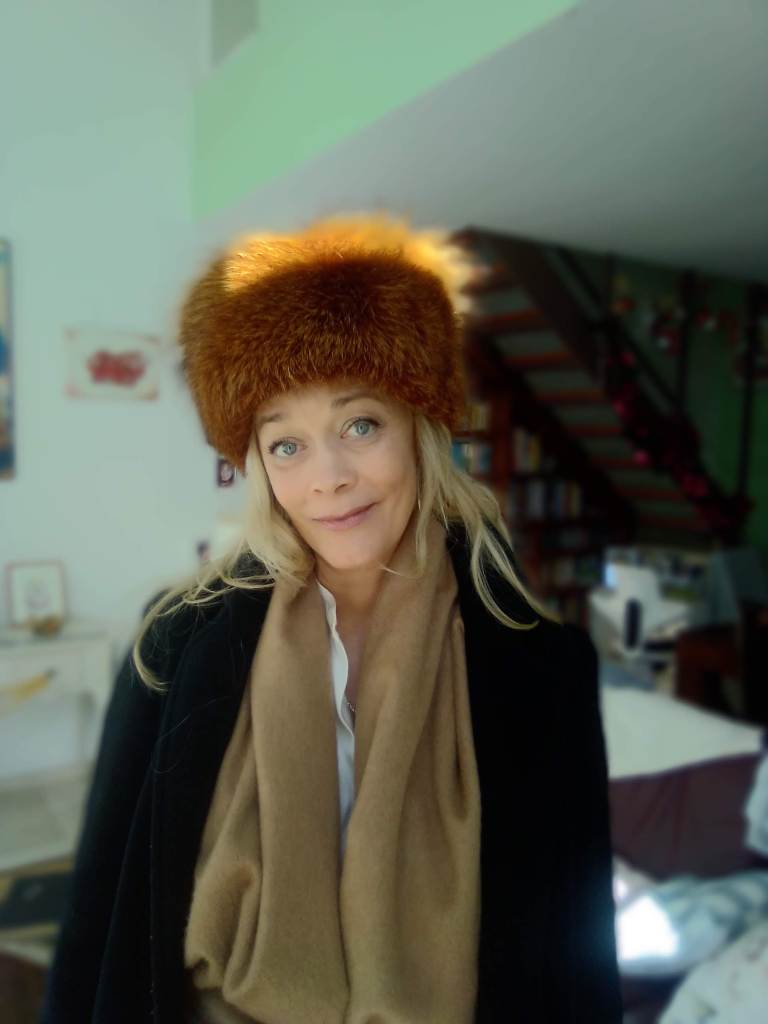
Dear sisters, friends, strangers-who-feel-familiar,
I have crossed many frontiers in my life. Most of them were man-made. I lived by my own rules.
For years I thought this letter belonged only to Russian women. I wrote it with their faces in my mind: ballerinas who escaped, waitresses who held three jobs, students who crossed borders at night and still showed up to life with eyeliner straight and back unbroken.
But the more the world burned and shook, the more I realised: their story is not an exception; it is a mirror. Ukrainian women resisting invasion, Sahrawi women in exile, women in Narva between languages, women in Gaza, in Congo, in favelas and suburbs and refugee tents—everywhere I look, women are doing the same impossible thing: holding life together while power plays war and business with their futures.
So today, on my birthday, I am widening the address line.
This is no longer just “A Letter to Russian Women.” This is a letter to women standing at any frontier—political, economic, intimate.
This is for you, who know how to read propaganda in every language and still find the truth between the lines. Who carry children, elders, documents, and groceries through checkpoints, divorce courts, bankruptcies, blackouts. Who negotiate with landlords, soldiers, bosses, algorithms, and sometimes with your own fear. Who have rebuilt after collapse so often that “crisis” now feels like a season rather than an event.
I have watched you since 1992. In Russia, in Europe, in border towns and in big cities that pretend they have no borders. I have seen you work, love, sell, study, cross rivers illegally and moral lines reluctantly. I have watched you become the invisible infrastructure that keeps everything from falling apart completely.
Here is what I believe now.
The world as it is has been largely designed by men who love vertical power—thrones, titles, ranks, pipelines, frontlines. Women everywhere have mastered a different architecture: horizontal power—conversations, kitchens, mutual aid, group chats, classrooms, care networks. When regimes, markets, or climates crack, the vertical structures tremble first.
The horizontal ones quietly decide who eats, who learns, who survives, and who still believes in tomorrow.
This letter is not a manifesto. Manifestos age badly. It is also not a “project,” “programme,” or “plan”—those are words that belong to funding cycles and press releases.
I want a different word.
In Russian there is a term: zavet—a covenant, a testament, a promise that outlives the moment it was spoken.
So this is what I am asking you, wherever you are reading me. Let us think of ourselves as part of a quiet Women’s Covenant—not registered, not branded, not owned.
No logo. No membership list. Just an inner decision: that we will not go back to the same hamster wheel every time the men finish crashing the system; that we will, as far as we can, build a track of our own, made of the things we already control—stories, skills, relationships, local knowledge, stubborn care; that we will be faster than the oligarchs, warlords, tech bros and petty tyrants when the next vacuum of power opens—not with guns, but with ready-made bridges, schools, networks, safe houses, platforms.
For some of you, this covenant will look like running a local shelter, classroom, clinic, kitchen, or community centre that no government planned for but everyone relies on—or moderating an online group that shares real information in a sea of lies, or holding space for girls, queer youth, migrants, elders to speak without being punished for it.
For others it will be drafting laws, policies, and budgets with women in mind; sitting at negotiation tables and refusing to let “peace” mean only the silence of the beaten; funding women’s work the way war and extraction are funded now. For many, it will be quieter: refusing to pass on fear as destiny, letting your daughter, your son, your friend see you say “no” to what breaks you, remembering names and stories that would otherwise be erased.
You do not need permission to be part of this covenant. You also do not need to be heroic. Some days the bravest thing is simply to rest without calling yourself lazy.
All I ask, on this birthday of mine, is this.
When you scroll past horror, do not let numbness be the last feeling. When you feel small, remember that most of what keeps this world habitable has always been done by “small” people in unglamorous places. When you think “someone should do something,” allow the possibility that you are already someone, and you are already doing something—and that connecting it to others multiplies its power.
If this letter reaches you in a moment of exhaustion, take it as a hand on your shoulder—not to push you harder, but to remind you that you are not the only one holding the line. If it reaches you in a moment of strength, use that strength to check on one other woman who has less of it today, to share skills, money, time, or just listening, to link your small piece of track to hers.
I don’t know when the next gate will open—the next collapse, the next election, the next war, the next chance. I only know this: I want us to have already started walking in another direction when it does.
From Narva to Nairobi, from St. Petersburg to São Paulo, from Gaza to Groningen, from village to megacity, from border to borderless suburb—we are already there, scattered and working.
Let’s dare to see ourselves as part of the same quiet, global covenant of women.
With love, respect, and stubborn hope, from one frontier-crossing woman to all of you.
Irena Phaedra de Lange
If this speaks to you, share it with one woman who is holding a line you respect.
That’s how covenants travel—silently, hand to hand.
 The C.O.M.C. Files