
The Chronomancer and the Twins of Time
The truck hits a pothole, jolting all of us so hard my teeth clack together. My eyes blaze—not with fear, but a kind of scorched indignation, as if getting kidnapped is just another workplace hazard that’s finally tipped me over the brink of career fatigue. Shadows flick past: the outlines of men with scarves hiding faces, battered rifles glinting when headlights catch them. The driver spits out sharp commands in Hassaniya—I can’t quite catch the words; someone else snaps orders in French to the rest.
My mind reels, clutching at fragments. The storm, the car door yanked open, a gloved hand slammed over my mouth, arms like iron clamping my chest. The sting at my neck—a needle, surely—and then nothing but blackout.
Now the world is grit and dread and questions without answers. I force myself to think: What had Karim seen? What would he do? I flex my wrists against the rough bindings, slow and careful, trying not to draw attention, heartbeat pounding in my ears.
The truck lurches to a stop. Barked voices. One of the men laughs—a nasty, familiar sound. Bleating in the distance: goats. Not a city, then. Desert camp, somewhere out in the Sahel. I brace myself, mind rifling through every cheat‑sheet phrase in negotiation, every desert dialect scrap I’ve crammed over the years. I won’t just fold into the role of victim. Not here—not ever.
Night slides in, swallowing the last scraps of dusk. Somewhere beyond the sand and distance, I know only this: I have to survive, and somehow, I have to find Karim—even if the world has stretched out into a desert without edges.
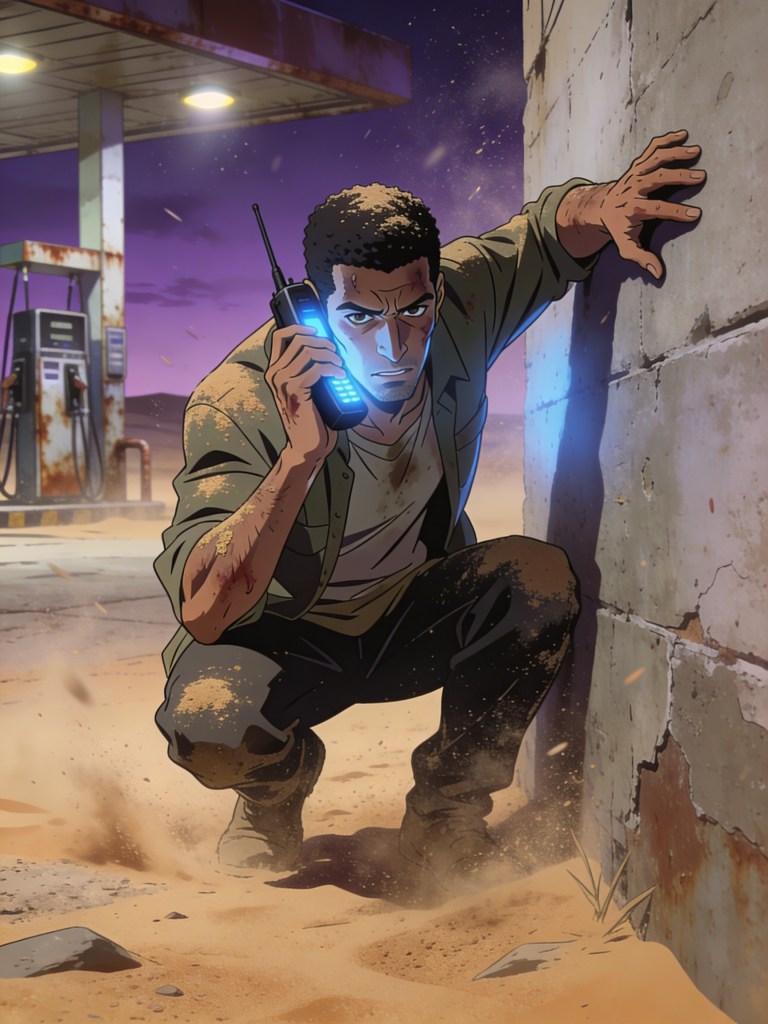
Karim, dazed and filthy, crouches behind the battered station wall. His hands shake as he digs out the satellite phone.
“Hasna—it’s Karim. Elena’s been taken. North of Tichit, Sahel corridor. The storm hit, there were hours of tracking—this was planned. I need backup now.”
Hasna clicks into focus, voice brisk even in the dead hours.
“I’ll alert the police, but if it’s the Tellil gangs, we need more. I’ll call Tarmo.”
Hargeisa, hotel shadows, the clink of glass. Tarmo’s unpacking is interrupted by Hasna’s terse message.
“Elena’s missing—likely Sahel traffickers. Sandi can reach the right contacts on both sides. Move.”
He moves—swipes a hotel key from the silent receptionist and unlocks Sandi’s door. The scene inside halts him: laughter, the tangle of sheets, Sandi flushed and tangled with Mikael, startled mid‑embrace.
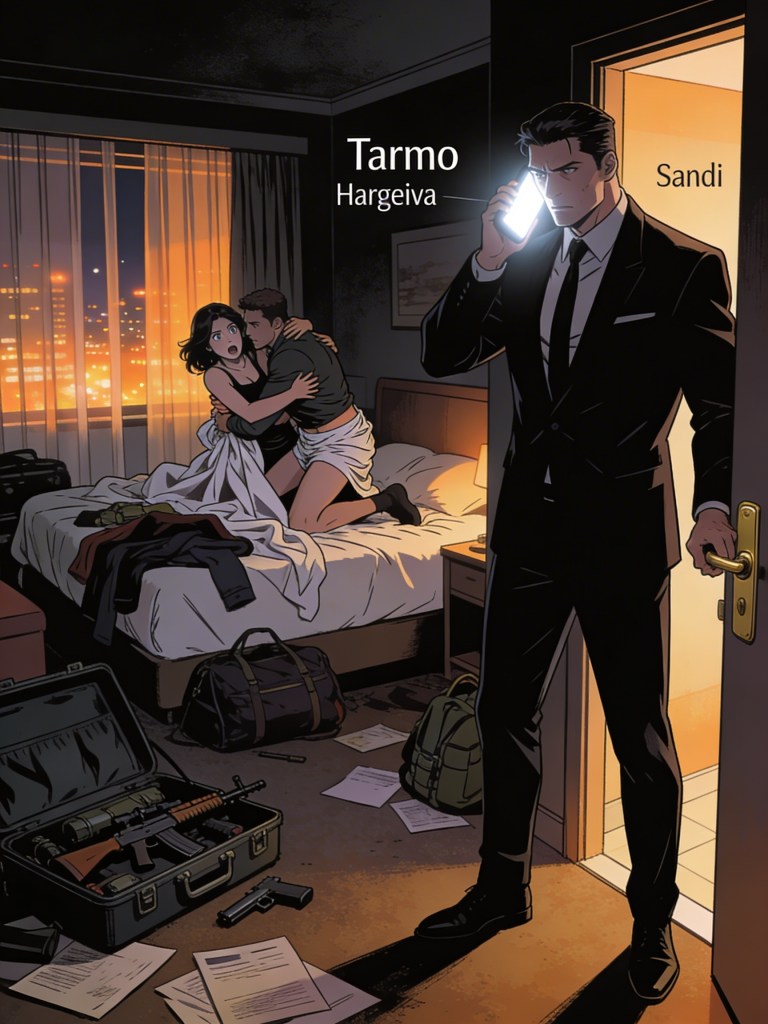
Tarmo hesitates only an instant.
“I don’t pay you two to get laid. Emergency—Elena’s gone near Tichit. Hasna’s already on backup. Decency’s a luxury tonight.”
Shock cedes to purpose. Mikael’s jaw sets, his hands already at his boots. The scene fractures: clothes pulled on, questions fired in clipped English, lover traded for operator in a heartbeat.
Karim, still reeling from the storm and my disappearance, activates his satellite phone. In a static‑filled call with Tarmo, the line is packed with accusation and camaraderie:
Tarmo’s voice, incredulous and urgent:
“How the hell could you let this happen, Karim? I turn my back for two days, and you lose Elena on the continent?”
Karim, brittle but focused, retorts:
“We were tracked—they waited for the right moment. I barely kept them from taking both of us. I need reinforcements.”
Tarmo:
“Hold tight. Sandi and Mikael are coming with me—we’re arranging a flight. In the meantime, you’ll need to move fast. I’ll send Saleck—he’s the only tracker within a hundred kilometres I trust. Set up a grid, check the old nomad routes, and keep your phone on.”
Karim exhales, shoulders straightening as resolve hardens in his chest.
“I’m on it. Tell Sandi to bring her drone. I want the sky lit up.”
Tarmo, softer:
“We’ll find her, Karim. Don’t do anything heroic. Stay alive.”
Karim’s hand tightens around the sat phone as he steps into the wind, waiting for Saleck—the desert fixer renowned for finding the unfindable.
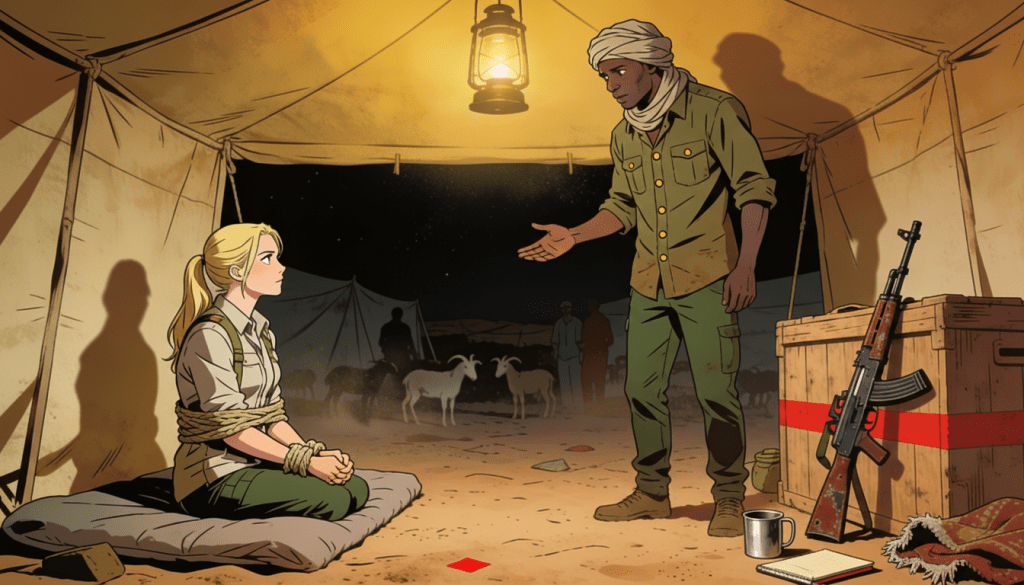
My wrists are bound, listening to murmurs from my captors. The leader’s eyes linger on me with calculating coldness.
“The university will pay much for you,” he says in rusty French. “Or many governments. Until then, you eat, you do not speak. If you try to run—”
He gestures to the nearest man, who raps his knuckles on a battered AK.
I hold his gaze, masking fear with practised calm, already memorising faces, voices, patterns—a scholar’s defence against despair.
I.Ph.
 The C.O.M.C. Files