
The Chronomancer and the Twins of Time
Sandi- Hargeisa
I wake in my Hargeisa hotel room, sunlight pressing through curtains I barely remember closing.
I blink—and there is Mikael, still sleeping on the floor in front of my bed. That man never stops surprising me. Maybe it’s just the spell of this continent.
He stirs, opens one eye, and with a wry twist of his lips says, “Don’t get used to it.” He stands, stretches, and steps out into the hallway.
Ten minutes later, as I towel off from my shower—not expecting him back so soon—I walk out of the bathroom naked. I stop short when I see him already back in the room.
“I should attach a bell to your feet!”
His silver eyes glint with that familiar, inscrutable calm.
“Wouldn’t help much, Sandi. I’d still move quietly—you’d just hear the bell after I was already there.”
He doesn’t look away.
“Besides, how else would I keep you on your toes?”
Breakfast in the hotel’s small dining area feels uncomfortably quiet. Across from me, Mikael sits, unhurriedly working through a Somali breakfast: spongy laxoox, stewed beans, a triangle of watermelon.
For years, I’ve only ever seen him in the background, one step behind Tarmo, silent and alert—never like this, quietly chewing, his attention on the immediate, mundane act of eating.
I find myself scrutinising him, curiosity creeping in. Does he notice the bursts of cardamom, the sharp tang of preserved lemon? Can he appreciate tastes and textures at all?
Without looking up, Mikael spoke, his tone flat.
“It’s food. Combustible.”
He glances at me then, a shadow of a smirk on his lips.
“Let’s get our agenda straight. First Port Master Omar Dajib, then Minister Faduma Kaltuun for National Planning, right?”
I blink, caught off-guard that he’s once again answered my private musings. It takes me a moment to gather myself.
“Are you going to accompany me all day?” I ask, trying to shake off my bewilderment.
Mikael nods, unhurried, and finishes his tea. His eyes twinkle with faint amusement.
“Of course. I’m a trained KGB agent, Sandi. I read facial expressions like a book.”
He raises one eyebrow.
“Your SUPO is either lacking or wearing off.”
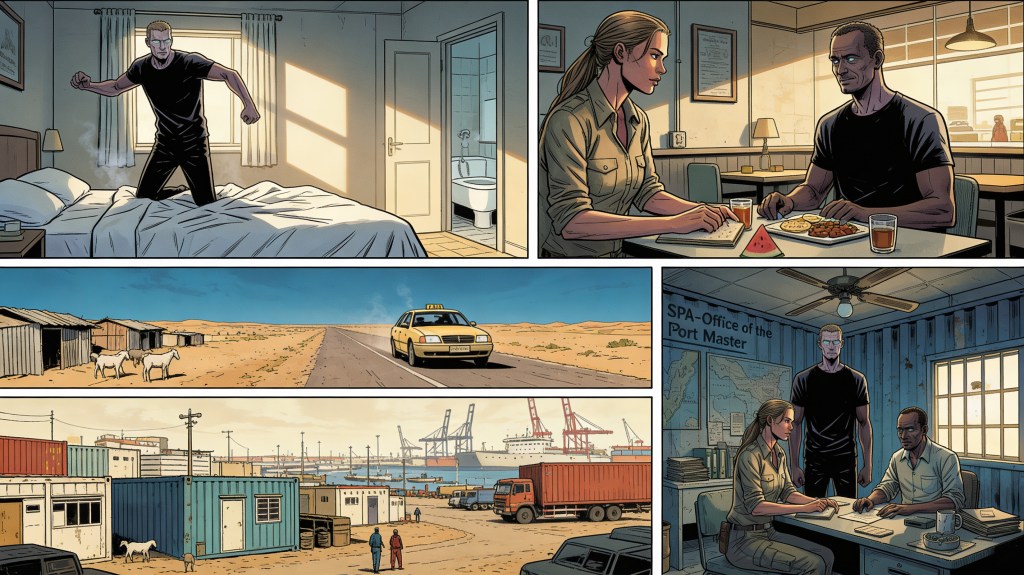
Our taxi winds its way out of Hargeisa, leaving behind the hum and grit of the capital for the long, desolate ribbon of tarmac heading east.
Kilometre after kilometre of ochre dust and indigo sky flicker past, distant goats wandering across the road, occasional settlements just clusters of tin roofs glinting in the heat.
I gaze at the passing landscape, the vastness pressing in—a reminder, maybe, of the distances between where deals are made and where they must be delivered.
One hundred and sixty kilometres later, the coast draws up abruptly, and Berbera reveals itself: a ragged edge on the Gulf of Aden, cranes clawing at the sky, the port’s mouth alive with battered ships, container stacks rising like anxious question marks above the scorched sand.
The Somaliland Ports Authority is less a building and more a suggestion, cobbled together from converted shipping containers and prefab offices set among the organised chaos of freight, shouting men, and the blare of truck horns.
I step out, momentarily overwhelmed by the scale and rough clamour of the port, and—if I’m honest—relieved to feel Mikael at my side, silent and solid, flanking me as we navigate the tangle of trucks and dockworkers’ pointed stares.
Directions turn into contradictory hand-waves and false starts until, sweating and somewhat dishevelled, we arrive at a battered blue container marked “SPA – Office of the Port Master.”
Inside, Omar Dajib’s office is cramped, reeking faintly of engine oil and strong Yemeni coffee. A single creaking fan stirs the thick air. I sense at once that our arrival, and my very presence, are a mild affront; it hasn’t occurred to them that Tarmo Amellal would send a white woman—in this part of the world, affronts sometimes arrive gift-wrapped as courtesy or lost as subtext.
Omar doesn’t rise. When battered chairs are finally offered, Mikael remains standing, silently taking his usual position behind me.
As I begin the formal pleasantries—“Thank you for receiving us, Mr. Dajib, I hope your morning is well”—Omar’s thick hand cuts across the desk, curt.
“State your business and your offer. I will consider it—if it is worth my while to tell the Turks otherwise.”
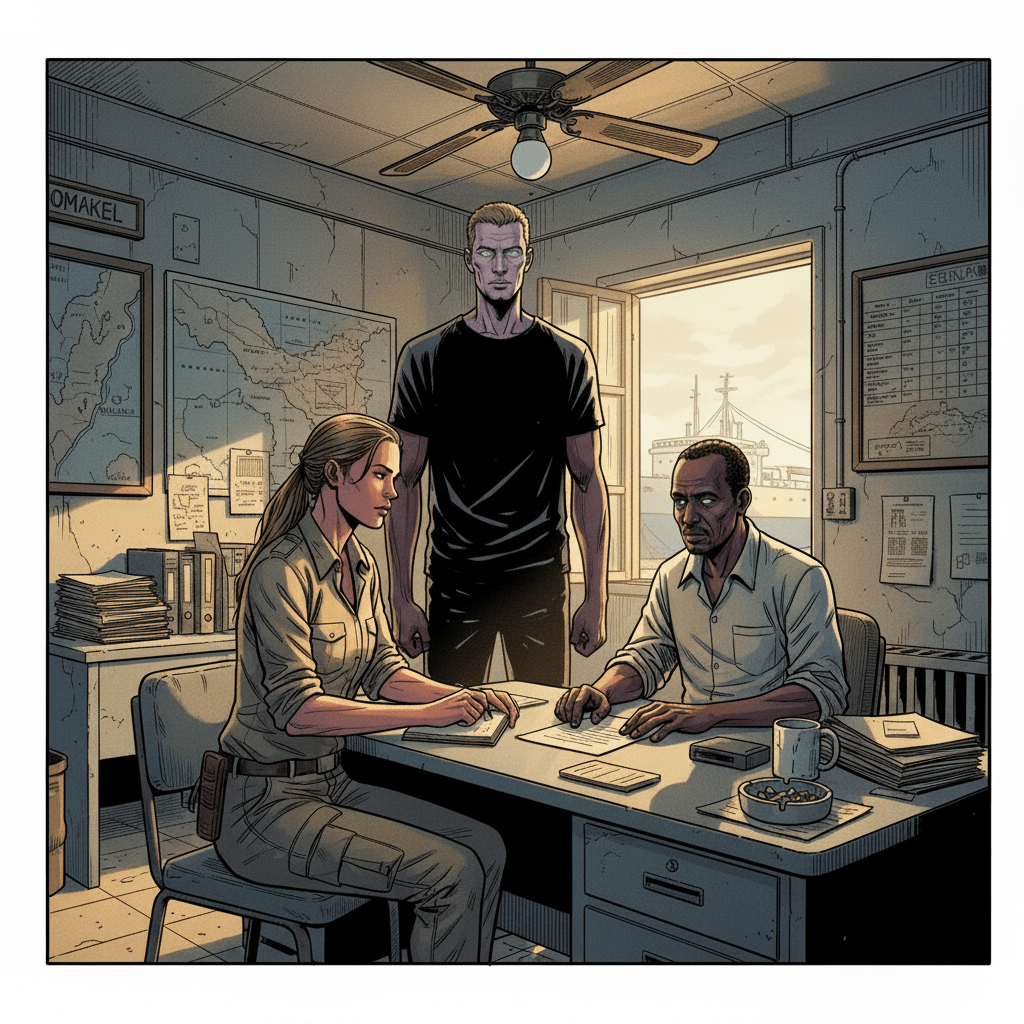
I hear it clearly: Erdogan’s envoys have already tried to poach Tarmo’s deal, and these negotiations will tolerate no pleasantries, only the complex calculus of profit and allegiance.
I steady my voice, folding my disappointment into diplomatic restraint.
“I understand your position, Port Master. I’m here simply to close the deal you sealed with Tarmo Amellal. I’m not in any position to better other offers.”
Omar drummed his fingers, unimpressed.
“Well, then, you have come a long way in vain. I wish you a safe return.”
A silent subordinate opens the door, the invitation to leave clear.
The cab ride back to Hargeisa stretches into a loaded silence, every kilometre weighed down with my thoughts. Tarmo should have anticipated this, I brood. How could he send me without warning—without leverage? I’m not equipped for renegotiating shipping deals. I glance at Mikael beside me, composed, as though he’s simply waiting for a cup of tea, untouched by the negotiation’s collapse.
Our next stop: the Ministry of Foreign Affairs and International Cooperation, a whitewashed building squatting against the Hargeisa dust. I look up at it, fingers crossed.
Some relief—at least now I’ll be dealing with a woman. Inside, male staffers slow me at every corridor, demanding to know my business, their eyes flicking warily toward Mikael, his presence unsettling but silent.
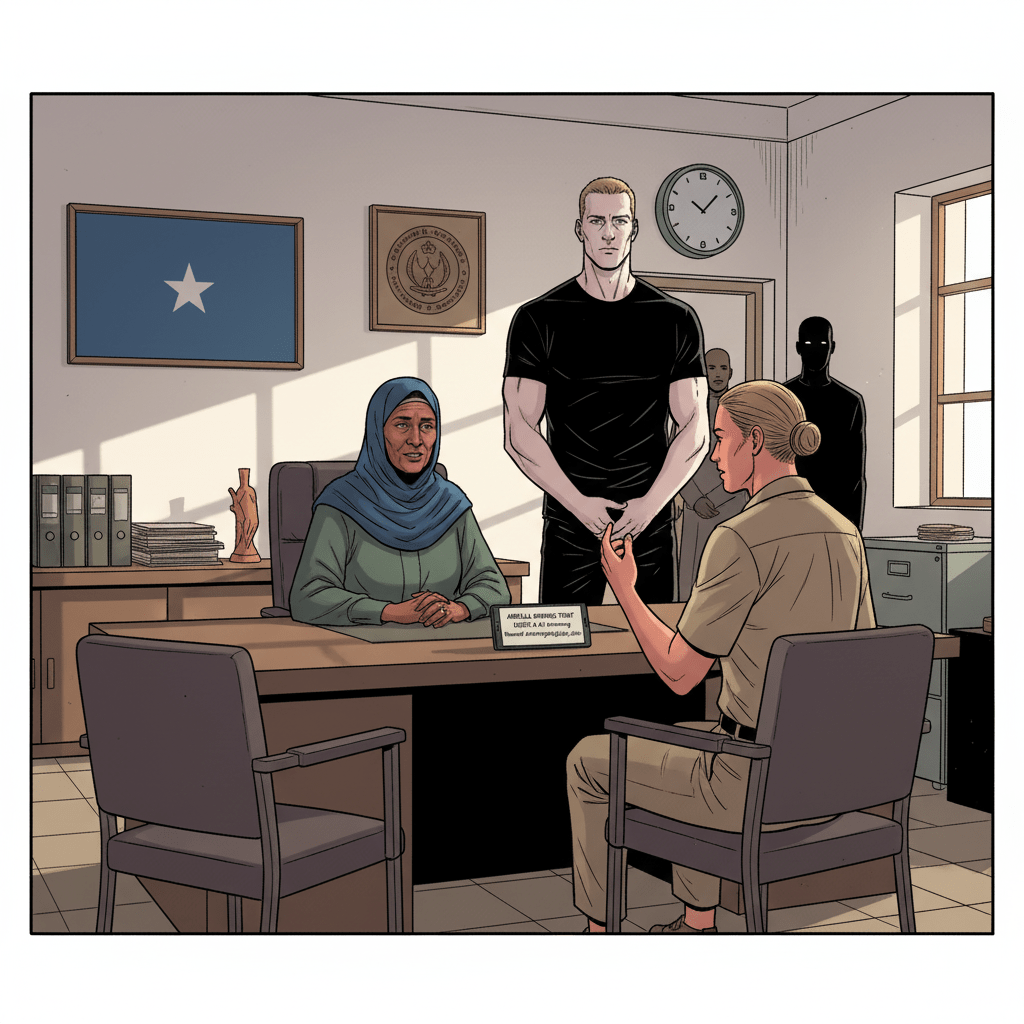
Eventually, a young man leads us into a neat office. Behind the desk sits Minister Faduma Kaltuun, a woman of age and grace, her eyes curious, her smile both warm and reserved. At her welcome, I sit, Mikael once again standing sentry behind me.
I relay the abrupt reversal at the port, the shift of Omar’s allegiance and the switch to another—unnamed but obvious—suitor. Faduma listens in silence, assessing, her expression unreadable. As she begins to speak, Mikael’s phone vibrates quietly. He extends it for me to read.
A terse, unwelcome message flickered on the screen:
Amellal Heritage Trust, in cooperation with UNESCO, CYcrds and the African Union, will boost commerce and tourism in collaboration with a renowned anthropologist.
Hot anger burns inside me.
I almost choke: “That bastard. Tarmo did it again, pulling Elena into the fray for his own ends.”
The room is so quiet I can hear the clock ticking, each second marking the complication pressing in.
I.Ph.
 The C.O.M.C. Files