
The jet shuddered into a slow taxi, twin engines spooling down as Tehran’s dawn tilted gold over the tarmac.
Imam Khomeini International unfurled beyond the glass: vast, oddly tranquil—its mirrored surfaces glinting like distant mosque domes. Tarmo leaned into the cabin window, pulse half-lulled by altitude and adrenaline, aware that every arrival—no matter how choreographed—carried a whisper of fate.
On the apron, a CIP escort waited, board in hand, not just “Mr. Amellal,” but the machinery of privilege at work. The cabin door hummed open. He stepped down into air thick with fuel and dust—liminal, far from the usual bustle of commercial terminals.
The private vehicle was polished, discreet—no queues, no chaos, just a practiced handoff: eyes flicking in recognition, never curiosity. Airport staff handled his documents with a reverence reserved for money and mystery. Passport control, visa formalities, customs—all navigated while Tarmo sipped strong tea in a private lounge flooded with chrome and sunlight. Conversations ran in low undertones, trays passed heavy with pastries, shoes clicked on polished floors. He let the performance fold around him: security escorts, a banker on call, whispers about suites and the latest Western imports at the boutique.
Outside, the Salaam Terminal traced geometric ambitions—glass, steel, ancient dreams reformulated for the future. Novotel and Ibis hotels loomed on sky bridges; distant runways drew the morning traffic. Tarmo sensed the paradox: modern hospitality layered on ground haunted by older magics, Zoroastrian and otherwise.
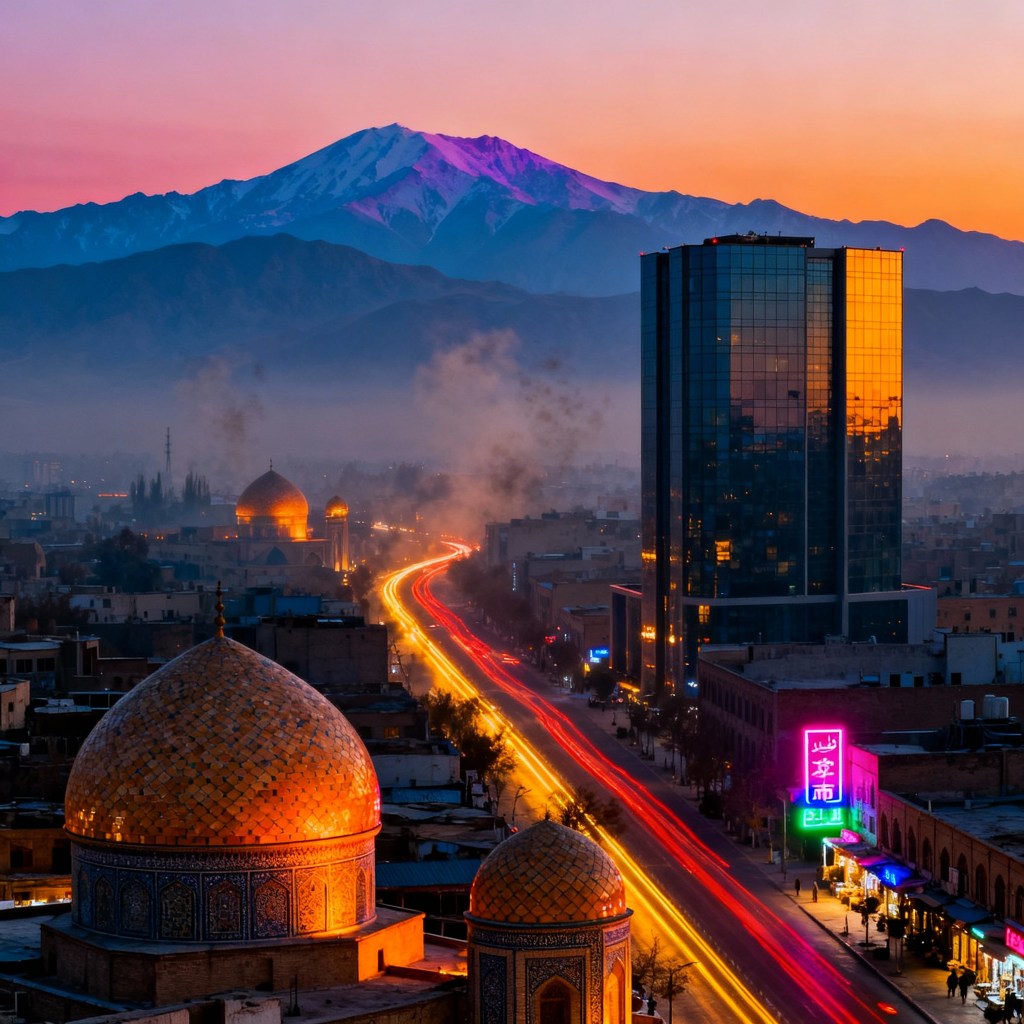
The luggage arrived, paperwork completed. He crossed out into Iran. Tehran—just thirty kilometers north—held its breath between past and present, between the ceremonial and the shamanic.
Mikael had grown used to Tarmo’s silences—gruff, deliberate, usually parked behind a vodka or a stare at the nearest window. Today, at Imam Khomeini International, that armour was missing. Tarmo was restless; his gaze slid past the convoy, through plate glass toward a horizon Mikael couldn’t see.
He ran through the day’s schedule: reunions with the new government, handshakes for informers who claimed to know half the city’s shadow brokers, all supposedly hunting down Sandi’s location. It felt routine—a crisis that would resolve as they always did: patience first, money if necessary.
But another problem settled like static around Tarmo’s shoulders—a weight Mikael knew from old battles but could never name. It wasn’t Sandi. He was sure of that now. Ever since that night at the Pera Hotel—ushering Tarmo through old corridors, letting him into Elena’s room only to emerge with more questions than answers—something in his boss had shifted. The machinery of power and purchase felt suddenly thin, haunted.
He knew: this was about Elena. Her absence was a presence—the kind that remade a room. Tarmo moved with manufactured urgency, chasing ghosts no informant could pinpoint.
Just then, Mikael’s internal narrative fractured. Ja’far Azar, right hand of the delegation, approached—iron-grey suit, a face equal parts calculation and hospitality. He spoke in clipped Farsi: appointments reshuffled, a government liaison keen for Tarmo’s input, hints of Sandi’s trail in the southern districts.
While Ja’far recited his litany, Mikael watched Tarmo’s hands, restless on the armrest. They mapped routes that business and politics couldn’t reach—Elena a puzzle piece outside the frame.
Ja’far paused, waiting for a decision. Tarmo nodded, restoring the choreography of meetings—for now. But Mikael saw in his eyes that his mind lingered on Pera’s night, on half-formed promises, on the strange, quiet magic of someone who could unsettle the man he thought he knew.
IKA — VIP Arrivals, Tehran
Ja’far Azar’s handshake was firm, with a slight theatrical delay—long enough to signal that the welcome was more than formal, not quite friendly. His name itself was a cipher: Ja’far, unmistakably Muslim, carried like a verse; Azar, Persian fire, Zoroastrian in root. In Iran, that blend could mean poetry or calculation. Mikael’s notes on him were sparse but sharp: former oil-ministry liaison, fixer in infrastructure deals, conversant in three languages, fluent in favors. Most important—his loyalty belonged to the machinery of access.
Ja’far’s smile never touched his eyes. “The new ministers speak highly of your counsel, Mr. Tarmo Amellal,” he said, voice pitched for the listening walls. His network threaded through ministries and out to legacy power brokers, operating well above the street. He traded in permission, consent wrapped in theatre: closed-door dinners, cleared imports, sudden customs rescues, rare introductions when timing called for it.
He played gatekeeper with casual mastery.
No one reached the core—the president’s circle, the Revolutionary elite, the real intel on Sandi’s trail—without passing through him and making it look effortless. Mikael knew this. He also knew Ja’far was already studying Tarmo for cracks in the old stoicism.
By late afternoon, as the Emirati-built SUVs rolled into Tehran, Ja’far offered his final flourish.
“A small gesture for a man who travels far,” he said, smiling half-merchant, half-priest. The gesture arrived as two women, immaculately dressed, carrying a faint trace of cinnamon in their perfume.
Mikael registered the offer for what it was: hospitality as loyalty test. Tarmo, courteous but cold, dismissed them with perfect manners—his disinterest reading as a man already elsewhere.
That “elsewhere” followed them into the night.
Tehran held plenty of five-star anonymity, but Ja’far’s people had given Tarmo two clear options: the Hana Boutique Hotel—discreet, artful, quiet, its lobby tinctured with oud and coffee—or the Espinas Palace Hotel, all glass-and-granite grandeur, a skyline fortress where ministries hosted brunches under crystal domes.
The Hana would hide him—perfect for confidential meetings, with a back exit ideal for slipping away unseen.
The Espinas would announce him—drawing the right eyes, and the wrong ones.
Tarmo stood under sodium-lit dusk, the choice on a small card in his hand, large enough to ruin a week. Tehran hummed with night markets and offices emptying into the streets. Mikael waited a pace behind, scanning faces and shadows. Ja’far had left hours ago—his work done: the gate opened, the stage arranged.
Tarmo lit a cigarette, drew in blue smoke, and studied the two addresses.
Some doors only opened if you walked straight into the right lobby. Others—you slipped through sideways, invisible.
The Hana was quiet in the way expensive discretion is—soft carpets, diffused light, no questions asked. The kind of place where the concierge knows which guests have state escort and which prefer their cars to pull up through the service alley.
Tarmo’s suite sat on the top floor, its private terrace screened by bamboo—the city a glittering sprawl beyond. Inside, the palette was warm: dark teak, low Persian lighting, linen curtains shifting with the hum of the air.
I.Ph.
 The C.O.M.C. Files