
Pera Palace
My DIEK driver sweeps the car along the Bosphorus, minarets blinking in and out of the morning haze. Istanbul grows brighter—histories threaded through fog and horn blasts.
Up ahead, the Pera Palace rises with sly confidence, its neo-classical lines softened by decades of dawns. Velvet chairs catch the new light; gilded mirrors throw fractured reflections of strangers and their secrets. The air tastes of old money and revolutions sung about in the lobby, never quite completed.
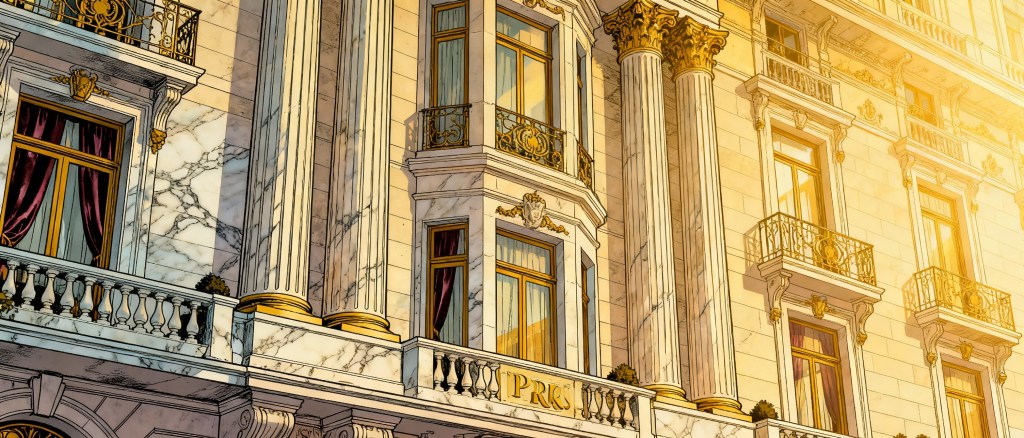
I check in beneath a chandelier older than modern Turkey. My own name, practised smile—both real and not quite true. The desk clerk hands over my keycard: a gesture as polished as the marble underfoot.
For a moment, I linger in the lobby: a map of ghosts and ambition. The parquet floor creaks beneath my boots, and somewhere above, the weight of the Orient Express lingers, echoing inside gilded arches and the hush of expectation.
I wander, bag slung close, each step tracing the legends of spies and poets who passed before. The hotel breathes: bitter coffee and perfume, the distant thread of cardamom, smoke, and river. Near the window, I catch the gaze of the woman with a notebook and stories in her eyes—every guest an unfinished manuscript.

I let myself belong here, if only briefly—inhabiting the city and its strange opulence, letting the legend slip from my shoulders one carefully measured breath at a time.
Revolving doors spin me out into a world that aches with old stories—mine and millions before. Istanbul’s famous hotel holds me in its velvet hush, barely restraining the riot of gulls, traffic, and an imam’s call winding through exhaust and sunlight.
Room number committed to memory, I let the corridor claim me. Antique parquet sighs beneath my soles, gilt ceilings glimmer overhead, coffee and cigarettes curling from the lounge. Time flattens—revolutionaries and seducers have left fingerprints on these chairs, pressed legends into the wallpaper.
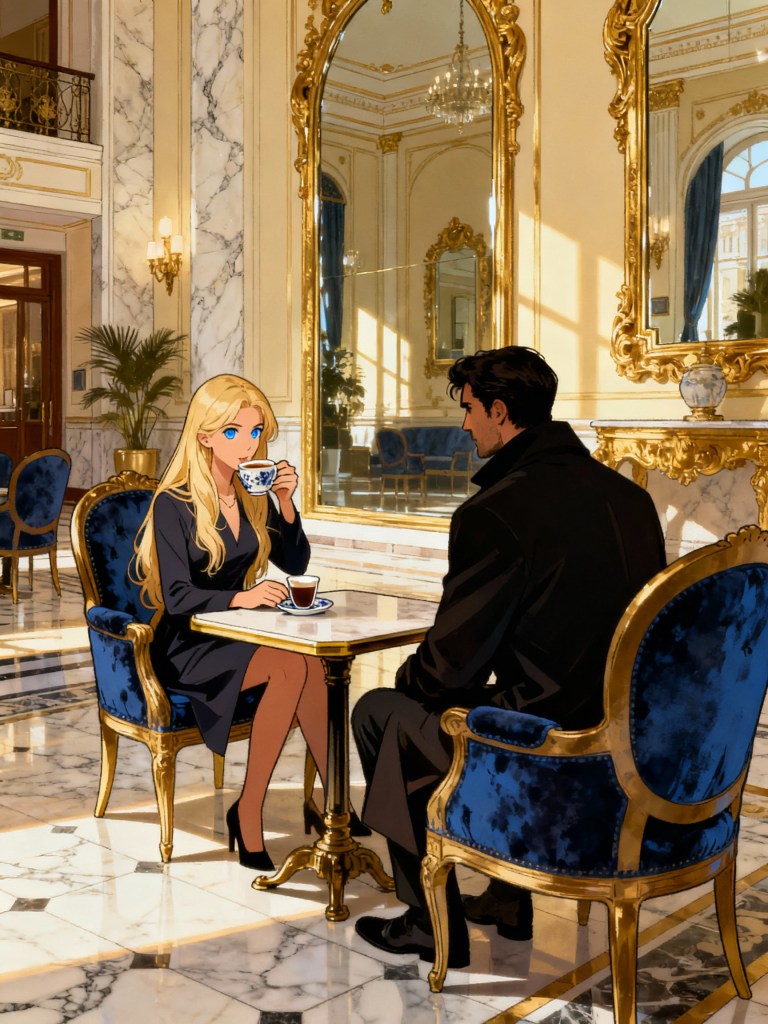
By the window, I settle over a tiny porcelain cup. The Turkish coffee is black and granular, strong as confession. The waiter is attentive but silent, revealing nothing. I watch the city breathe behind the glass—wondering what stories brought him here, what bargains he’s kept or broken, and what other legends might be hiding in plain sight.
A man appears at the periphery—a dark figure refracted through the sweep of a gilt-framed mirror, posture deliberate but unhurried. Even in a lobby wreathed with velvet and old intrigue, his presence is both marked and evasive, like a foreign consonant in a familiar phrase.
He claims no space, carries an accent in the drape of his coat, and the slow precision of each step. Stranger, cypher, not threatening, not yet—just the suggestion of intentions folded deep as the palace’s carpets.
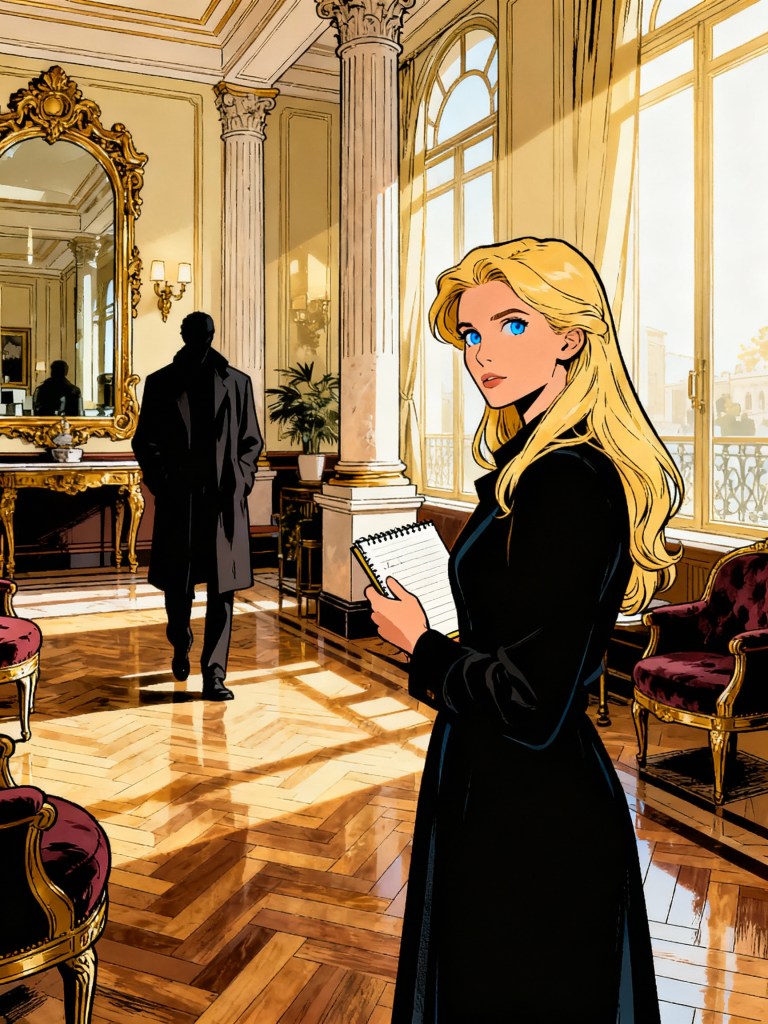
He gestures—a gloved hand, minimal nod—to the empty chair across from mine. Courteous, measured, a distance preserved like brittle glass.
“May I?” His voice comes edged with the roll of the Caucasus, mellow yet unmistakable.
Our gazes meet—his quiet, noncommittal, intelligence burning down to the bone.
“You’re Ekrem,” I say, feeling the guess hang between hope and calculation.
A thin smile flickers, ghosts beneath his eyes.
“Burçu thought it wise to meet here—old Istanbul, before new stakes rearrange the city. Sometimes the past is gentler to strangers than the future is.”
No handshake. Smart; old etiquette, new code.
He sits. Steam from my Turkish coffee twists between us, ephemeral. Ekrem’s eyes trace the contours of the bar: marble, brass, daylight pooling in the Kubbeli Salon’s domes. He returns to me, weighing, sifting.
“You’re not local,” I offer, an anthropologist’s reflex cataloguing borrowed poise.
“But you move as if the ground’s mapped to your stride.”
He shrugs—a gesture halfway to surrender.
“This city is a collector of outsiders, Dr Delange. Istanbul calls us, binds us in the orbits of its secrets. I didn’t choose to meet, but your arrival shifts priority for those I answer to. Tonight, what you want and who you seek matter more than any name.”
A pulse of tension—reciprocal analysis, a brittle balance born of necessity. I hold the stare, refuse to blink.
“I came to read the city’s trouble—its angles and fault lines,” I answer.
“You can point out the geometry—or let me find out the hard way.”
A pause. The city’s ancient song rises—the layered call to prayer, streetcars, the far-off clang of cafe cutlery.
Ekrem leans back: not hostile, only patient, letting the silence open like an old door.
“Walk with me, Elena”.
I.Ph.
 The C.O.M.C. Files