
The Living Thread
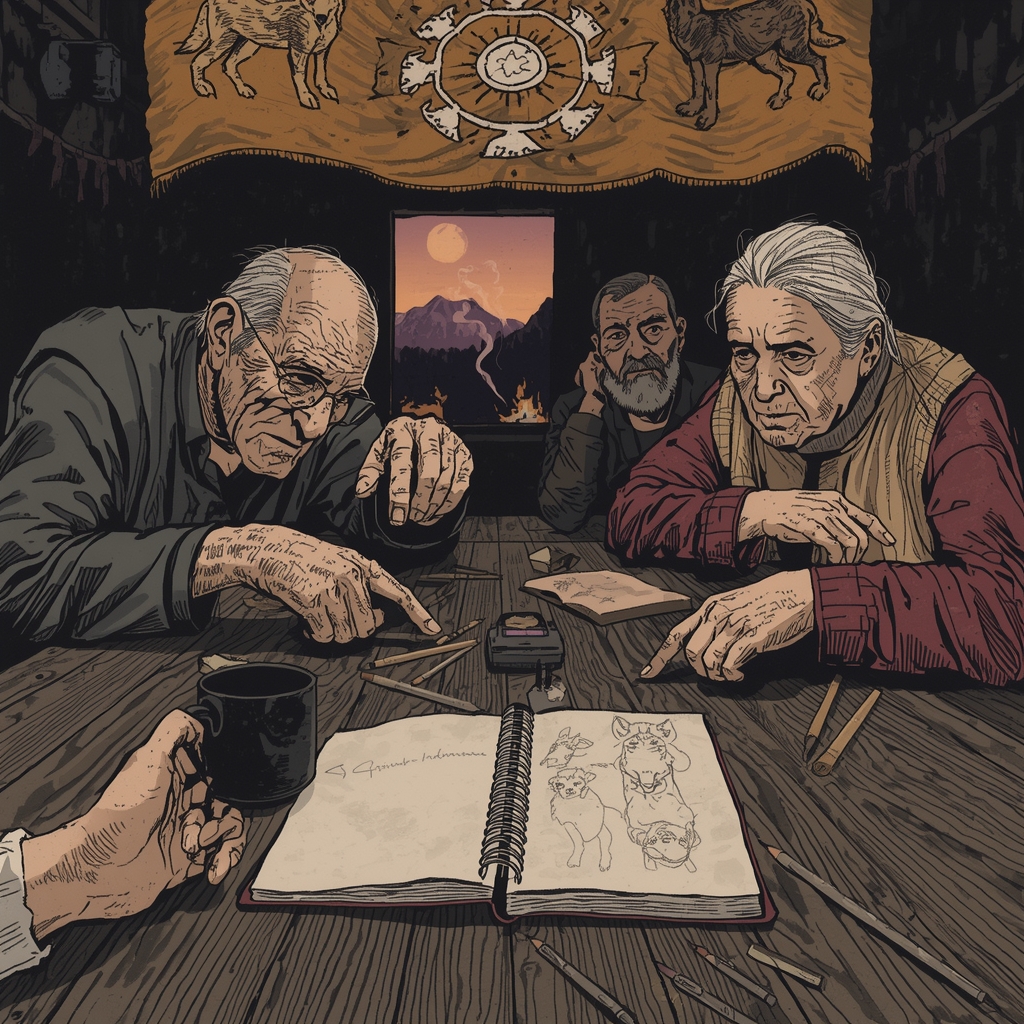
A pale sun claws over the ridge, sending light in trembling bands through the narrow window, gilding the swirl of smoke in the hearth.
I take my coffee black—the only appropriate colour for a woman straddling the border of legend—and stack my notebooks, pencils, and a battered digital recorder. The villagers have agreed to speak with me this morning, after some collective haggling and much suspicious sniffing regarding my “intentions.” Scholarship, apparently, is a fraught pursuit on land watered by old blood.
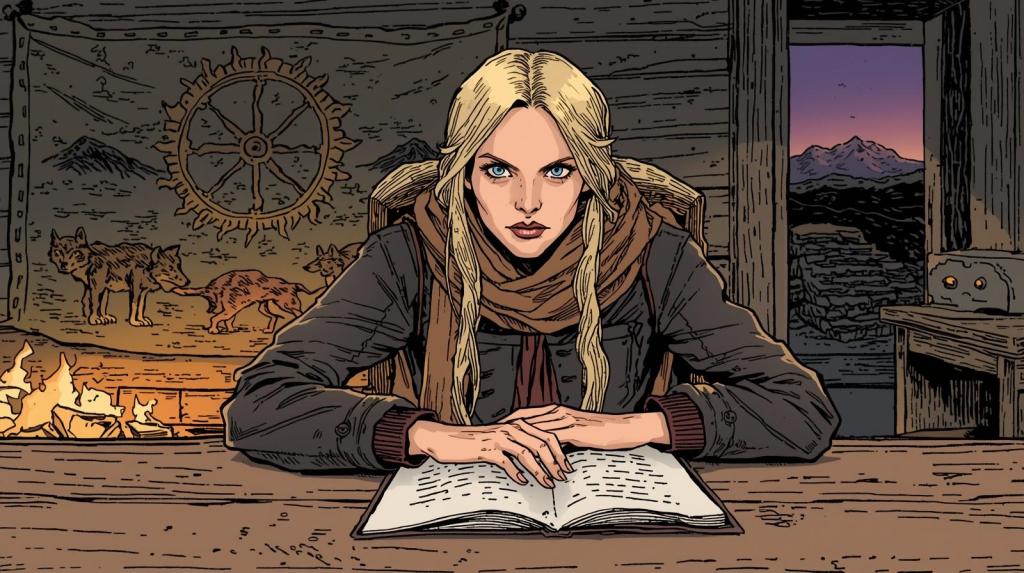
The table is set beneath a tapestry thick with threadbare wolves and a jagged sun wheel. The warmth here is complicated: the kind reserved for the not-quite-outsider, the guest on probation. I nod to the elders, adjust my makeshift scarf, and start where all stories do—at the axis of memory and night.
The Wolf’s Name
First, old Vasile—his shoes patched with more stories than leather—leans in, eyes glittering.
“The wolf watches this land,” he declares, tapping my notebook with a gnarled finger.
“He watched us before the Romans, before the priests from Bucharest. My mother’s people called themselves ‘the wolf-ones.’ Not to boast—just to remember.”
He outlines, in slow, careful speech, the details I’d encountered in textbooks but never quite believed: the winter wolf dances, sometimes still performed by children in strips of fur and old paint; the feared pricolici, werewolves said to roam the passes after sunset, dispatched by unfinished oaths.
A flaxen-haired woman next to him—Maria, whose laughter lines seem etched by generations—draws back her sleeve and reveals a stitched wolf’s head near the cuff.
“We sew them for protection,” she says, voice half-mocking, half-reverent. “Not for the tourists. For when the nights feel too long.”
I sketch spirals in my margins: embroidery as shield, animal as ancestor.
The Lake’s Shadow
We break for tea brewed black as confession. The conversation turns, inevitably, to the lake—the same stretch of water where, out in the world beyond this enclave, searchlights still blink futilely for any sign I went missing at all.
Ion, the youngest elder, leans forward:
“There’s a saying. Not everything that goes under comes back. Sometimes it returns… changed.”
He shrugs off the chill his words bring. Local silence proves more formidable than any official secrets. From the edge of the table, another voice—soft, weathered—is raised:
“My sister’s friend, long ago, slipped beneath the surface one solstice. She wasn’t found until summer’s end. Claimed she met old gods under the water. Grew old twice as quick after.”
I record this, teeth on knuckle, fighting the lure of folklore’s easy answers. Yet in every pause and sidelong look, there’s the sense of something only half-revealed, a contract nearly broken.
Zalmoxis and the False Grave
Discussion wanders to Zalmoxis, the buried god, whose promise of immortality seeps through the region like spring melt.
“He taught us not to fear dying,” intones Vasile, “but the priests, they mix it with their own rites now. Still, some bury a coin or a knife for the journey—a little Dacian insurance to cheat the old gods of their due.”
Maria nods. “We don’t speak the name in winter. Only come the thaw, when the river floods, do we honour the journey.”
Her fingers knot over the table’s edge, as if holding the story’s weight against the pull of forgetting.
Between Scholarship and Spell
I let them talk, only breaking in to gently ask:
“Which of the old rituals do you keep at midsummer?”
They list bonfires, masked dances, girls wreathing their hair with wildflowers. Sânziene, they call it, though the name is now shared with church calendars.
“Do you carve the wolf?”
They gesture to lintels, gates, and the circle of carved wood around the hearth.
“Who remembers the river-women?”
Maria and two others trade glances: “Some things aren’t meant for men to hear. Will you keep this in your foreign papers, Elena?”
I promise respect, but candour, too—a witness, not a thief.
Ethnography, Aftermath
As dusk coils in, I sit alone, transcribing by the hearth’s light. I wonder if my team—Tarmo, Mrs H., Karim, Sandi, Hasna—are scanning satellite images and folklore archives simultaneously, never dreaming that the same myths they hunt play out daily behind these heavy curtains, by this breath of woodsmoke and old thread.
What I’ve gathered isn’t science, not simply: it’s half memory, half spell, alive in the mouths and gestures of those who guard it.
Words are energy. Magic is pure energy. Measure your words.
The wolf is more than a beast; the lake is more than water; disappearance is never just a physical act, but an escape—or a summons.
I.Ph.
“If you’d like to support my work: Ko-fi page: https://ko-fi.com/phaedrasfables86481
 The C.O.M.C. Files