
Stories and Suspicion at Europe’s Edge
The journey carries us into Ružomberok. Hills close in—dark and wild, as if the old stories about mountain spirits and forest witches linger here longer than in other places. The streams are rowdy, climbing over their own stones, reminding me of tales where rivers could be both guide and trickster. The skyline, chewed ragged by the Great Fatra, looks like teeth from a sleeping giant of Carpathian legend.
Ružomberok’s market is both crossroads and stage, and I pass through it with our group, notebook ready, my mind dipping back into folklore between the noise. Even as we blend in, part of me waits for some old goddess of the crossroads to step out and barter for news, for memory, for luck.
Sandi and Bartek joke with women selling bryndzové halušky, hands flying in silent patterns—they remind me of the younger village witches in tales, proud and practical, always brewing up more than just food. Karim listens to a wooden spoon carver whose gnarled hands look like roots drawn from some old Slavic oak; I half expect to hear that the spoons must never be gifted in pairs, or they’ll wake the house spirits.
I find myself trailing after mothers chatting about seasonal feasts—words jumping, a spellwork of Slovak brushing Hungarian brushing Ruthenian—and I remember stories where such feasts might summon ghosts, where bread was left on windowsills for wandering souls or mountain men.
Lunch at Koliba U Dobreho Pastiera feels ceremonial: sheep cheese steaming, rye bread sour as old wives’ warnings, stews thick as stories. A baker brags about his loaves, a grandfather’s voice threads through the noise, telling of sheep on foggy hills—the kind of landscape where a traveller could step into mist and find centuries lost.
Later, while I walk near Malinô Brdo cableway, the river below churns like the boundary rivers of myth that mark the edge of what’s safe. The tang of resin sharp in my lungs feels like a tonic, or a warning—don’t look back, don’t eat the fruit, move forward.
We share slivovica, hands warmed, stories swapped. Each exchange feels laced with something older: field notes turning to talismans. Folk memory, or borrowed charm for CYcrds, so we stay lucky, so doors open, so we move unseen.
The valley pulls us, thick with shadows and rumour. The border of Transylvania always seemed to mark a threshold in the stories I grew up on: step across, and anything—wolves, witches, old gods—can find you. Pockets full of bread, head full of tale, I walk onward, unsure if I am hunter or haunted, but sure the memory is worth carrying.
The road out of Ružomberok curls down into the gentle foothills of the Low Tatras, where the villages grow smaller, quieter—forgotten corners held by hills and dense forests. We make deliberate stops, our presence casual but purposeful.
In one village, I step out with camera and notebook, scanning for familiar markers: wayside shrines set at crossroads, their painted icons weathered to soft blurs; elderly women stooped under years, their twig-like fingers tracing embroidery patterns as they speak of saints long gone, rituals fading beneath time’s rush. I ask gently, collecting fragments—spring songs, local festivals, pieces of memory stretched thin like old lace.
Sandi and Bartek move easily among the villagers, chatting with shepherds, capturing hand-carved tools, smiling through wary silences. Karim listens from the edges, noting dialect shifts and the half-erased lines of footpaths. Every post we release under CYcrds’ name—images of flower-decked Maypoles, scraps of verse, whispered legends—becomes another layer in our living archive, proof of both presence and intent. To the casual eye, we are only cultural fieldworkers. Nothing more.
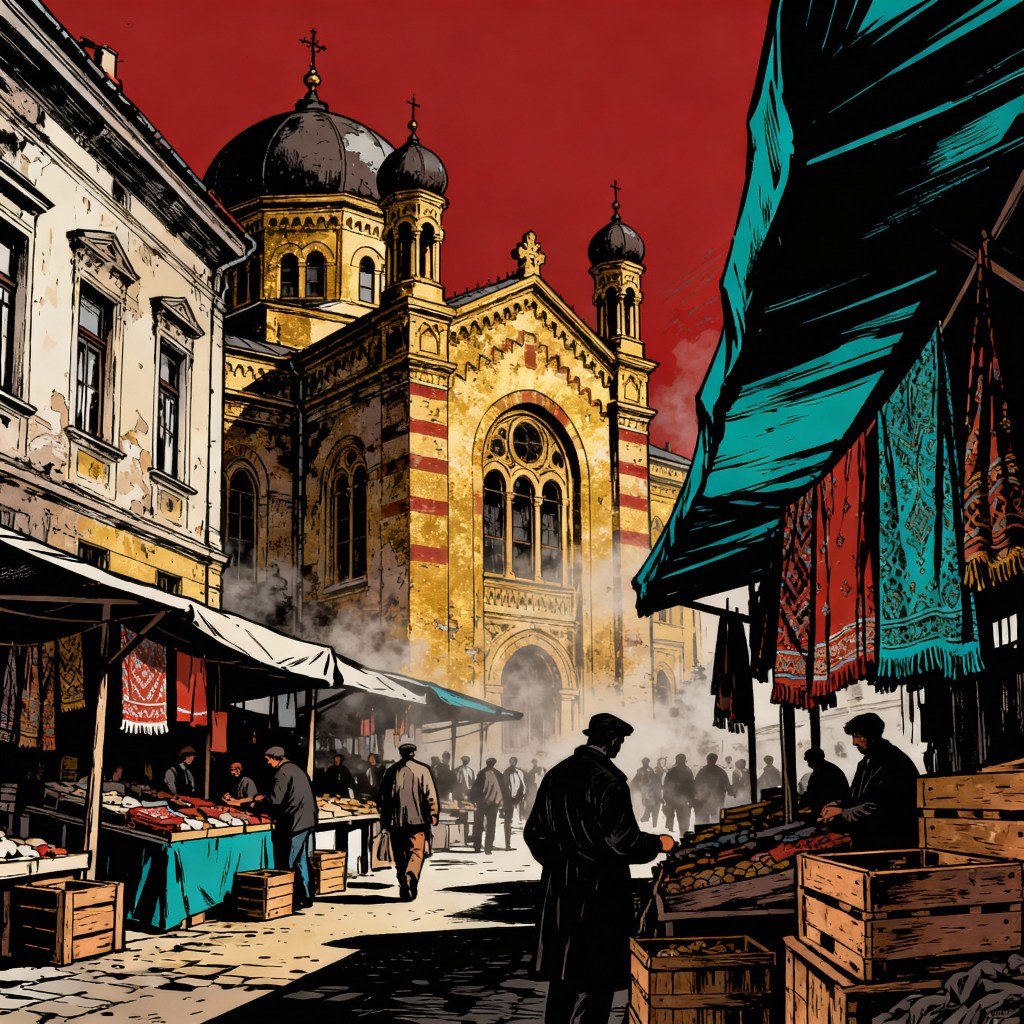
Crossing into Romania near Satu Mare, the landscape reshapes itself: Hungarian, Romanian, and German lines blending in markets where old synagogues cast their shadows across stalls of smoked sausages and bread from ancient grains. The richness should steady me, but my chest tightens.
The satellite phone stirs—a crackle of static, Mikael’s disembodied voice fracturing through: “Police and paramilitary presence up near the border. Checkpoints are sporadic but intense, focused on foreign teams. Expect suspicion, especially around smuggling hotspots. Keep all IDs and documents visible but secure.” His warning clings to the silence after.
I nod to myself, pulse quickening. Hasna, steady as ever, fires permissions and polished documents to local councils and museums, recasting us as sanctioned preservationists—invited to observe the Maypole festival, to record the oral poetry. Every stamped approval becomes another shield; every email another fragile barrier against suspicion.
The air is denser now. Each glance from uniformed eyes knots something deep inside me. Yet we keep moving. Not only papers, but the small faith we’ve earned in villages—the smiles, the gestures, the fragments of song—propel us onward, carrying us toward the carved edges of Europe’s uneasy history, where every border feels like a question left half-answered.
We stop for the night in a small Romanian village just past the border—a place where the road narrows and the world seems to fold inward. The evening unfurls with quiet intimacy: the low sun casts gold across sloping tile roofs, sheep return to their pens, a distant bell tolls from a worn stone church.
We find rooms in a modest guesthouse with whitewashed walls, thick and cool, vines crawling around chipped window frames. The proprietress, a woman with silver hair and gentle eyes, greets us with shy hospitality and a supper of mamaliga, sour cream, brined cheese, and thick tomato stew. There’s plum brandy in chipped glasses and black bread still warm from the oven.
After dinner, Sandi wanders out to the garden, camera in one hand, barefoot in the dewy grass. Bartek lounges on the stone steps, lighting a cigarette and watching her with a private smile. Karim pores over maps and messages at a side table, ever vigilant, stealing the occasional glance at me.
I sit by the open window, laptop propped on my knees, uploading notes and photos to CYcrds and double-checking our paper trail. The air is laced with honeysuckle and moist earth. Tension lingers as an undercurrent, but for this hour we are safe, sheltered in the hush between geography and story.
As darkness settles, the village quiets—just the creak of shutters, the sigh of distant animals, the hum of old, familiar fears and new hope twined together. Tonight, rest is a gift: a pause on the edge of trouble, the brief, rich comfort of ordinary life before the long road pulls us onward.
Sleep eludes me. I lie in the twilight hush of the guesthouse, the sheets too crisp, the shadows too restless for my nerves. Down the hall, laughter drifts from behind Sandi and Bartek’s closed door—a fierce, innocent joy that feels almost alien tonight. Tarmo is a ghost in my mind, his memory pressing insistently against every thought.
Karim. He’s kept his distance since Dakhla, content to hover at the edges of every situation, flame banked but constant. In all this time, he has never once used his longing against me, never intruded, never commented on the architecture of my heart or its scattered allegiances. His care has always been a gentle thing—almost invisible, but I’ve felt it, a steady presence threading through our shared silences.
A soft knock at my door stops my breath. My heart leaps in both hope and guilt. I hesitate, then cross to the door, barefoot and suddenly aware of my pulse everywhere. He stands there—shoulders broad, eyes warm and deeply uncertain.
“Can’t sleep either?” he asks quietly.
“No,” I say, my voice barely above a whisper.
He doesn’t move to step in, but the invitation hangs between us, shivering and honest. For once, I let myself lean into him, into the need for arms that have only ever sheltered me, never ensnared.
I reach for his hand, and Karim’s face flickers with something raw—joy, relief, disbelief, maybe all three at once. With unhurried grace, as if afraid the moment might vanish, he follows me inside and closes the door behind us.
Tonight, there are no words of explanation or apology. Only honesty and the way desire can heal—for a little while—what neither wisdom nor waiting ever could.
I let Karim’s hand settle in mine, guiding him into the sparse hush of my room. The shadows shift as we draw the curtains, leaving only a sliver of moonlight across the bed—enough to see how hunger and doubt flicker in his eyes.
We don’t speak. The space between us is already thick with memories: old laughter in sunlit deserts, the taste of salt and wind, the ache we buried beneath the weight of loyalty and restraint. I peel back the thin shirt he’s wearing, tracing the lines of muscle and old scars—the map of a life lived in devotion and silence. His breath hitches, and for once I see him stripped of his quiet vigilance, utterly present and wanting. He unbuttons my dress with trembling fingers.
He breathes in my hair, pausing to whisper my name—a prayer and a plea. Presses himself hard against me. His fingers slip the straps down one shoulder, then the next, the fabric pooling at my feet in silent surrender. He steps back a moment, breath drawn, gaze reverent as he takes in the bare curve of my body in the faint moonlit glow.
Karim lowers himself, kneeling before me, tracing slow circles along my thighs, then upward, skimming the line of my underwear. With a look that undoes me, he hooks his thumbs under the fabric and peels it down, caressing the soft skin of my hips and pubis as he bares me completely.
I shiver in the stillness, exposed and alive beneath his gaze. He stands and gathers me to him, our mouths colliding—hungry, searching, unafraid. He lifts me, urgency and awe mingling in his arms, and carries me to the bed.
I.Ph.
 The C.O.M.C. Files