
The Extraction
The Call
Hasna’s voice slashes through Tarmo’s phone like a blade: “Both of you—move, now! No debate. OUT.”
We scramble. I grab clothes, almost tripping as I shove my leg into the wrong jeans. Tarmo reaches for his watch, his wallet—boardroom instincts in a firefight moment. The words “Where is my—” die on his tongue. This isn’t preparation; it’s chaos.
Then it comes—three urgent knocks. Coded and unmistakable. One-two-three, pause, two. Zürich. Or worse.
Tarmo’s phone screams with the scrambled tone reserved for priority alerts. I freeze, eyes wide. We’re still too close, bodies aching with interrupted need as the alarm rises between us.
Hasna’s voice cuts through again like a gunshot: “Status update. Route compromised. Window closing in five minutes. Move now or you’re dead.”
Frustration crashes through me—violent, helpless. Tarmo presses his forehead to my sweat-damp shoulder. My hands cling, refusing release.
“By Odin, this fucking universe,” he mutters.
My laugh shudders out, half-dare, half-desperation. “So much for borderless pleasure. Duty calls—no rest for the wicked.”
We rip apart—too quick, too slow. Half-dressed, half-cursing, eyes locked. His hand lingers at my wrist one beat longer than survival allows. Promises pass in silence.
Another knock. Harder. Closer.
“We’re out of time,” he rasps, hunger still curling under the command.
I glare and grin at once, hair wild, defiance burning. “Unfinished business travels light.”
The Run
The room becomes a war zone of scattered gear, but discipline floods back like muscle memory. Tarmo moves automatically—belt, holster, pistols checked. The dance of those who expect to die.
I tug on jeans, my golden tattoo flashing on my arm before I cover it. My eyes catch his—afterglow hardened to steel.
Hasna barks through the speakerphone, each word discharged like ammunition: “Window’s down to minutes. Two black sedans circling Kadrina. North exit in four minutes—don’t bother if you’re late.”
Tarmo doesn’t waste words. Grabs bags, my hand, burner phones shoved in his jacket.
“You clear on route?” he mutters, scanning the courtyard through a slit in the curtain.
I hiss back, “Seriously, is this my life now? Anthropology with live rounds?”
A thud outside. Heavy boots. Wrong rhythm. Enemy rhythm.
I grip his shirt, whisper dark humour into the rising fear: “I told you—your bedside manner’s catastrophic.”
He grins despite everything, presses his forehead to mine—just once, reckless.
“Finish line’s the freighter. Don’t get caught.”
Then it breaks.
Harder knocks, too near. Boots rush the hallway, someone shouting in Russian, doors slamming. We’re gone—through the window, down fire stairs, into air so cold it cuts the lungs.
The Escape
We run. Muscles hammered, hearts caught between ecstasy and panic, cutting toward the birch line. Boots slide through frost and dead leaves, the manor shrinking behind us.
Muffled shouts echo—pursuers or bureaucratic wolves, no difference. A black sedan crunches onto the loose-packed track, headlights knifing through pale morning light.
Tarmo jerks me down behind cover.
“Don’t let go of my hand,” he whispers harshly. “We’re almost at the car.”
I nod, then pause. “What car? The G-wagon is parked under our window.”
He pulls out a key fob. Behind a wooden shed, something chirps in response. An armoured Bentley emerges from the shadows—Tarmo’s contingency, our slim chance at surviving Zürich.
Above us, the sky brightens blank and merciless—the day cold, ruthless, and full of consequence.
The Third Player
The armoured Bentley purrs through Estonian backroads, Tarmo’s knuckles white on the wheel. I check the mirrors compulsively—no pursuit visible, but my nerves refuse to settle.
“This doesn’t make sense,” I mutter, adjusting the sleeve over my gold tattoo. “Moscow already made their point. Why escalate now?”
Tarmo’s jaw tightens. “Because you’re still here. Still a threat to their Narva operations.”
“No.” I shake my head, something clicking into place. “The timing’s wrong. The kidnapping was yesterday—Moscow doesn’t move this fast on cleanup. Someone else is playing.”
Before Tarmo can respond, my personal phone—not the burner—buzzes. The caller ID makes my stomach drop: Dr. Sarah Chen – UNESCO Cultural Protection Unit.
I answer, voice carefully neutral. “Sarah.”
“Elena, thank God. Listen very carefully—we know what happened to you. We’re getting you out.”
“I’m fine, Sarah. I don’t need—”
“You were kidnapped by Russian ultranationalists and tattooed with what our analysts believe is a tracking device. You are not fine.” Dr. Chen’s voice cuts through—crisp, professional, terrified. “UNESCO cannot afford to lose personnel to geopolitical crossfire.”
I feel Tarmo’s eyes on me, his expression darkening as he catches fragments of the conversation.
“Who’s ‘we’?” I ask.
“Joint task force. UNESCO Cultural Protection, EU Intelligence, British Consular Services. Elena, the Narva situation is more volatile than we briefed you. Your research has attracted attention we cannot manage.”
“What kind of attention?”
“The kind that kidnaps academics and marks them like cattle.” Chen’s voice hardens. “We have extraction teams positioning now. There’s a safe house in Tallinn—”
My blood chills. “How did you know where to find me?”
A pause. “We’ve been monitoring your movements since the kidnapping report reached us six hours ago. Standard protocol for endangered personnel.”
Six hours. My mind races. The rescue happened at midnight. It’s barely dawn now. UNESCO received reports and mobilised extraction teams faster than any bureaucracy should move.
Tarmo is listening intently now, no longer pretending to focus on driving.
“Sarah, I need more time. My research isn’t finished.”
“Your research is finished. Elena, we have intelligence indicating further threats to your safety. You need to be extracted immediately.”
“Intelligence from whom?”
Another pause, longer this time. “Sources we trust. Elena, a black Mercedes has been following you for the last twelve kilometres. Are you aware of this?”
I spin to check the rear window. A black sedan, distant but persistent, matches our speed around a curve.
“That could be anyone—”
“It’s not. Elena, we know you’re with Tarmo Amellal. We are aware of his business interests. We need you separated from him immediately.”
The bottom drops out of my stomach. UNESCO knows about Tarmo. Not just that I’m with him—they know what he is.
“Elena.” Chen’s voice becomes urgent. “We have reason to believe Mr. Amellal’s protection may be… compromised. Our extraction is the safer option.”
I look at Tarmo, his face stone, hands steady on the wheel despite the implications crashing around us.
“How long do I have to decide?”
“You don’t. Extraction team intercepts in fifteen minutes. Cooperation is preferable but not required.”
The line goes dead.
I stare at the phone, then at Tarmo. “They know. UNESCO knows about you, about us, about everything.”
“How much?”
“Enough to mount an immediate extraction. Enough to know we’re being followed.” I glance back again. “They’re not trying to protect me from Moscow.”
Tarmo’s eyes narrow. “They’re trying to protect UNESCO’s reputation from being associated with whatever I’m involved in.”
“Or,” I say quietly, “they know exactly what you’re involved in, and they can’t afford for me to be part of it when it goes public.”
The Bentley hits a straight stretch of road. In the mirror, the black Mercedes accelerates.
Tarmo’s voice is deadly calm. “Your choice, Elena. Fifteen minutes to decide if you trust UNESCO’s safe house or my unsafe freedom.”
I look at my hands, at the sleeve hiding my gold tattoo, at the man who rescued me from one cage and might be leading me toward another.
“Some choices,” I mutter, “aren’t really choices at all.”
The Choice
The Bentley takes a sharp left onto a narrow forest road, gravel crunching under armoured tires. I watch the black Mercedes in the side mirror, falling back as we hit rougher terrain.
My phone buzzes again. Sarah Chen, insistent.
I look at Tarmo, his jaw set as he navigates the winding path. Behind us, the Mercedes struggles with the uneven ground, urban suspension no match for Estonian backroads.
I answer the call.
“Elena, we’ve lost visual on you. Where are you?”
“Making a choice,” I say quietly.
“Elena, be reasonable. We have protocols—”
“Fuck your protocols, Sarah.” My voice hardens. “You want to extract me to protect UNESCO’s reputation, not my life. I know the difference.”
“That’s not—Elena, you’re making a mistake. We can’t protect you if you don’t cooperate.”
Within seconds, radio chatter cuts through the vehicle’s internal comms, voices I don’t recognise, speaking Estonian with clipped urgency. Tarmo’s instructions are sharp: “Military code K4. Block all public roads, private use, and unusual traffic to Soodla Airbase.” He’s met with a terse acknowledgement. Power, when properly applied, vibrates even the air inside a speeding car.
Through the windscreen, I see the first checkpoint ahead—two Estonian military Humvees positioned across the road, soldiers with automatic weapons. They wave the Bentley through without hesitation.
Behind us, the black Mercedes screeches to a halt at the barrier. I watch through the rear window as uniformed soldiers surround the vehicle, weapons raised.
“Looks like you can’t protect me anyway,” I say into the phone. “Your extraction team just got stopped at a military checkpoint.”
Sarah’s voice turns sharp. “Elena, what have you gotten yourself into?”
I see Tarmo’s slight smile in the rearview mirror as we pass a second checkpoint, then a third. Radio chatter fills the car—Estonian military coordinating road closures, perimeter security, air traffic control.
“Something bigger than UNESCO can handle,” I answer.
“Elena, listen to me carefully. Tarmo Amellal is not who you think he is. Our intelligence—”
I end the call and power down the phone. I roll down the window and toss it into the forest, watching it disappear among the birch trees.
“Fifteen minutes,” I say to Tarmo. “They gave me fifteen minutes to choose.”
“And?”
I look back one last time. The Mercedes is barely visible now, trapped behind military barriers while Estonian soldiers check documents and search the vehicle.
“I choose the devil I know over the bureaucrats I don’t trust.”
Tarmo’s radio crackles: “Soodla Base confirms green light. Package inbound, ETA four minutes.”
“Good choice,” he says, pressing the accelerator. “UNESCO’s extraction protocols don’t account for old Soviet airfields and Estonian military facilities.”
I settle back in my seat, adrenaline finally beginning to ebb. “How long have you been planning this escape route?”
“Since the moment I met you,” Tarmo replies. “I told you—in my world, you plan for every possible outcome and then some.”
The forest opens ahead of us, revealing the concrete expanse of Soodla Air Base. Floodlights, cargo aircraft, armed perimeter. I realise I’m seeing the true extent of Tarmo’s reach for the first time.
UNESCO’s safe house suddenly seems very small in comparison.
Inside the perimeter, the lines between past and future blur. Floodlights scatter shadows across yielding snow; a cargo plane looms, its tail ramp already lowering.
“Kadrina was compromised before we arrived,” Tarmo tells me, voice flat. “You’ll see why soon.”
The rumble of pursuit fades outside the barbed wire—we’ve bought ourselves a window.
As the aircraft’s engines spool up, masked technicians and armed staff hustle us aboard. The world narrows to a sealed fuselage and the hot prickle of adrenaline, exhaust, and possibility. Below, Kadrina disappears into memory; above, the sky is a brightening wound, stitched together by necessity and urgency.
Author’s Note
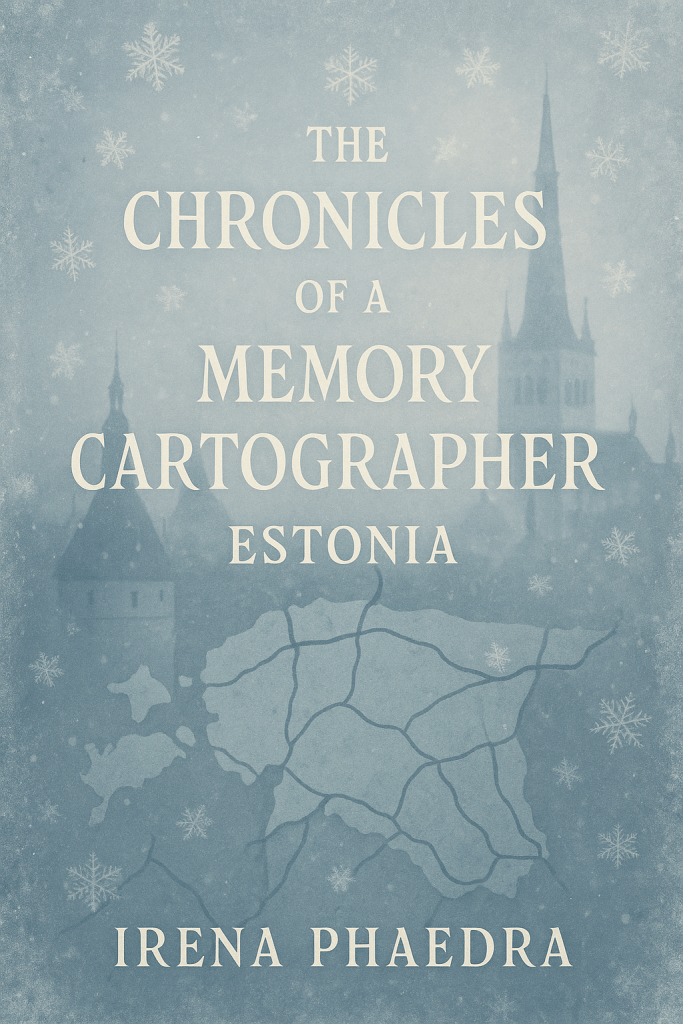
So ends the book’s Estonian chapter: clandestine checkpoints, bent allegiances, and one Bentley doing what MapQuest would never recommend. Elena and Tarmo made their break—now it’s my turn.
Here’s my dilemma: Do I play the diligent editor, politely wrangling narrative chaos into something smooth and publishable? Or throw caution (and grammar) to the wind, sending out raw drafts as they tumble from my mind and memory, letting readers witness the unfiltered cracks and adrenaline of creation?
Both routes tempt me—one with the promise of literary finesse, the other with the thrill of immediate, imperfect truth. As any anthropologist (or entrepreneur) knows, real stories rarely benefit from too much polish. Maybe it’s wisest to keep the border open—let unfinished business travel light. For now, consider yourself an accomplice.
Onward, preferably with bracing coffee (loaded with honey) and questionable decisions.
May our roads convert to our stories,
our detours to revelation,
and our destinations remain delightfully unsettled.
I.Ph.
 The C.O.M.C. Files