
My phone vibrates—Marina.
“Marina, hola! You’ve caught me ensconced in Maiasmok, channelling my inner 19th-century intellectual with tragicomic flair. Have you escaped the luminous languor of Lisboa yet, or are you still flirting with saudade* over pastéis de nata?
“Elena, cariño, you sound like Turgenev’s lost heroine. Is it as cold as your photos look, or just atmospheric?”
I laugh. “Everything is atmospheric here. Even the snow feels curated. I’m a minor celebrity just for eating marzipan alone.”
“You’re always a celebrity. Tell me, how’s your mystery man—Tarmo, was it? Still brooding?”
“He does brood well. I’m learning there’s a difference between being observed and being watched.”
“Don’t get run over by a philosopher on a snowplough! Don’t forget why you’re there.”
“Always, Marina. I’ll call when I’m out of these shadows.”
No sooner have I pocketed the phone than it shivers again—Mrs. Henderson.
“Mrs. Henderson. Reporting in.”
“Yes, my dear. The new assistant has proven herself to be a valuable asset. The “piles” are visibly shrinking as she is very organised. At this rate, I am going to send her to assist you. Tell me, has Tarmo proved useful, or only distracting?”
“He’s both. The briefcase already holds more than receipts.”
“Excellent. Trust your instincts—remember, the CYcrds Tétouan and Tangiers need your approval as well. Any trouble?”
“Nothing I can’t handle. Watchers—of every kind.”
“There always are. Take notes for your dissertation and our next chapter. And Elena, never trust beautiful men with diplomatic passports.”
Her voice is light; the warning is not.
“Thank you. I’ll check in before I travel south.”
“I expect nothing less.”
Pocketing my phone, I realise these moments—of distance and closeness, of home and exile—feed me as much as the sugared marzipan, each a layer of protection and longing.
Evening: On Choosing Armour
Later, in my suite, I hold up two dresses as if weighing the respective merits of rival cultures: the little black dress, diplomatic neutrality personified, and the red velvet, poised somewhere between boldness and foolishness. I stand before the mirror in my suite, holding two dresses.
The little black dress whispers, “I belong anywhere” with diplomatic anonymity. The red velvet makes bolder statements about confidence and perhaps foolishness.
“Black says ‘I’m a seriously blond,'” I muse aloud, then hold up the red. “This says ‘I refuse to apologise for it.'”
I pull my fur kubanka lower over my ears, feeling for a moment like a Russian countess facing the Estonian snow. A кубанка (kubanka)—a piece that transforms the entire ensemble from merely elegant to regal.
The mirror reflects back a woman who looks like she could command attention in any court, medieval or modern.
“If you’re going to be the foreign scholar everyone stares at, might as well dress like you expect it,” I tell my reflection.
Outside, beneath my lit window, a well-dressed man stops under a streetlight to check his phone. I think nothing of it. Tallinn thrives on appearances.
What I don’t see: deeper in the shadows, another gaze. Karim. Unseen by the operative and by me, cataloguing, calculating.
Schlössel Hotel: Dinner and Danger
The restaurant at Schlössel Hotel breathes old-world elegance, crystal and candlelight, creating intimate shadows where desire can masquerade as diplomacy.
The restaurant’s elegance feels like camouflage tonight—crystal and candlelight masking conversations that get people disappearing. I’ve dressed to blend into Tarmo’s world, but the weight of watching eyes since I arrived suggests my cover isn’t as seamless as I’d hoped.
Tarmo, usually composed, gives himself away with a long glance from head to heels.
“You look like royalty,” he breathes, before collecting himself.
“It matches my mood—warm, rich, designed to be noticed.” I take my seat and accept the wine menu, smiling with more danger than poise. “You’re watching me as if I’m some intricate cultural phenomenon.”
“Aren’t you?” he counters.
I twirl my glass. “Aren’t we all? Most end up as footnotes. Some become folklore. Guess which I am?”
We spar, conversation sliding between fieldwork and feint. When the young waiter arrives, I order in carefully practised Estonian, pleased by the flicker of surprise.
“Sooviksin Murimäe Veinikelderist tellida vahuveini valget Muri d’Or Solarist,” I say, not without difficulty.
“Impressive,” Tarmo murmurs after the waiter leaves.
“Language is immersion. Both are dangerous if you misread the signals.”
“You’re being watched,” Tarmo says softly, his composure suddenly under strain. “Three tables over, man in the navy suit—photographing you since you sat down.”
I don’t turn, only smile as if flattered. “I know. There were two others at my hotel this morning. Different faces, same organisation.”
He’s silent for a moment. Around us, the restaurant hums—outwardly serene, but sharpened by the scrutiny woven through every corner.
“You make an impression,” he finally says. “They were expecting you the moment your name hit the arrivals list. Dakhla wasn’t so long ago.”
I nod, lips barely moving. “My reputation got here before I did. Surveillance isn’t personal—it’s caution. They learned in Morocco to never underestimate a researcher with too many questions and too many contacts.”
He smiles, hard-edged. “Tallinn isn’t Dakhla, but the rules are the same. You’ll be watched everywhere you go.”
“That’s the point,” I say quietly. “Asking makes them react—sometimes even reveals what they’d rather keep hidden.”
He shifts in his seat, gaze sharpening. “Just remember, here, too many eyes can close doors that should stay open. Move carefully.”
Outside, snow drifts down on the medieval streets, distant sirens echoing. In this city, my expertise is both shield and spotlight—my questions are dangerous not because of what I might ask, but because of who’s listening for the answers.
“The kind that maps social networks, identifies local leaders, and documents how Russian-speakers actually feel about European integration.” I lean forward, lowering my voice. “Some people prefer their dynamics remain opaque to the West.”
“Exactly.” I meet his eyes, calculation reflecting back at me. “Do you still need what I can deliver—badly enough to risk both our lives?”
He’s silent for a moment, power coiling under the surface—alone in his choices, resolute in their pursuit. “This is bigger than either of us. What matters is that we finish the job.”
The waiter’s hands tremble as he refills our glasses. Either he’s nervous, or he’s been told to look that way.
“The Russian leaders I need to reach are already suspicious,” I continue. “Layer in surveillance and political drama, we could lose access altogether.”
“What do you need?”
“Safe transport to Narva, secure comms, and ways to keep them guessing—move through Estonia without surveillance tracking every kilometre.”
He smiles, humour edged with darkness. “Your CYcrds certification is perfect cover—three days in Tallinn for the exploration, Tartu for archives, then Narva for fieldwork. I’m just facilitating local business access.”
“And the surveillance?”
“We assume they’re listening, watching, and planning. We proceed as if we’re exactly what we appear to be—a wealthy patron and a researcher working on legitimate academic questions with significant political implications.”
“Public for cover, boring to dodge attention.” I nod. “The paper trail: academic progression, certification, archival research, then community fieldwork.”
He leans forward, voice intent. “We assume we’re watched at all times. We act precisely as we appear—a patron of research and a committed anthropologist. No distractions. No attachments.”
I lean back. Outside, snow falls on a city that’s seen centuries of empires collide. Inside, we’re planning to step into the latest collision, protected only by credentials and careful words.
“One more thing: does it worry you?”
He meets my gaze, unwavering. “If worry stopped me, I’d never have left the boardroom. Besides, power is choosing to proceed despite the risk.”
Over salmon, I scan the room—a man by the kitchen, expensive watch, unfamiliar posture. I lower my voice. “Who’s the desert prince by the door?”
Tarmo follows my gaze. “Why?”
“He claims the space. Used to more of it—and better weather. Not local.”
I raise my glass. “To observation. And to hoping the mysteries here are just interesting—not fatal.”
“If this goes wrong—if we’re detained, compromised—what’s your extraction plan?”
He lets the question sit between us before replying, voice cold and final.
May curiosity not kill the cat.
IrenA pHAEDrA
*Saudade is an untranslatable term in Portuguese that refers to melancholic longing or yearning.
Author’s Note
Sometimes, imagination outruns stamina; writing a whole chapter is both a sprint and a marathon. I set out today to lay bare a storm of thoughts, only to realise the pages wanted to run ahead of me. If you’re reading this here, know you’re witnessing the story in its raw, incandescent sprawl.
If curiosity beckons you further, you’ll find new layers and evolving tangents on my Wattpad page. There, the conversation continues, less filtered, maybe more chaotic, always alive.
I value your insight more than passive likes—leave a comment, argue, reflect, or even challenge the flames of my fiction. Let’s make this story less a static text and more a living field of ideas.
Yours in provocation and creation,
I.Ph
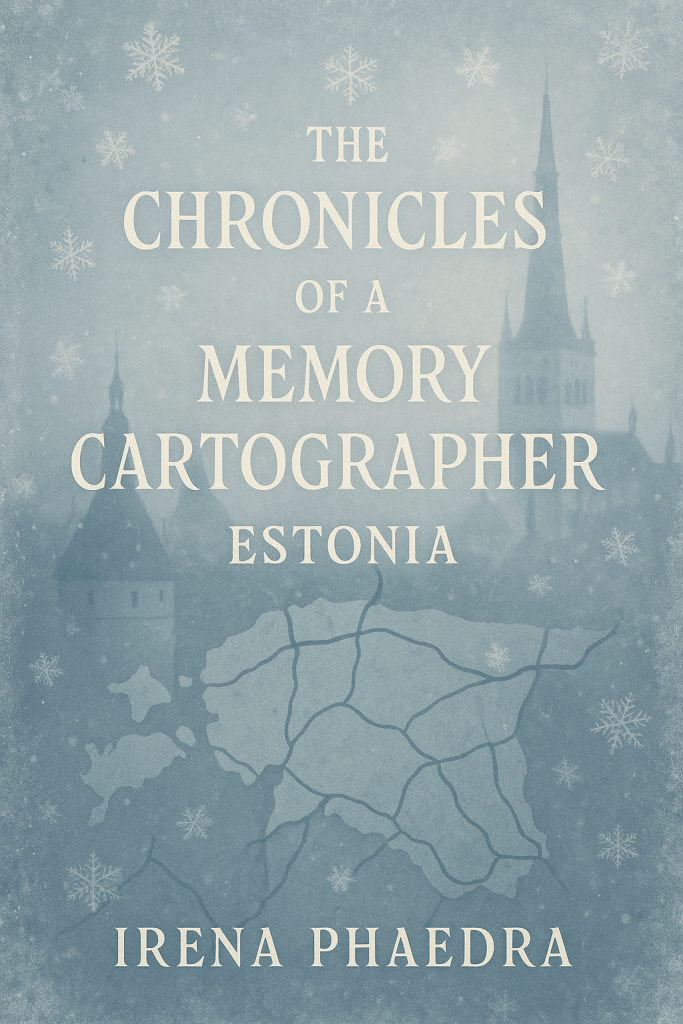
 The C.O.M.C. Files