
Prologue: A Field Note Skipped, Rediscovered
This essay traces its roots to an absent entry—dreamed up while wandering the endless corridors of memory and Morocco, charting stories as a cartographer of recollection. It nearly vanished into my own archive: an idea penned, then forgotten, waiting for its rightful place in the Chronicle. Sometimes, what’s left on the cutting room floor is what most wants to endure. Call it a touch of Phaedra, if you like—only, in this case, remembering is the real creative act.
Why Civilisation Flows from Continuity, Not Conquest
History loves a conqueror: those who carve empires with spectacle and flourish. Yet what endures is rarely the photogenic charge forward, but the slow, stubborn work of those who maintain, mend, and pass on. Civilisation’s scaffolding is built not of conquest, but continuity.
“Conquest is photogenic. Continuity is pandemic-proof.”
The Builders We Forget
Our textbooks celebrate the fallen empires and victorious campaigns. But it’s the farmers coaxing crops from difficult terrain, the artisans refining skills across generations, and the communities replaying rituals long after the headlines fade who build real, lasting value.
Consider ancient Egypt: not just the pyramids, but the scribes, priests, and farmers who laid the groundwork for millennia. Or Rome, whose legacy is more the persistence of law and engineering than armies on the march.
Modern Strongmen and Old Lessons
Today’s disruptors mistake noise for substance. Leaders like Netanyahu, Putin, and Trump wield power as televised ritual, forgetting that civil society’s roots are patience, not pyrotechnics. Their drama fades; the quiet civilisers, who hold the line in classrooms, archives, and libraries, are the ones who stitch progress together.
Digital Age Dilemmas
“Innovate fast, break things”: the slogan of Silicon Valley. But what endures online is not the disruption, but the slow, cumulative building of shared knowledge. Continuity, not conquest, is civilisation’s digital future.
Field Notes on Continuity: Morocco’s Living Archive
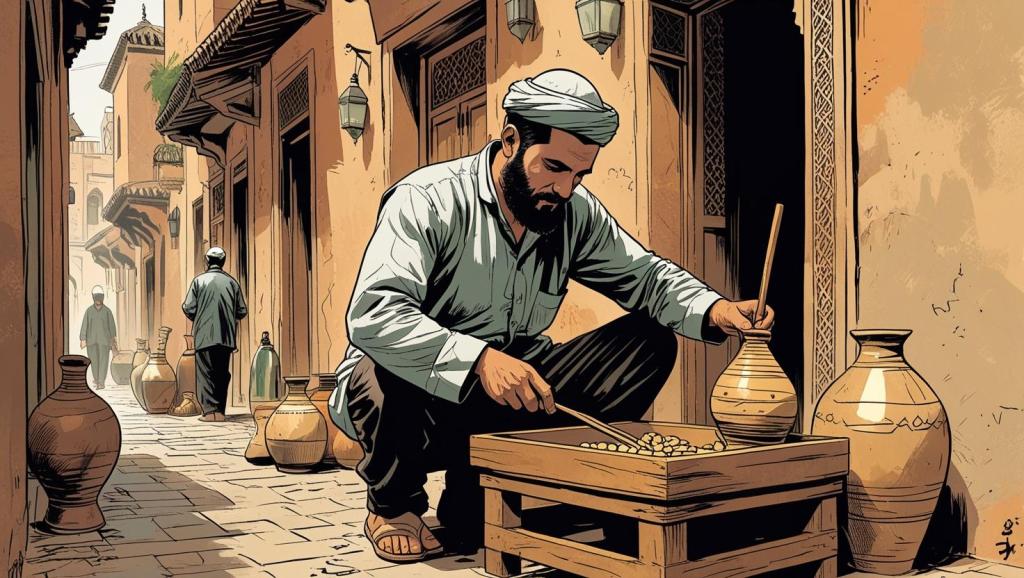
This rediscovered memory belongs to the “Chronicles of a Memory Cartographer: Morocco”—a tale of artisans whose skill persists despite empires passing overhead. Farmers watering crops along ancient canals, Berber communities passing oral law by daily habit, Iranian poets weaving survival into verse: each is an unsung architect of civilisation’s stubborn foundation.
- In Mesopotamia, farmers outlasted kings, passing down irrigation secrets as if handing over blueprints for endurance.
- Morocco’s Berber communities navigated imperial tides by preserving language and hospitality—a delicate fabric, stronger than any ruler’s decree.
- Iranian craftspeople and poets spun survival and belonging into their carpets and sonnets, threading continuity through every upheaval.
Closing Reflection: Monuments and Menders
If you dream of tomorrow’s monuments, follow the conquerors. But to civilise—to build what lasts—thank the careful hands patching the walls after the parade has passed.
Civilisation’s true architects are the ones you rarely read about, the ones who remember, repair, and root. The work was nearly lost in my own chronicles, only to resurface here—a testament to the power of memory, presence, and the mundane heroism of continuity.
May your strength serve continuity, remember strongmen come and go; continuity doesn’t even bother waving goodbye.
By Dr. E. Delange—Anthropologist undercover, memory cartographer at large.
P.S. Sometimes the most important notes are the ones nearly forgotten. This one finally found its time and place—the wind always returns, but only the palm keeps growing.
 The C.O.M.C. Files