
Once, wherever I laid my head was my home.
This October marks twenty years since I moved into this house. Twenty years of watching seasons change through the same windows, of learning neighbours’ names and stories, of putting down roots in what I thought would simply be my address for a short period. What I didn’t expect was to become an archivist of loss, a keeper of the shifting shapes that death takes in one small corner of the world.
I’ve been counting lately—a morbid inventory, perhaps, but one that reveals something I hadn’t noticed until the numbers accumulated into a pattern. The deaths that surrounded me in my first three and a half decades were jagged things: sudden, violent, premature. A neighbour crushed by a grain silo at harvest time, leaving behind a young wife and three children who still had to learn to tie their shoes. A classmate was stabbed in the neck at seventeen, bleeding out on concrete while trying to stop two boys from fighting each other. My ex-boyfriend, who chose his service weapon over another sunrise.
The 1990s claimed friends in waves—overdoses that started as experiments and ended as epitaphs. Cars became metal coffins when disco nights collided with early morning commutes, young bodies no match for physics and bad timing. What haunts me still is how these deaths were preceded by chance encounters: I’d run into someone unexpectedly, share a brief conversation, maybe laugh about something trivial. Within a day, they’d be gone. As if the universe offered one last glimpse before pulling them away forever. Each death felt like a theft, lives interrupted mid-sentence, stories cut off before their proper endings.
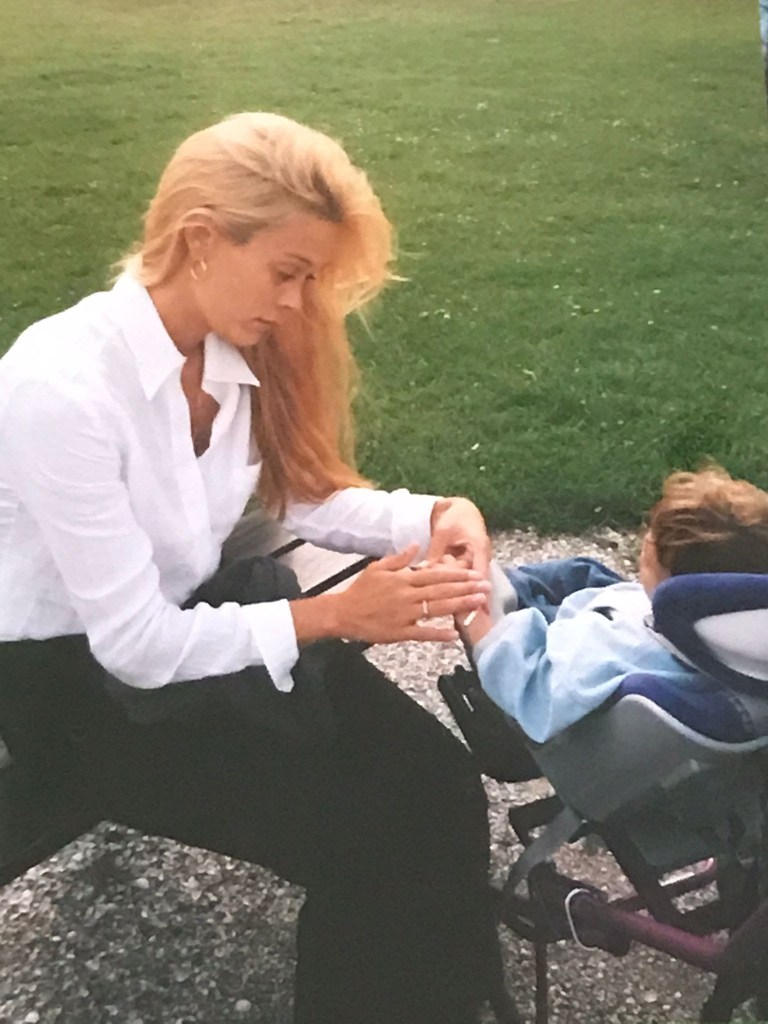
The most personal loss stands out in this catalogue: my son Liam, entrusted to professionals who failed him. Some grief doesn’t fit into neat categories of accident or illness—some loss happens in the space between what we hoped for and what we received.
However, something shifted in the past eighty seasons. Now, roughly seventy per cent of my neighbours have died of old age. Not suddenly, not violently, not before their time—but quietly, in beds they’d slept in for decades, surrounded by grandchildren who knew their stories by heart. These deaths carry weight, too, but it’s the weight of completion rather than interruption.
Twenty years in one place teaches you that geography shapes grief. Stay anywhere long enough and you become a witness to how a community ages, how the nature of loss evolves from chaos to conclusion. The violent randomness of young death gives way to the gentler rhythms of expected endings.
My relationship with mourning has transformed, too. In those early years, when death struck young and fast, I never attended funerals. I was convinced that people were a part of me, through shared life stories—I would light a candle instead, holding them close in a private ritual. But here, in this neighbourhood where natural death has become familiar, I find myself at funeral after funeral, not for the departed but out of respect for those left behind. I’ve learned that grief shared is different from grief held alone.
This isn’t to say that natural death is easier—grief is grief, and love lost hurts regardless of timing. But there’s something to be said for deaths that feel like periods rather than exclamation points, for losses that make sense in the arithmetic of human experience.
Twenty years. Long enough to watch a neighbourhood transform, to see older people become elders, and become part of my memories. Long enough to understand that every address is also a coordinate on someone’s map of sorrow, that every house holds its own inventory of who has stayed and who has gone.
I’ve become a keeper of this particular geography of grief—witness to how death changes its face but never its impact, how loss accumulates and transforms but never truly diminishes. Twenty years in one place, and I’ve learned that home isn’t just where you live, but where you learn to say goodbye.
May harmony find you,
Irena Phaedra
P.S. In fifteen minutes, Chapter 6: The Dragon’s Enigma
 The C.O.M.C. Files