
Denia, Las Marinas, Spring 2015
One Sunday, seeking respite from routine, I ventured to a neighbouring beach with my granddaughter and son-in-law. Though I was in low spirits that day, something unexpected caught my eye: two little boys playing nearby. Their swimming trunks featured bright red, leaf-shaped symbols that initially resembled hearts. A moment later, I recognised them as pompeblêden—the distinctive emblems from the Frisian flag deeply connected to Frisian identity.
For the uninitiated, pompeblêden (often mistaken for hearts) are stylised representations of yellow water-lily leaves. They are proud symbols of Friesland, prominently displayed on the region’s flag and appearing on everything from sports jerseys to local products. The seven pompeblêden on the flag represent the ancient autonomous Frisian sea lands that once united against external threats. Today, these emblems symbolise Frisian history, unity, and cultural pride.
As my granddaughter began playing with the boys, I conversed with their parents—the only other family on the beach that day. This chance encounter marked the beginning of my journey into Frisian culture.
Through this meeting, I formed a friendship with Roos, who began visiting my home ostensibly to help with cleaning but primarily for conversation. At the time, I was immersed in studying Irish folklore, my house overflowing with books and research notes. Noticing my work, Roos inquired about my project.
When I explained Cycrds™, she responded with evident pride about her own heritage. My personal knowledge of Friesland was limited to a childhood sailing trip with my mother’s study friend Ludi—”a wonderful” experience that, as I put it, had left my insides forever changed by the Frisian lakes. Indeed, I had spent most of the sailing seasick, leaving my innards quite literally on those wide waters.
Curiosity ignited, I delved into research about Friesland. Soon, I found myself captivated by the legends and history of Magna Frisia—a region whose cultural identity remains fiercely preserved, shaped by centuries of autonomy, resilience, and a language that transcends mere communication to become a living expression of identity.
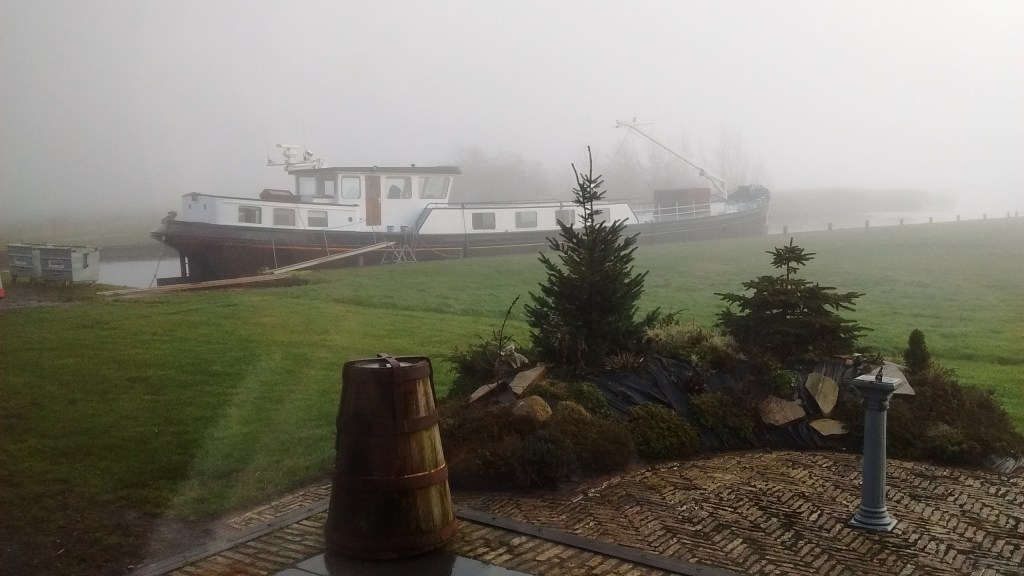
It was a cold February day in 2016 when Roos invited me to her father-in-law’s home in Koufforderigge for what would be the first of many visits. Mist shrouded the lake, obscuring the farmhouses along the roadside. There I met Ulbe Zwaga, not only the family patriarch but widely regarded as Friesland’s enfant terrible. He was renowned for his fierce loyalty to his homeland and readiness to challenge established Dutch conventions. His public appearances and interviews consistently reflected this uncompromising stance, earning him both admiration and notoriety throughout the region and beyond.
Ulbe’s home, built by his own hands at the end of a muddy farm road beside a small shipping yard, was almost as impressive as the towering man himself, who stood behind the stove when I entered. I would later also meet the legendary Skûtsjesilen champion, Tjitske, who joined us that evening.
After the ritual removal of shoes and initial greetings, we were served authentic Frisian brew. Then, in true local tradition, came the invitation to the sauna. While I consider myself open-minded, my expression at the prospect of communal nudity prompted Roos to gently request our host cover his “noble parts.” A tiny hand towel appeared as a concession to my conventional Dutch sensibilities. Following a cold shower, we gathered for a meal—one of the most memorable and lovingly prepared I’ve ever experienced. Braised or rather simmered beef with apple (suddervlees met appel).
That evening, the champion arrived, and I seized the opportunity to ask every question I could think of. Both our host and the champion shared their knowledge generously, though, as is often the case, even the most devoted locals don’t have every answer. Nevertheless, I departed enriched with tales of Frisian heroism, of defiance against Caesar and the Prussians, and of a land shaped equally by hardship and pride.
And so, what began as a chance encounter on a Spanish beach—heralded by those unmistakable pompeblêden—evolved into an exploration of Friesland’s living heritage. In this land, history isn’t merely remembered but fiercely lived.
May Harmony find you,
Irena Phaedra
P.S. Consider this merely the opening act of my Frisian adventures & incursions. Even as you read, the next chapters are being scribbled down. Some with the gravity of legend, others with the cheerful chaos that only true travel can inspire. History, after all, is less a finished story than an ongoing argument with time, and I seem determined to keep debating. The Frisians and I are not quite finished with each other yet.
 The C.O.M.C. Files
One Comment Add yours