
The Lupin Effect: Finding Balance in an Age of Neurological Overload
In an era where images of conflict in Gaza arrive unfiltered on our screens with an immediacy unknown to previous generations, we face a peculiar neurological dilemma. Our primitive brains are overfed while our limbic systems, responsible for complex emotional processing, are increasingly silenced.
This wasn’t always the case. When footage from Vietnam reached living rooms in the 1960s, it arrived filtered, delayed, and consumed collectively. Today’s conflicts reach us instantly, graphically, and often in isolation as we scroll through personalized feeds. The result? A constant triggering of our fight-or-flight responses with little opportunity for nuanced moral reasoning.
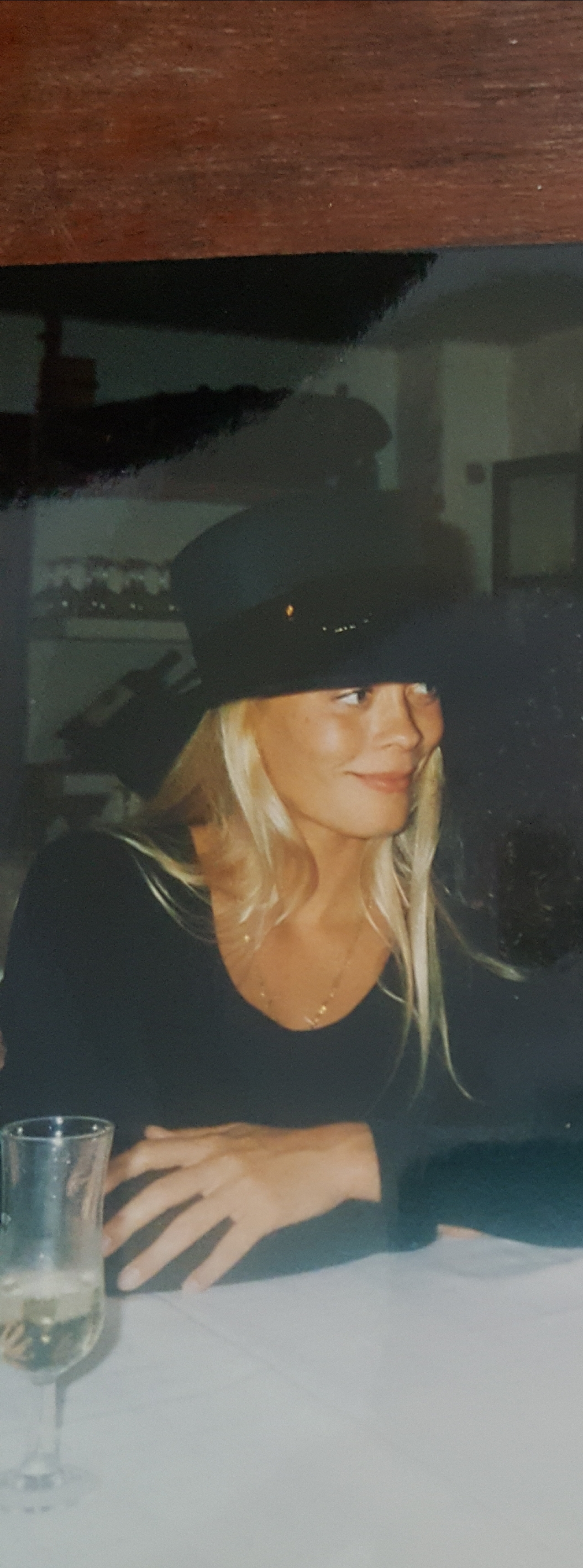
I remember the mid-nineties, early mornings spent watching Lupin the Third from an unconventional vantage point—a home outside Benidorm I shared with two friends of impressive calibre. One owned a popular grunge bar; the other ran a network supplying “goodies” no legal firm could handle. I was there recovering with my four-year-old daughter, surrounded by dry bush and bark, desert-like in its sparseness.
These longhaired wonderboys had their followers, and boy, did they follow! Each day brought 15 or more visitors gaming, smoking, eating, and overall chilling, accepting life and each other without judgment.
My daughter attended a private school, where she was admired by older girls who were fascinated by her unconventional family. They were the first youngsters I noticed with phones, sitting on tables yet looking in awe at parents like us—Charlie and I with long blond hair, our Depp-like brother with brown curls, all arriving in a purple metal Beetle.
It was in this setting—a small community operating by its own rules yet maintaining its own moral code—that Lupin’s adventures resonated with particular clarity. The gentleman thief’s duality mirrored our own existence: outside conventional boundaries yet governed by principles that, while unorthodox, maintained a sense of justice and care.
This memory highlights how different our media consumption was then. Watching Lupin the Third was an event, a shared experience in a physical community.
Today’s fragmented, algorithm-driven consumption creates an entirely different neurological experience that helps explain why we simultaneously witness heightened activism and profound disengagement among younger generations.
The evolution of Lupin across time offers unexpected insight into our modern condition. Created in 1905 by Maurice Leblanc, the character has been reimagined repeatedly—from the anime I watched in those Spanish mornings to Assane Diop in Netflix’s recent adaptation.
Each iteration reflects its era while maintaining a core duality: the balance between self-interest and moral compass.
What makes Lupin particularly relevant today is his navigation of seemingly opposing values. He operates outside conventional rules yet maintains a code that directs his skills toward challenging those who abuse power. He embodies individual excellence and selective empathy—a balance increasingly challenging to keep in our either/or digital landscape.
Our social systems reveal a similar tension. We function within competitive frameworks that reward individual achievement while valuing the protection of the vulnerable. As one political figure recently declared, “Only the strong will survive”,—echoing the Social Darwinism of the Gilded Age and the “greed is good” ethos of the 1980s. Yet history shows us these periods are typically followed by progressive reforms and a renewed focus on community values.
The question becomes: How do we restore balance in an environment designed to overwhelm us? Perhaps the answer lies in storytelling—not as an escape but as a bridge. Stories engage both primitive and higher brain functions simultaneously. They slow the consumption to allow for integration. They create emotional distance that permits processing without shutting down.
Where once we found community in physical spaces—like that home outside Benidorm—many now seek it through shared narratives. Lupin’s evolution across media forms demonstrates how timeless themes can connect to modern contexts in ways that feel relevant rather than didactic. In a world where former magazine role models have been replaced by fleeting social media figures consumed at breakneck speed, such stories offer rare space for reflection.
The knife cuts both ways. The same technologies that fragment our attention can be wielded to create counterforces. The same competitive systems that reward individualism can nurture collective care. Like Lupin himself—charming, resourceful, and ultimately guided by a moral code—we might find ways to operate within flawed systems while simultaneously working to transform them.
In doing so, we might rediscover what that eclectic (Danes, Dutch, English, Spanish and Swedish) community in 1990s Spain intuitively understood: that true strength lies not in survival alone but in the capacity to remain human amid forces that would reduce us to mere consumers or competitors. The gentleman thief would expect nothing less.
May Harmony find you,
Irena Phaedra
P.S. Well, I took a walk around the world to ease my troubled mind
I left my body lying somewhere in the sands of time
But I watched the world float to the dark side of the moon
I feel there’s nothing I can do, yeah
I watched the world float to the dark side of the moon
After all I knew, it had to be something to do with you
I really don’t mind what happens now and then
As long as you’ll be my friend at the end
If I go crazy, then will you still call me Superman?
If I’m alive and well, will you be there and holding my hand?
I’ll keep you by my side with my superhuman might
Kryptonite
 The C.O.M.C. Files